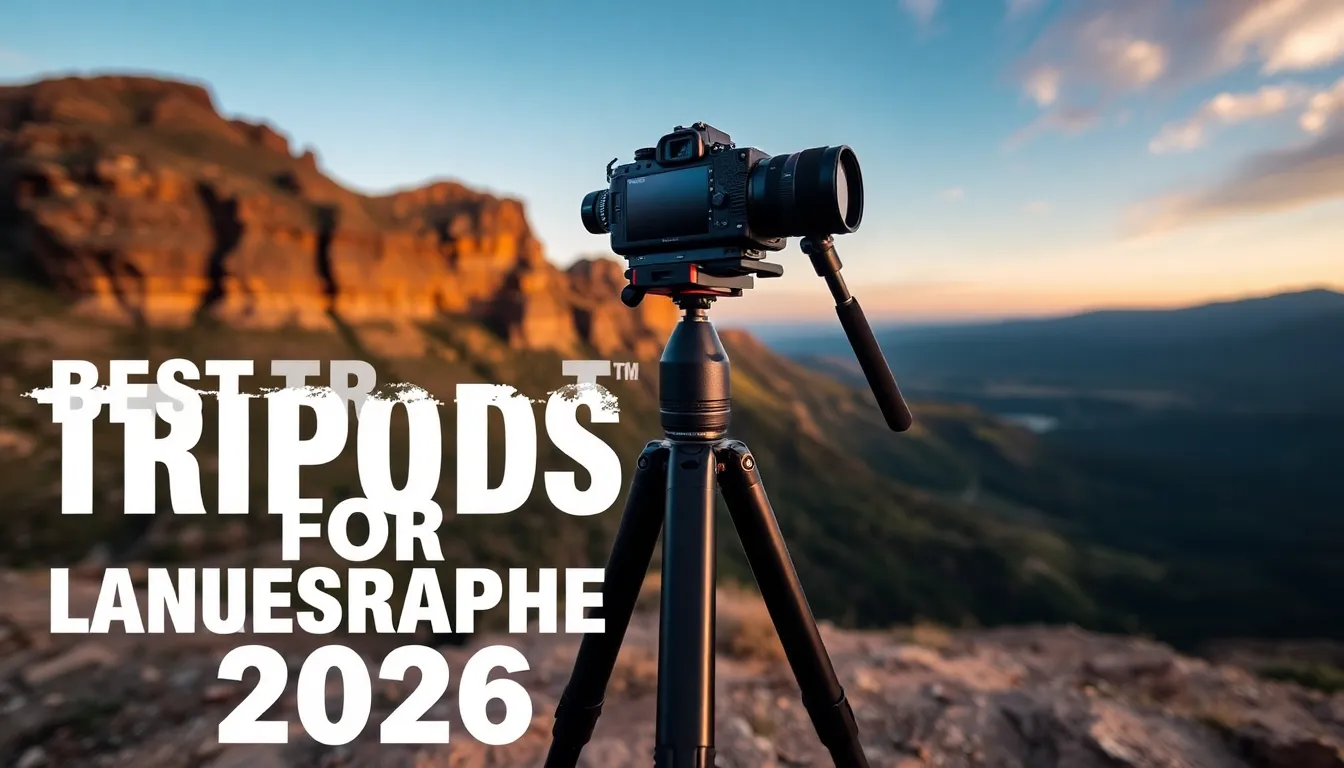
Best Tripods for Landscape Photography in 2026
I’ve spent enough mornings standing in cold mountain air, watching light transform the landscape, to know that a tripod is never just a tripod. It’s the foundation of intention. It’s what separates the snapshot from the image you’ve genuinely composed.
A good tripod becomes invisible—you stop thinking about it and start thinking about the world in front of your lens. A bad one reminds you of its existence every time the wind gusts or you adjust your framing. After years of landscape work across various terrains, I’ve learned that choosing the right tripod means understanding your own workflow: How far do you hike? How much do you value stability over portability? Are you chasing light or working methodically from one location?
This year, I’ve tested four tripods that represent different philosophies. Each has earned its place in the landscape photographer’s toolkit, but they’re not interchangeable. Let me walk you through what I’ve discovered in the field.
Peak Design Travel Tripod
The first time I packed the Peak Design Travel Tripod, I was skeptical about something so compact being genuinely useful. Then I hiked four miles to a waterfall at dawn, and by the time I reached the overlook, I understood the philosophy.
When collapsed, this tripod is genuinely small—about the size of a water bottle. Peak Design engineered this by making the legs fold in on themselves rather than the traditional collapse method. The quick-deploy ball head is buttery smooth; I’ve spent countless minutes fine-tuning composition without fighting friction. The build quality feels premium throughout; there’s no plastic rattling, no doubt about whether this will hold your camera steady in a light breeze.
The tradeoffs are real, though. Maximum height is modest—around 56 inches without the center column extended. If you’re tall and prefer working at eye level, you’ll be crouching more than you might like. The leg angles are fixed; you can’t spread them wider for greater stability on uneven terrain. And yes, you pay for that compactness. This isn’t a budget purchase.
I’d reach for this tripod for backpacking trips, scrambling to remote locations, or any shoot where weight and pack space are serious constraints. It’s the tripod that doesn’t make you compromise on image quality to achieve portability.
Pros: Genuinely compact, excellent build quality, smooth ball head, ultralight Cons: Lower maximum height, fixed leg angles, premium pricing
Manfrotto Befree Advanced Tripod
The Manfrotto Befree Advanced is what I call the “sensible choice”—the tripod that doesn’t sacrifice the things that matter while remaining genuinely portable.
Manfrotto has been making tripods since photographers were using film, and you feel that heritage in the Befree. The twist-lock legs are intuitive; there’s a learning curve of about thirty seconds, then you stop thinking about them. The column extends to a reasonable height for most users. The whole setup is light enough for day hikes but feels substantial enough that you’re not nervous in moderate wind.
I’ve used this tripod across seasons—wet coastal rocks, sandy deserts, muddy riverbanks. The aluminum construction is durable without being a tank. It’s not the cheapest option, but the price-to-performance ratio is exceptional. You’re getting reliability that will last years of regular field use without the weight premium of heavier-duty models.
The Befree isn’t specialized for anything in particular, which is exactly its strength. It’s genuinely competent in every situation I’ve thrown at it. The ball head is adequate but not remarkable; it works without demanding your attention either way. Some photographers might wish for more fine-tuning control or wider leg spread for uneven terrain, but for standard landscape work, these limitations rarely matter.
Pros: Excellent value, reliable performance, good height, durable construction Cons: Modest ball head, moderate maximum height, average leg spread options
K&F Concept SA254T1 Tripod
There’s something honest about the K&F Concept SA254T1. It doesn’t pretend to be something it isn’t. It’s a carbon fiber tripod at a price point that shouldn’t exist, and it works.
Carbon fiber construction means it’s lighter than comparable aluminum options while remaining rigid. The monopod conversion is genuinely useful—twist off the center column, and you’ve got a capable single-leg support for situations where you need mobility. I’ve used the monopod configuration for following weather fronts or quickly repositioning in dynamic light.
Testing this tripod required shedding assumptions I’d developed from expensive gear. The ball head is basic but functional. The leg adjustments require attention; you need to actually think about what you’re doing rather than working on autopilot. The included accessories feel minimal compared to premium brands. But here’s the thing: when I was framing a sunset composition, checking focus, and adjusting my filter holder, I wasn’t thinking about what I paid for the tripod. It was just holding my camera steady.
The honest criticism is that this isn’t the most intuitive tripod for users who value speed and convenience. Setup takes slightly longer. The legs don’t lock as confidently as premium options. If you’re working in harsh conditions regularly, you might question longevity. But for weekend trips, learning photography, or anyone watching their budget, this tripod punches well above its price.
Pros: Excellent carbon fiber value, monopod conversion, lightweight, affordable Cons: Basic ball head, less intuitive controls, potential durability questions
Manfrotto 055XPRO3 Tripod
When you’re standing at a dramatic vista and the wind is genuine, when you’re using your largest telephoto lens, when you’ve committed to staying at one location for hours waiting for perfect light—you understand why the Manfrotto 055XPRO3 exists.
This is the workhorse. It’s heavier than the other options I’ve tested, and that weight is intentional. The aluminum construction feels industrial. The center column rotates horizontal, which is genuinely useful for macro work or shooting directly down at foreground details. The leg locks are positive and reassuring; there’s no question about stability. I’ve used this tripod in conditions where lighter options would be compromised.
I’ve watched photographers use the 055XPRO3 for decades without replacement. It’s not sexy. It doesn’t win awards for innovation. But there’s something about handling gear that simply works, year after year, that matters when you’re trying to focus on the landscape rather than equipment.
The tradeoff is obvious: this tripod is heavy and bulky. If you’re hiking distance, it becomes a consideration. The compactness of modern alternatives means this fits poorly in adventure travel. But if you’re working within reasonable hiking distance, if you value stability above portability, if you want equipment that will outlast your enthusiasm for a dozen other hobbies, this is the answer.
This is also the tripod I’d recommend for photographers who struggle with technique—the stability is so robust that poor technique becomes less punishing. You can work methodically without second-guessing your setup.
Pros: Exceptional stability, horizontal center column, proven durability, reliable performance Cons: Heavy and bulky, overkill for day hikes, premium price
My Pick
If I’m being honest about my own work, I use different tripods for different situations. But if forced to choose one for landscape photography in 2026, I’m choosing the Manfrotto Befree Advanced.
It’s not the most compact. It’s not the heaviest-duty. It’s not the cheapest. But it’s the most honest compromise between weight, stability, and ease of use. After I’ve hiked to a location and composed my image, I want the tripod to disappear from my consciousness. The Befree does that. It’s stable enough for everything I photograph. It’s light enough that I don’t resent carrying it. The build quality means it will be reliable for years.
The landscape demands your full attention. Your tripod shouldn’t.
Comments
Leave a Comment