The Magic Window That Changes Everything
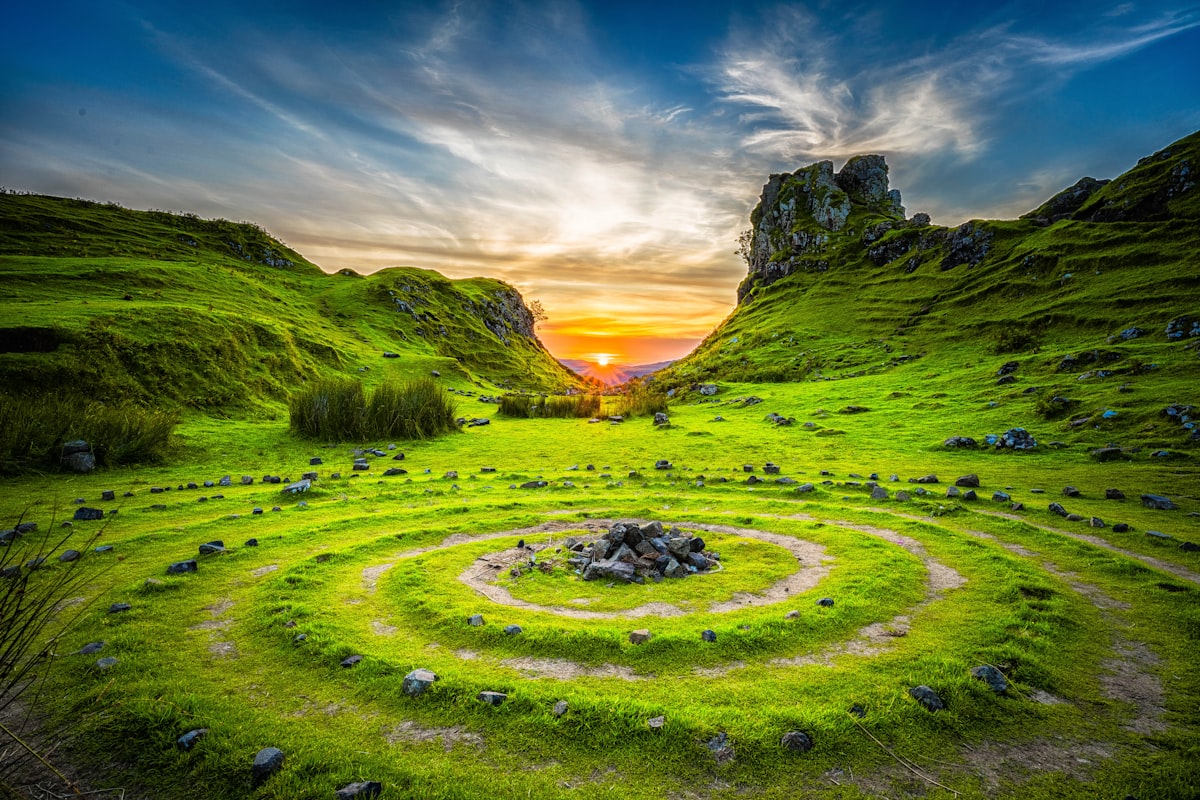
There’s a moment each day when the world stops feeling like itself. The light turns honey-thick, the shadows grow long and purposeful, and suddenly a mundane hillside becomes something you need to photograph. This is golden hour—and once you understand it deeply, your landscape work will never be the same.
I’ve spent hundreds of mornings and evenings chasing this light, and I can tell you it’s not romantic myth. It’s physics meeting intention. The sun sits low on the horizon, filtering through more atmosphere, which scatters blue wavelengths and leaves the warm oranges and reds. But knowing why it works is less important than knowing when to be there and how to use it.
Timing: The Real Work Begins Before Sunrise
Golden hour isn’t actually an hour. Depending on your latitude and season, it might last 20 minutes or 90 minutes. This is why guesswork fails. I use the PhotoPills app religiously—not occasionally, but before every shoot. It shows me exactly when the sun will kiss the horizon, where light will rake across the landscape, and which ridges will silhouette dramatically.
The evening golden hour is forgiving for beginners because you can arrive early, scout your composition, and wait. The morning version rewards discipline. I typically arrive 45 minutes before sunrise, position myself by feel and headlamp, then wait for the light to gradually reveal what I’ve chosen. There’s something humbling about committing to a location in darkness.
Exposure and White Balance: Two Critical Decisions
Golden hour light is saturated, and your camera will want to neutralize it. Here’s what I do in the field:
First, I shoot in RAW exclusively. JPEG will crush those warm tones before you can save them. Second, I set my white balance manually to around 3500-4500K rather than auto or daylight preset. This preserves the warmth rather than fighting it.
For exposure, I meter off the sky rather than the land. The foreground will sit in shadow—that’s the point—and I’d rather recover shadow detail in post than blow out golden light in the sky. I typically expose so the histogram’s right edge sits just before clipping, then lean on my RAW file’s latitude to bring back foreground information.
Composition: Light Does the Heavy Lifting, But You Must Direct It
Here’s what nobody tells beginners: golden hour light is so flattering that mediocre compositions become acceptable. Don’t let this fool you into complacency. The light amplifies good composition and bad alike.
I use the low sun as a tool for separation. A ridge backlit by golden hour becomes a thin line of fire against shadow. Foreground textures catch side-light that would disappear at midday. This is where your composition planning matters—position elements so the light sculpts them, not just floods them.
After the Magic Fades
The golden hour ends abruptly. Once the sun dips below the horizon, the light flattens and cools. I typically shoot for 15-20 minutes past “true” golden hour into what I call blue hour—the light turns cool and the contrast drops. It’s excellent for moody work, but it’s a different tool entirely.
Pack your gear immediately after. I’ve made the mistake of lingering, thinking I had time, only to walk away with nothing usable because I missed the transition.
The Discipline Beneath the Beauty
Golden hour isn’t beautiful because it’s rare—it’s rare because you have to commit to being there. Every serious landscape photographer I know obsesses over these minutes. It’s not poetry. It’s planning, arriving early, and trusting that the light will do what it always does. Your job is simply to be ready when it appears.