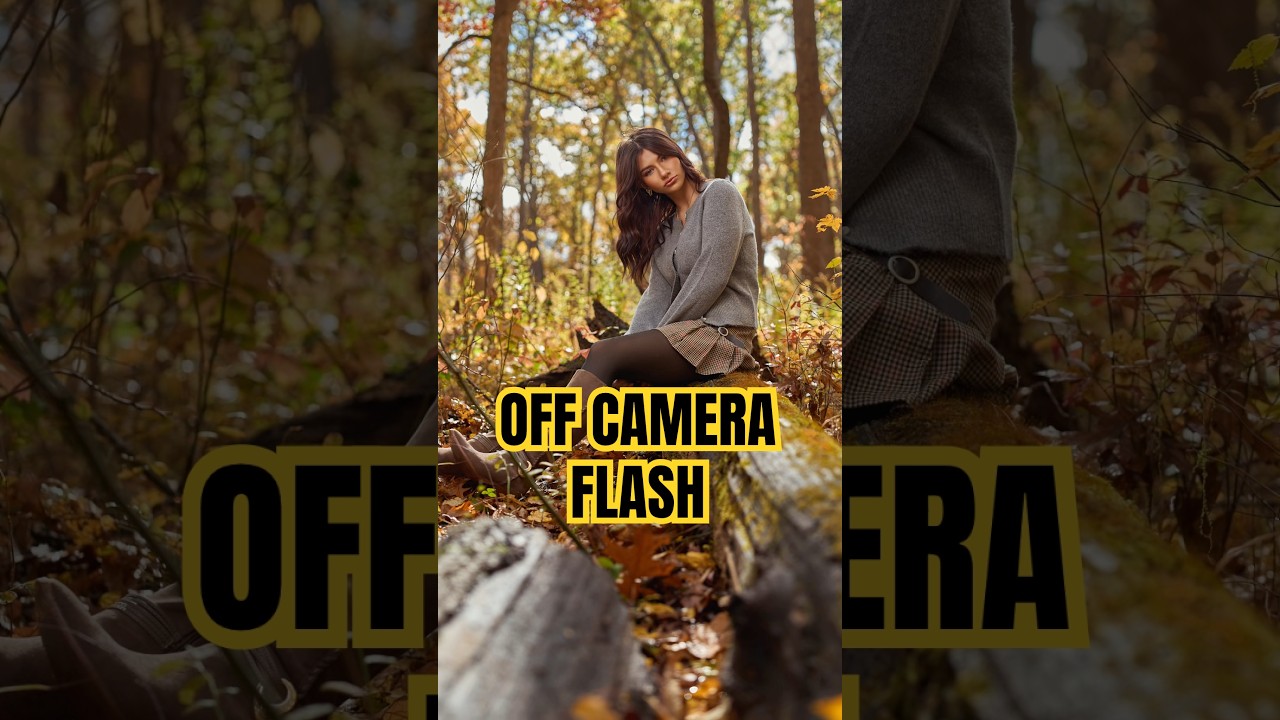
I’ve stood in countless sun-drenched fields, squinting at LCD screens, watching my carefully composed portraits collapse under the weight of harsh shadows across my subject’s face. The midday sun is a merciless master, and for years I thought the answer was to find shade or wait for golden hour. But I was missing something fundamental about how light behaves, and how we can shape it.
In this excellent tutorial, Joel Grimes shows us how to transform outdoor portraiture by harnessing flash—not as a primary light source, but as a subtle tool to fill shadows and reveal the dimensionality in our subjects. What I’ve learned from his approach is that flash isn’t the enemy of natural light; it’s its partner. When used thoughtfully in bright conditions, flash becomes invisible while doing essential work.
Understanding the Challenge: Why Outdoor Portraits Fail in Bright Light
When the sun is high and harsh, it creates deep shadow pockets under the eyes, nose, and chin. Your subject’s features flatten or disappear into darkness. The temptation is to expose for the face, which then blows out your background entirely. It’s a no-win scenario that many photographers accept as inevitable.
But here’s what changed my thinking: those shadows aren’t always the enemy. They’re information. The problem is the contrast ratio—the gap between the brightest and darkest areas is too extreme for your camera to capture detail in both. Flash solves this by filling those shadows just enough to recover detail without looking artificial.
Step 1: Choose Your Flash and Settings
Joel recommends using a dedicated external flash rather than relying on your camera’s pop-up flash. The power and control you gain are worth the investment. I’ve found that even a modest speedlight offers enough range for outdoor fill work.
Set your flash to manual mode—not TTL. In bright sunlight, TTL can become unpredictable as your camera meter tries to balance ambient and flash light. Manual gives you consistency. Start at 1/4 or 1/8 power. You’re looking for subtlety here, not blast.
Your shutter speed should be your camera’s sync speed or lower (usually 1/200th of a second for most DSLRs). Your aperture becomes your primary control for ambient exposure. If you’re shooting at f/5.6 to maintain depth of field, adjust your shutter speed first, then let your flash fill in the gaps.
Step 2: Position Your Flash Correctly
This is where technique meets artistry. I typically position my flash off-camera, either on a light stand or held by an assistant, at roughly 45 degrees to my subject and slightly above eye level. This mimics the direction of natural light and feels organic rather than confrontational.
The distance between flash and subject matters enormously. Closer flash means less power needed and more control over the light’s spread. I often work with my flash just three to four feet from my subject’s face when shooting tight portraits.
Step 3: Meter for Your Background First
This is the counterintuitive part that took me weeks to internalize. You’re going to expose for your background and sky, then use flash to bring your subject into balance. This prevents blown-out skies—the plague of outdoor portraiture.
Meter your background. Set your shutter speed and aperture so the sky looks correct. Your subject will now appear underexposed. This is exactly what you want. This is where your flash comes in.
Step 4: Use Flash as a Subtle Fill
Adjust your flash power until your subject’s face matches the exposure of your background. You’re not trying to match the sun’s intensity; you’re trying to recover shadow detail and bring your subject’s face into the same exposure range as the scene around them.
The beauty of this approach, which I’ve tested dozens of times in the field, is that it looks natural. Passersby often don’t notice you’re using flash at all. The light feels like it could’ve come from the sun bouncing off a reflector.
Step 5: Watch Your Catchlights
Pay attention to the reflection of your flash in your subject’s eyes. That catchlight is visual proof that your flash is working. A properly placed catchlight adds dimensionality and draws the viewer into the portrait. If it’s too bright or unnatural, dial back your flash power.
My Field Insights
I’ve learned to scout my locations with flash in mind. Is there interesting foliage that will frame my subject? Will the background compress nicely at my chosen focal length? These compositional questions become more important because your flash work will be wasted on a mediocre scene.
Also, communicate with your subject. Flash can startle people, and bright sunlight combined with flash can feel overwhelming. I explain what I’m doing before I start shooting, which usually results in more relaxed expressions.
The Larger Truth About Light
What Joel’s tutorial ultimately teaches us is that outdoor portraiture isn’t about fighting the sun—it’s about managing contrast. Flash is one tool in that larger conversation about light control. Once you internalize this principle, you’ll start seeing fill light opportunities everywhere.
I used to think fill flash was a crutch for photographers who couldn’t find good light. I was wrong. It’s a skill that separates competent outdoor portrait photographers from exceptional ones.
Ready to master this technique yourself? Watch the full tutorial by Joel Grimes in the video above, and take these principles into the field. The next time you’re shooting in harsh sunlight, you’ll have the knowledge to transform a challenging situation into your strongest work.