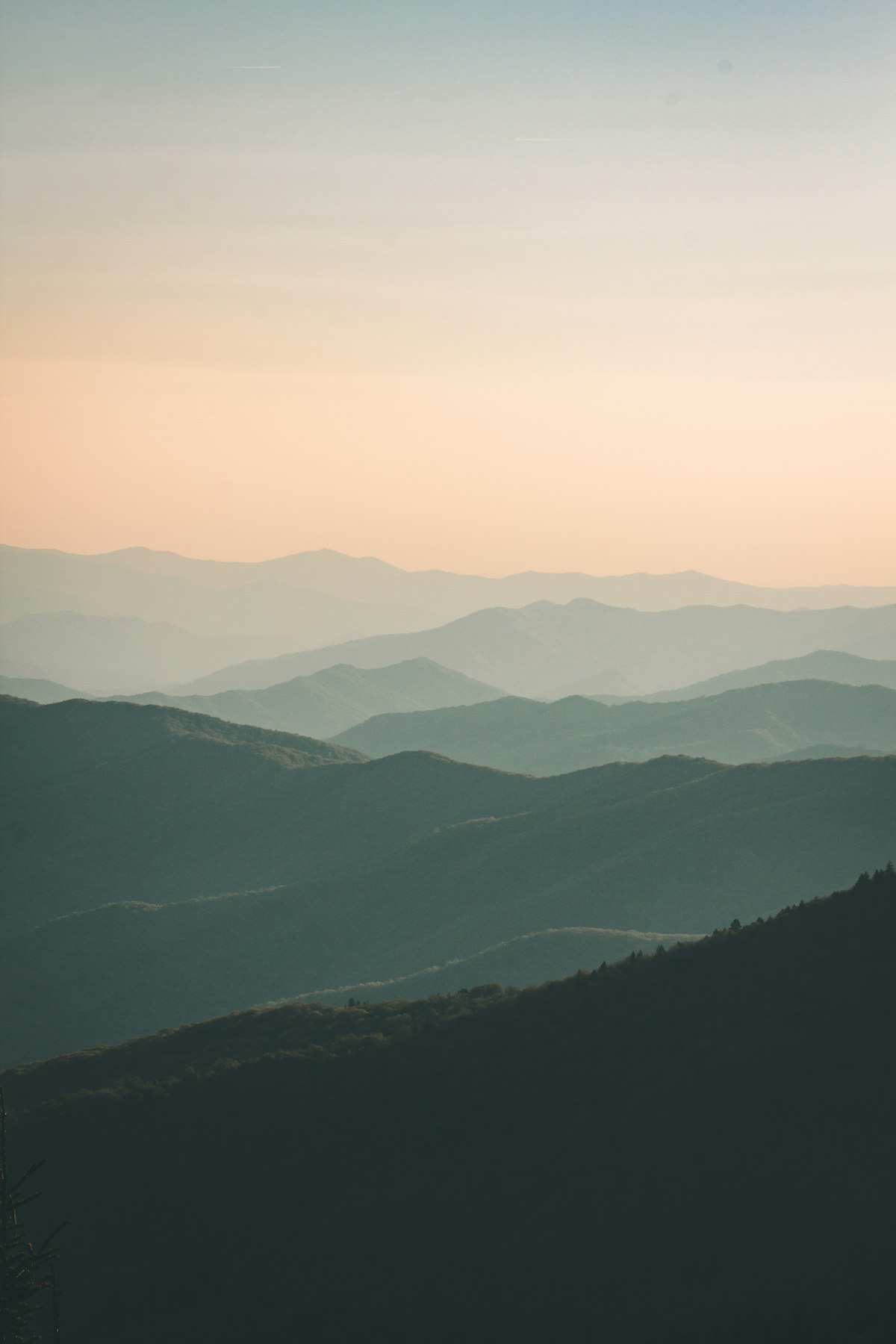
Minimalist landscape photography is the art of saying more with less. While traditional landscapes aim to capture the grandeur of a scene with as much detail as possible, minimalist landscapes reduce the scene to its essential elements — often just two or three visual components in a field of empty space.
The Philosophy of Less
Minimalism in photography isn’t about finding empty scenes. It’s about making compositional choices that eliminate everything non-essential. A single tree on a foggy hillside. A lone rock in calm water. A horizon line dividing two tones. These images work because every element present serves a purpose, and nothing competes for attention.
The challenge is editorial. Your eye naturally wants to include more — that interesting cloud formation, that colorful bush, that distant mountain range. Minimalism requires you to deliberately exclude elements that would be welcome in traditional compositions.
Finding Minimalist Scenes
Weather Is Your Ally
Fog, mist, snow, and overcast skies are minimalist tools. They naturally eliminate visual clutter by hiding distant details and reducing the scene to nearby subjects against a featureless backdrop.
Fog hides backgrounds and isolates foreground elements. A line of trees disappearing into fog is inherently minimalist — the fog does the editing for you.
Snow simplifies ground planes into white negative space. A dark fence line against fresh snow is a ready-made minimalist composition.
Overcast skies provide a blank canvas above the horizon. A smooth, textureless sky paired with a simple foreground element creates an immediate minimalist frame.
Water Simplification
Long exposures turn moving water into smooth, featureless surfaces. A 30-second exposure transforms a choppy ocean into a sheet of silk. Combined with a simple subject — a pier, a rock, a wooden post — the smooth water becomes perfect negative space.
Use a 6-stop or 10-stop neutral density filter to achieve multi-second exposures in daylight. A 10-stop ND at f/11 on a sunny day gives you roughly 30-second exposures.
Desert and Plains
Flat landscapes with minimal vegetation are natural minimalist environments. Sand dunes, salt flats, snow fields, and agricultural plains provide clean backgrounds with strong geometric shapes (the curve of a dune, the line of a furrow).
Composition Principles
Negative Space
The empty area of your frame is not wasted space — it’s an active compositional element. Negative space creates breathing room, draws attention to the subject, and generates a sense of scale and isolation.
A rule of thumb: in minimalist compositions, the subject should occupy 10-25% of the frame. The remaining 75-90% is negative space. This ratio creates the sense of vastness and solitude that defines minimalist landscape work.
Simplify the Palette
Minimalist images often work in a restricted color palette — two or three colors at most. Monochromatic scenes (fog, snow, overcast) naturally achieve this. For color images, look for scenes where one or two colors dominate, with a single contrasting accent.
Strong Geometric Elements
With fewer elements in the frame, each one carries more visual weight. Look for strong shapes: a perfect circle (lone tree canopy), a clean line (horizon, fence), a triangle (mountain peak), a curve (river bend, dune crest). These geometric anchors give the eye something definitive to land on.
Placement Precision
In a busy landscape, subject placement can be approximate — the surrounding elements provide context regardless. In minimalist compositions, the exact position of your subject within the frame dramatically affects the image’s feel. A centered subject feels stable and formal. A subject at the extreme edge feels precarious and dynamic. Small shifts in framing change the emotional tone entirely.
Technical Considerations
Expose carefully. Large areas of uniform tone (sky, snow, fog) challenge your meter. Spot meter on the subject and use exposure compensation to place the negative space where you want it — bright but not blown for light backgrounds, dark but not crushed for dark ones.
Focus precisely. With one subject in a sea of empty space, focus errors are immediately obvious. Use single-point autofocus locked on the subject, or switch to manual focus with live view magnification.
Sensor cleanliness matters. Dust spots that hide in detailed images become glaringly obvious against smooth skies and water. Clean your sensor before a minimalist shoot.
Post-Processing Minimalist Images
Less is more in processing, too. Heavy processing contradicts the simplicity that defines the genre.
Fine-tune tone. Adjust exposure and contrast to set the mood. Bright, airy processing for serene images. Dark, contrasty processing for dramatic ones.
Simplify further in post. Clone out small distracting elements — a distant bird, a power line, a bush at the frame edge. If it doesn’t serve the composition, remove it.
Consider black and white. Minimalist compositions translate beautifully to monochrome because the emphasis is already on form and tone rather than color.