Reading the Sky: Mastering Weather Photography in the Field
I’ve spent countless hours standing in rain, wind, and fog waiting for light that most photographers would abandon their positions to escape. Weather photography isn’t about enduring discomfort—it’s about understanding that dramatic atmospheric conditions create the most compelling landscape images. Over years in the field, I’ve learned that the real skill lies not in owning specialized gear, but in reading conditions and positioning yourself for the decisive moment.
The Anticipation Game
The first lesson weather photography teaches you is patience paired with constant observation. I always arrive at a location at least an hour before I expect interesting light to develop. This isn’t wasted time—it’s reconnaissance.
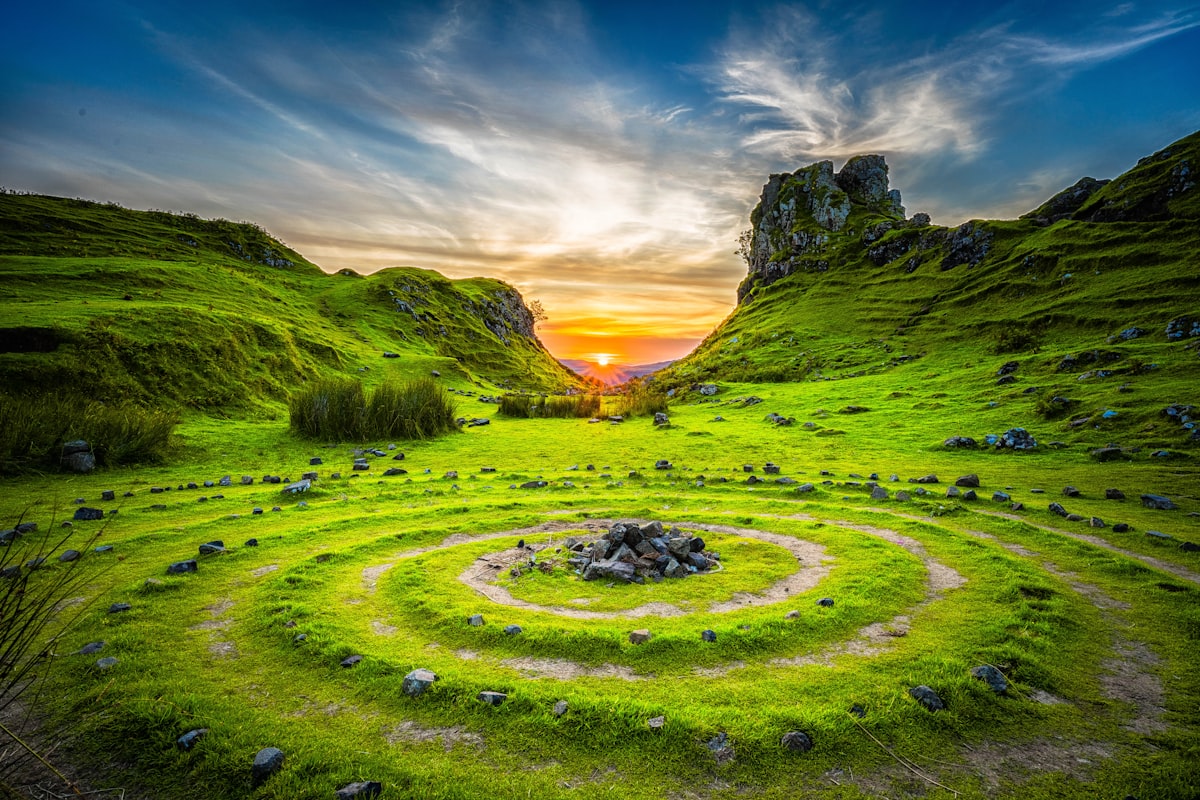
Watch the clouds. Seriously. Study how they move, where gaps appear, and how light interacts with different cloud layers. On a recent shoot in the Scottish Highlands, I noticed towering cumulus clouds forming over a ridge. Rather than chase them, I positioned myself lower, knowing the afternoon sun would backlight them within forty minutes. When that light arrived, the clouds glowed like molten copper.
Clouds move with purpose. Wind patterns, temperature gradients, and topography all influence their behavior. The more you observe, the better you predict where dramatic light will appear next.
Camera Settings for Changing Light
Weather creates notoriously inconsistent lighting. I’ve learned to work with exposure compensation rather than fighting it.
When storm clouds dominate the frame, I typically underexpose by one-third to two-thirds of a stop. This preserves detail in bright skies and prevents that washed-out appearance that happens when your camera’s meter gets confused by large dark areas. If the foreground is significantly darker than the sky, I’ll shoot in aperture priority mode (f/8 to f/11 for landscape depth) and adjust compensation as conditions shift.
For moving weather—rain, mist, or wind-driven clouds—I use a faster shutter speed than typical landscape work. 1/250th of a second minimum helps freeze atmospheric movement and prevents motion blur from wind-induced camera shake. When using filters in windy conditions, secure them carefully; I’ve learned this the hard way.
The Practical Reality of Wet Weather
Here’s what the guides don’t emphasize: weatherproof gear makes the difference between collecting images and collecting frustration.
I keep my camera in a weatherproof bag until the exact moment I’m ready to shoot. When transitioning between locations in rain or mist, I slip the camera into a compact rain sleeve rather than my full pack. More importantly, I carry microfiber cloths—multiple ones. Lens droplets distort light in unpredictable ways. I wipe my lens between every few frames during rain.
A polarizing filter becomes essential in weather photography. It cuts glare from wet surfaces and deepens skies, making clouds more dramatic. In overcast conditions, it reduces the flat, washed-out appearance that diffuse light naturally creates.
Reading the Moment
The most challenging aspect isn’t technical—it’s knowing when conditions are about to peak versus when they’re already fading.
I watch for three things: the angle of light relative to cloud formations, the color temperature shifting in the sky, and the behavior of the wind. When I see light beginning to rake across a storm system, when the sky takes on that greenish-gold hue before sunset, and when wind patterns suggest clouds will break momentarily—those are my cues to start actively shooting.
Weather photography rewards those willing to sit with uncertainty. You’ll waste afternoons waiting for conditions that never materialize. But when you’re present for that moment when light transforms ordinary landscape into something transcendent, you’ll understand why we stand in the rain.