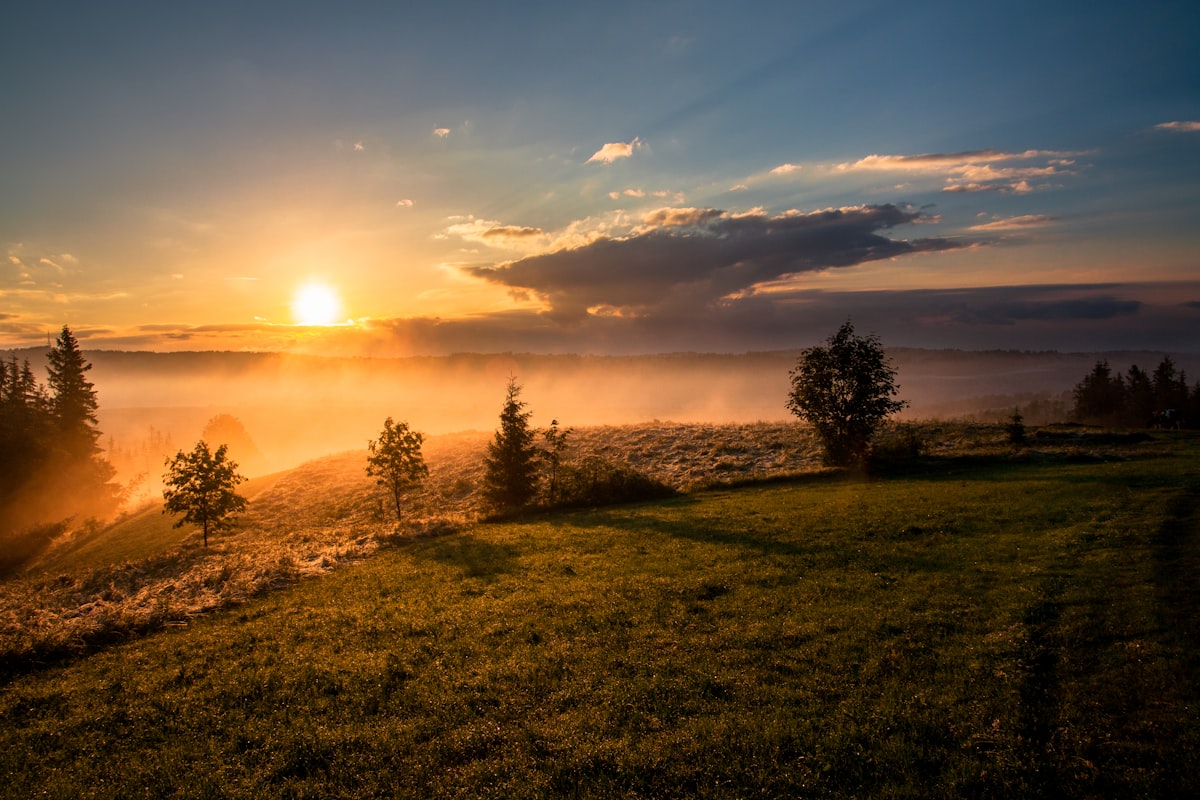
The Moment Before Magic
I’ve spent enough mornings standing alone in meadows and enough evenings perched on cliffsides to know that golden hour isn’t really about the clock—it’s about presence. The golden hour arrives when the sun sits low on the horizon, roughly one hour after sunrise or before sunset. But knowing this intellectually and feeling it in the field are two different things entirely.
Last spring, I was photographing in the Scottish Highlands when I nearly packed up too early. The light was pleasant enough at 4 PM, but I stayed. Twenty minutes later, the entire landscape transformed. The bracken that had looked dull green suddenly glowed amber. The distant hills shifted from purple-grey to burnt orange. What changed wasn’t the landscape—it was the angle of light, the wavelengths reaching my camera sensor at a shallow angle through more atmosphere.
This is what you’re hunting for: that precise window when warm-colored light rakes across your subject at a low angle, creating dimension, texture, and depth that harsh midday sun simply cannot deliver.
Timing Isn’t Everything—But Planning Is
I used to rely entirely on sunrise and sunset times from my phone. Now I’m more strategic. Download an app like PhotoPills or the Photographer’s Ephemeris. These tools show you exactly where the sun will be positioned relative to your location, allowing you to scout beforehand and place yourself for optimal composition.
Here’s what I do: I arrive 20 minutes before the “official” golden hour begins. This gives me time to settle into the landscape, frame my shot, and adjust my position as the light evolves. Golden hour isn’t a static moment—it’s a progression. The first five minutes of light feel different from the last. Experiment with different positions within those 40-60 minutes.
Camera Settings for Golden Hour
When the light is warm and directional, I typically shoot with these parameters:
Aperture: f/5.6 to f/8 gives me enough depth of field to keep foreground and background sharp without needing excessive ISO.
Shutter speed: Start at 1/125th of a second and adjust based on how the meter reads. Golden hour light is deceptive—it looks bright to our eyes but may actually require faster shutter speeds than you’d expect, especially if there’s cloud cover.
ISO: I keep this as low as possible, usually 100-400 on full-frame. The warm light is forgiving, so you don’t need to push sensitivity unless you’re working with darker foregrounds or dense forests.
White balance: This is where many photographers stumble. Resist the urge to cool down golden hour light with a kelvin value below 5500K. Let the warmth live. I typically shoot in daylight mode (5500K) or even slightly warmer to preserve the inherent magic.
The Foreground Secret
Countless photographers nail the distant view during golden hour but waste the opportunity because their foreground is dark and featureless. The key is positioning: place yourself so that golden light illuminates something in the near ground. A stone, moss, wildflowers, a fallen log—anything that catches that low, warm light becomes a bridge between viewer and landscape.
Pay attention to backlighting too. When the sun is near the horizon behind your subject, it creates luminous edges on foliage and water that register as pure magic in photographs.
The Waiting Game
Golden hour rewards patience more than any other type of light. I’ve learned to sit, breathe, and simply observe how the light moves across the land. Sometimes the best shot comes in the final minutes when the sun dips so low that everything glows from within. Other times, a passing cloud scatters the light into something even more beautiful than direct rays.
The landscape doesn’t change. The light does. That’s the entire art form.