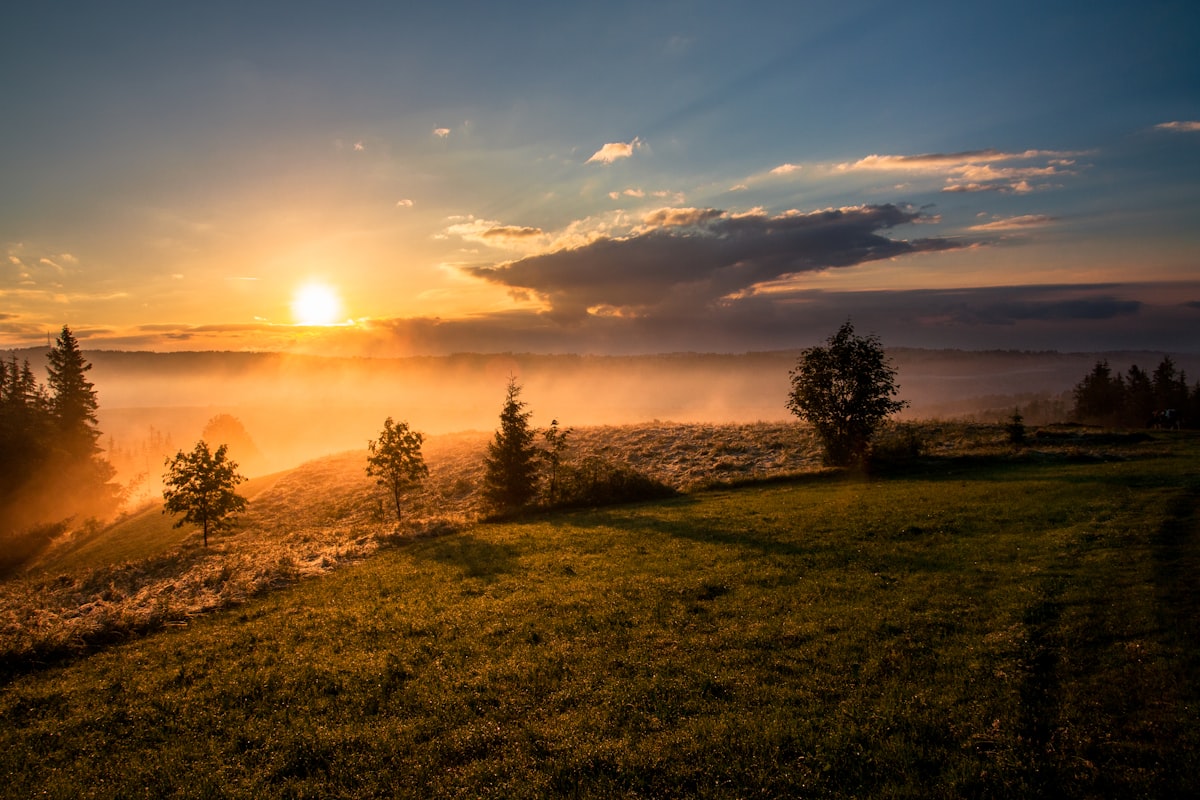
The Art of Landscape Composition: Finding Order in Wild Places
I’ve stood in countless remote locations—high mountain passes at dawn, coastal cliffs battered by wind, quiet valleys shrouded in mist—and learned that having access to beautiful scenery is only half the battle. The real challenge lies in translating what moves you emotionally into a photograph that moves others the same way.
Composition is the language that makes this translation possible. It’s not about rigid rules; it’s about understanding how to arrange visual elements so that viewers’ eyes follow your intended path through the frame.
The Foreground Anchors Everything
When I’m scouting a location, I spend more time studying the ground beneath my feet than I do gazing at distant mountains. The foreground is where your composition begins.
A strong foreground gives depth to your image and creates a visual entry point. Instead of photographing a lake with just water and sky, step down and compose with wildflowers or rocks in the immediate foreground. Use an aperture of f/8 to f/16 to maintain sharp focus from foreground to background. Position your main subject—whether it’s a tree, rock formation, or distant peak—so it relates meaningfully to these foreground elements. They should feel connected, not competing for attention.
I often get close to foreground details, sometimes uncomfortably close, kneeling or lying down to find lines that lead viewers into the scene rather than stop them at the frame’s edge.
Lines Guide the Viewer’s Journey
Every landscape contains natural lines: rivers, ridgelines, fence lines, shadows cast by passing clouds. Your job is to recognize and choreograph them.
Look for lines that originate in the foreground and extend toward your main subject. A hiking trail disappearing into a forest, a stream winding through a valley, even the edge where a meadow meets distant tree line—these become visual pathways. Position your camera so these lines form diagonals or curves rather than straight horizontals. A diagonal line creates movement and energy; a simple horizontal line can feel static.
I often use a 16-35mm wide-angle lens and position myself so I can capture a foreground line leading directly into the scene’s key element. This single compositional move transforms a snapshot into a journey.
The Rule of Thirds Remains Essential
Though often dismissed as cliché, the rule of thirds works because it reflects how human eyes naturally explore a frame. Imagine dividing your viewfinder into nine equal rectangles using two horizontal and two vertical lines. Position your main subject along these lines, not dead-center.
For a dramatic sky, place the horizon on the lower third line. For a striking tree or rock formation, position it on a vertical intersection. This creates tension and visual interest that centered compositions lack.
What I’ve discovered in the field is that this “rule” feels less like a restriction and more like a starting point. Once you understand why it works, you can break it intentionally when the scene demands it.
Simplification Creates Impact
The landscapes that stop me in my tracks often aren’t the most complex ones. They’re the ones where extraneous elements have been removed.
When composing, actively ask: What can I leave out? A cluttered foreground might need a different angle. A busy sky might call for exposing for the landscape and letting the sky burn white. Use your camera position—moving left, right, higher, lower—to eliminate distracting elements that dilute your message.
I often spend fifteen minutes at a single location moving only a few feet in different directions, watching how the composition changes. Sometimes the best frame exists just three steps away from where you first stopped.
Trust Your Instincts in the Moment
Composition guides are valuable, but they’re tools, not truths. When I’m in the field and feel drawn to a particular arrangement—even if it breaks conventions—I trust that instinct and capture it.
The most memorable photographs I’ve made came from understanding the fundamentals deeply enough to know when to follow them and when to set them aside.
Comments
Leave a Comment