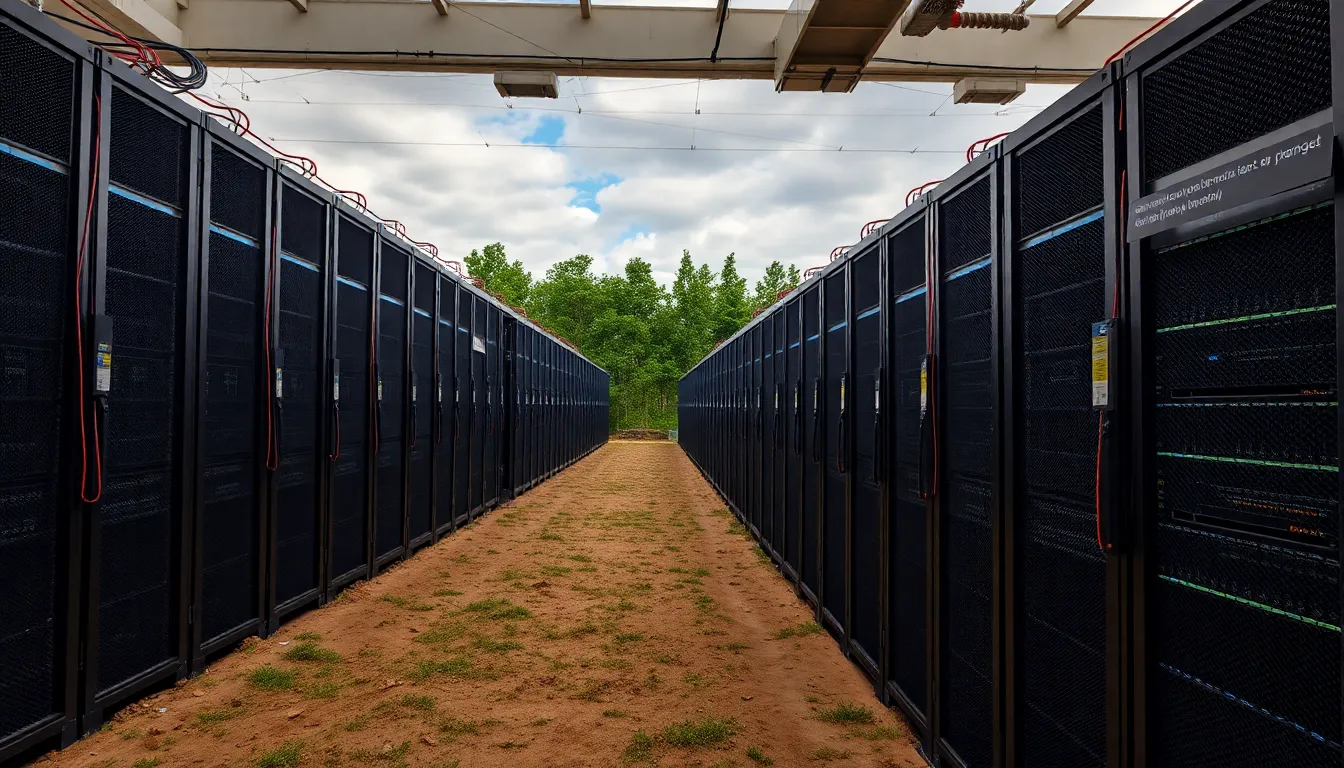
When Progress Comes with a Price Tag
Standing in the field with my camera, I often find myself thinking about the world beyond the viewfinder—the systems that power our ability to share these images instantly across the globe. Recently, I’ve been grappling with news that brings those two worlds into sharp focus: Meta is investing heavily in a colossal data center project in Louisiana, one that will require seven newly constructed natural gas power plants to keep it running.
The scale is staggering. We’re talking about a $27 billion facility that will demand an unprecedented amount of energy infrastructure. To feed this digital beast, the company is funding the construction of gas plants capable of generating 5,200 megawatts of power, along with 240 miles of transmission lines and distributed battery storage across three locations.
The Photographer’s Dilemma
As someone who spends countless hours documenting natural landscapes, I find myself wrestling with the implications. These transmission lines will cut across terrain. New industrial facilities will alter skylines that have remained relatively unchanged for generations. The infrastructure required to connect these installations will inevitably fragment ecosystems and viewsheds that photographers and nature lovers have cherished for decades.
Yet I also recognize that this is our modern reality. The images I capture and share instantly with thousands of people rely on the very infrastructure that requires this kind of massive investment. Every photograph uploaded, every portfolio viewed, every assignment coordinated remotely—it all depends on data centers humming along in places far from where we point our cameras.
Looking Forward
What strikes me most is the need for thoughtful dialogue about these trade-offs. As landscape photographers, we have a responsibility to document not just the pristine wilderness we love, but also the evolving relationship between human development and nature. Perhaps our role is to bear witness to both the beauty we’re trying to preserve and the complexities of the world that makes modern communication possible.
The Louisiana project raises genuine questions worth exploring: Can we design industrial infrastructure more thoughtfully? Can new developments minimize their visual and environmental footprint? How do we balance connectivity with conservation?
These aren’t easy questions, and they deserve more than headlines. They deserve the kind of careful observation and nuanced perspective that landscape photographers naturally bring to our work.
Comments
Leave a Comment