There’s a particular kind of photographer’s despair that sets in around day three of a blown trip. You’ve planned the locations, studied the tides, driven hours in the dark, and the landscape just refuses to cooperate. I’ve lived that despair more times than I can count. I once sat in dense fog for two full days at a location six hours from home, watched the light never once break through, and drove back with a single frame worth keeping. That frame became my best-selling print. The lesson I took from it was not that fog is lucky. It was that the locations that punish you most are storing up something extraordinary for a later visit, and the photographers who keep returning eventually collect.
That’s exactly what Thomas Heaton documents in this recent Iceland update. Watch the full tutorial on YouTube – it’s a short video, more of a field dispatch than a full walkthrough, but the craft insight packed into it is worth pulling apart. Heaton has made Iceland a recurring chapter of his photography life, and historically it has handed him some of the worst light and weather he’s encountered anywhere. What he describes in this video is the inverse of that pattern: a four-to-five day window that delivered exceptional light, cloud formations he had never witnessed in his career, intimate detail compositions alongside genuinely epic wide scenes, and enough location variety to keep any serious shooter busy for weeks of editing. For those of us who treat difficult destinations as ongoing relationships rather than single visits, what he’s describing is the whole argument for coming back.
Step 1: Reframe Difficult Destinations as Long-Term Commitments
 Heaton speaking directly to camera, explaining Iceland weather history
The first thing Heaton establishes is context. Iceland, in his experience, almost always produces bad weather. He goes in expecting the worst because the worst is statistically likely. This is not pessimism. It’s the same calibration I teach in my workshops: when you remove the expectation of a perfect shoot, you stop making panicked decisions in the field. You don’t rush a composition because you’re terrified the light is slipping. You read the conditions you have and work them fully. The photographers who get hurt by difficult locations are usually the ones treating each trip as their only shot. Heaton’s willingness to return to Iceland repeatedly is the entire reason this breakthrough trip carries such weight.
Step 2: Build a Multi-Location Itinerary with Flexibility Built In
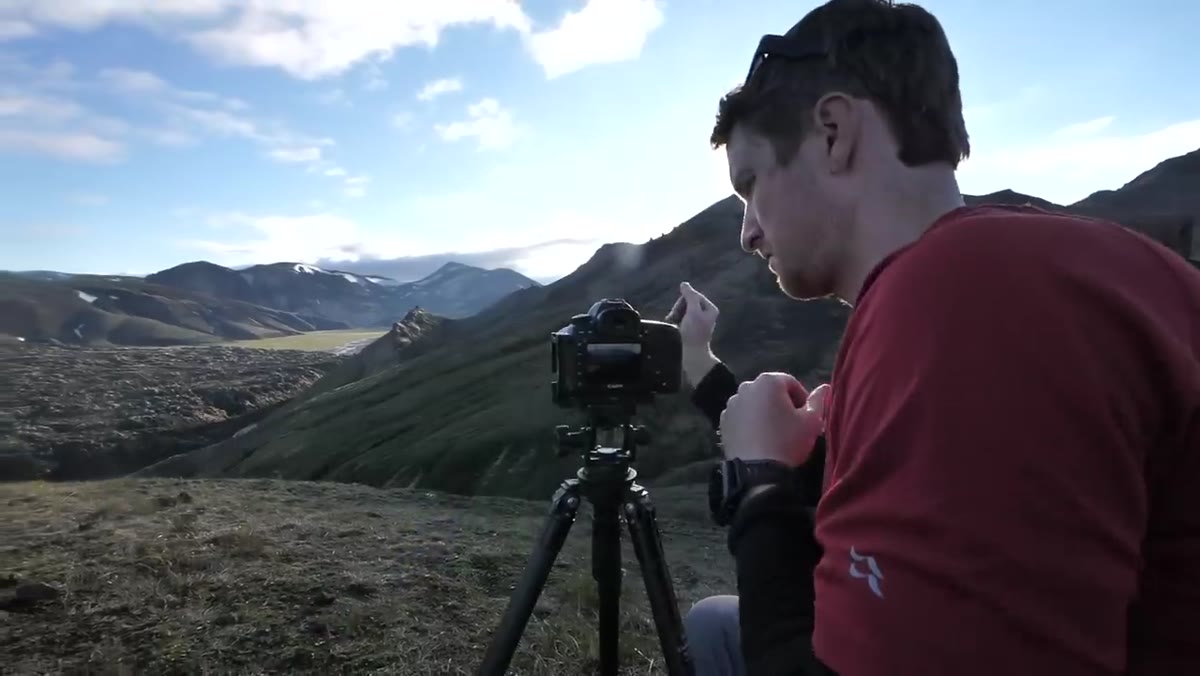 Heaton describing the range of locations covered during the trip
One of the most practical things Heaton mentions is the sheer number of locations they moved through during those four or five days. That kind of coverage doesn’t happen without a pre-scouted list that accounts for different weather scenarios. I build my field trips the same way: a primary location tied to a specific light condition, two or three alternates for when that condition doesn’t materialize, and at least one intimate detail location that works in almost any weather. Iceland rewards this structure because the landscape shifts scale so dramatically. You can be shooting vast glacial outwash plains at sunrise and crouching over volcanic basalt textures an hour later. Having the alternate list ready means you’re never standing in a parking lot deciding where to go while the light changes overhead.
Step 3: Treat Injury and Discomfort as Part of the Field Record
 Heaton referencing accidents and injuries that occurred during the trip
Heaton flags something most photographers quietly edit out of their public work: the trip included what he calls horrific accidents and injuries. His videographer Greg, who handles a lot of the behind-the-scenes filming, sustained an injury significant enough that Heaton plans to include footage of it with a warning for sensitive viewers. I mention this not for the drama but because it reflects something true about serious field work. Remote landscape photography in conditions like Iceland’s involves real physical exposure. You’re moving on wet rock, in unpredictable weather, before civil twilight when your depth perception is compromised. I wear approach shoes with serious grip, carry a headlamp even on afternoon shoots, and I never move across unfamiliar terrain faster than I can safely stop. The best composition in the world doesn’t survive a twisted ankle a mile from the trailhead.
Step 4: Document Cloud Behavior as a Standalone Subject
 Heaton previewing the cloud formations captured during the Iceland trip
The specific teaser Heaton offers for his upcoming full episodes centers on cloud formations he describes as unlike anything he’s witnessed. This is worth pausing on. Cloud behavior in Iceland is shaped by the interaction of cold North Atlantic air masses with the geothermal warmth coming off the landscape, and it produces formations that feel almost artificially dramatic. The practical lesson here is to watch clouds as an active compositional element, not a background. I shoot cloud sequences when the formations are interesting even if the foreground isn’t cooperating yet. Those sequences often tell me how fast the light is moving and where the breaks are going to open. A polarizer isn’t always the right tool in these conditions. Sometimes you want the full luminosity of a cloud stack to remain unpolarized so it holds its natural gradation.
Step 5: Release the Work Slowly and Deliberately
 Heaton explaining his editing and upload plan across the coming weeks
Heaton closes by explaining that this was a teaser video – the full footage from the trip will roll out across multiple uploads over several weeks. He’s still editing. This matters as a workflow point. After a dense shooting trip, the temptation is to process everything quickly while the excitement is fresh. What actually produces better work is waiting. Distance from the shoot lets you see which frames are genuinely strong and which ones you’re attached to because of the memory of being there. I keep a 48-hour rule for my best candidates: if a frame still stops me cold two days after I first opened it in Lightroom, it goes into the final edit. If I have to convince myself it’s good, it usually isn’t.
What I’d Add from Twenty Years in the Field
The piece Heaton doesn’t address in this short update, because it’s coming in later episodes, is what actually happened photographically in those exceptional conditions. Cloud formations at that scale create a specific exposure challenge: the sky is often three to four stops brighter than the foreground, and graduated ND filters sometimes produce a visible line across irregular terrain like lava fields or glacier edges. I’ve moved almost entirely to exposure blending for these situations, shooting two to three frames at different exposures without moving the tripod, then blending manually in post rather than relying on automatic HDR merge. The control you get is worth the extra time, and the results hold up at large print sizes in a way that single-exposure pulls from shadows rarely do.
The core thing Heaton is demonstrating, even in a video this short, is that patience at a landscape level, returning to a difficult location across years, is the same skill as patience at a compositional level, waiting for the frame to come together. Both require you to believe the place has something to give you before it has shown you any evidence. My mentor told me once that the mountain doesn’t care about your schedule. Iceland clearly operates on the same terms.
Watch the full tutorial on YouTube and follow Heaton’s channel over the coming weeks as the full Iceland footage releases. The cloud sequences alone sound worth clearing time for.
Comments (1)
Applied this to my portfolio shots and the improvement is noticeable.
Leave a Comment