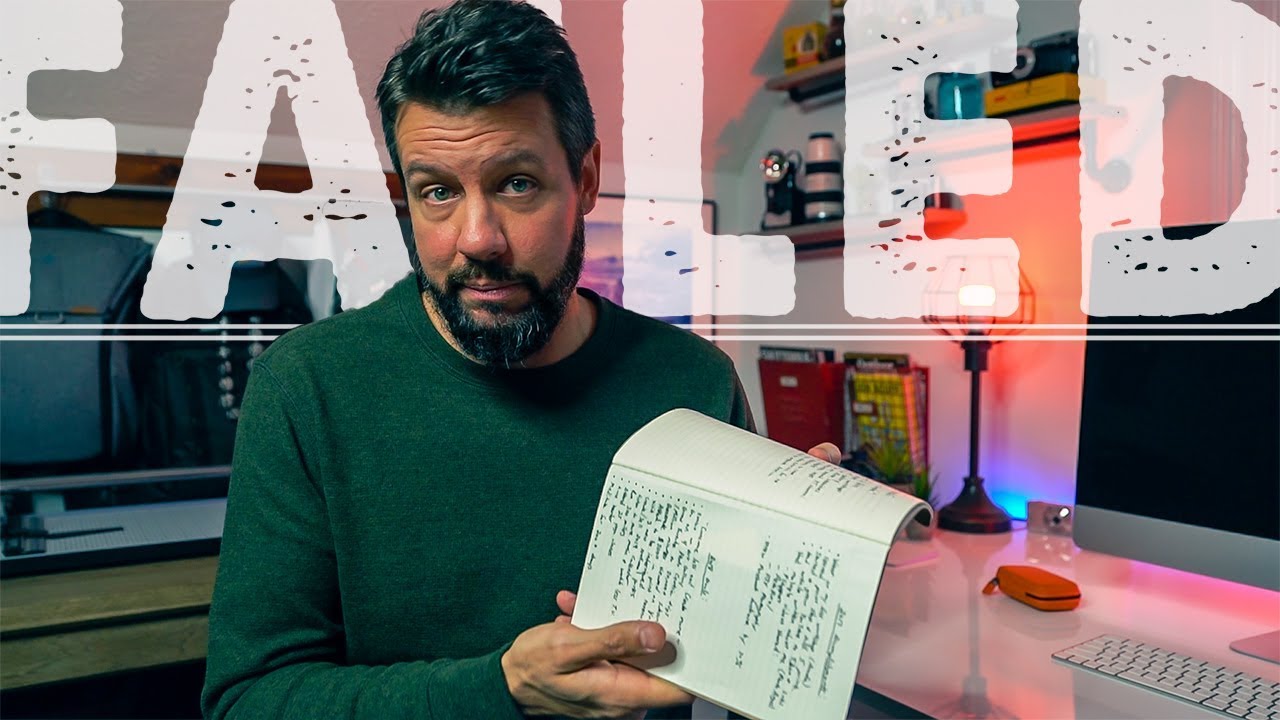
Every January I go through my gear room with the same ruthless energy I bring to a pre-dawn shoot. Filters get sorted. Hard drives get labeled. Bags get emptied and repacked. After twenty years of doing this work full-time, I’ve learned that physical clutter and creative clutter travel together. When one piles up, so does the other. That’s why I was genuinely stopped in my tracks watching Mark Denney’s honest, reflective breakdown of his 2018 photography goals — a year he navigated almost entirely without knowing what he had originally set out to do. Watch the full tutorial on YouTube
What makes this tutorial worth your time isn’t a new technique for capturing silky water or reading golden hour light. It’s something harder to come by: a working photographer pulling back the curtain on the real architecture of a creative year. How you set goals, how you track them, and what you do when life quietly buries them under a pile of daily distraction. I’ve driven six hours to a location, sat in fog for two days, and come home with a single usable frame. That trip looked like a failure on paper. It became my best-selling print. The gap between “how it looked” and “what it was” is exactly what Mark digs into here.
Step 1: Build an Annual Reset Ritual
 caption: Mark describing his year-end purge and decluttering process
Mark starts with a habit he calls the year-end purge, a deliberate inventory of everything he owns, photography-related or not. Anything unused gets donated. The act of clearing physical space isn’t just tidiness for its own sake. It’s a signal to your creative brain that the slate is clean and the next chapter is open. For photographers specifically, this means going through gear with honest eyes: what did you actually use, what sat in a bag, and what are you holding onto out of guilt rather than need. Do this before you write a single goal for the coming year.
The practical move here is simple. Set aside two to three hours in late December or early January. Touch every piece of gear. If you haven’t used something in twelve months, ask whether that’s because conditions weren’t right or because you’ve genuinely moved past it. I keep a running note on my phone throughout the year when something frustrates me or feels redundant. By the time January comes, the purge list mostly writes itself.
Step 2: Write Goals Down in a Physical Book, Not an App
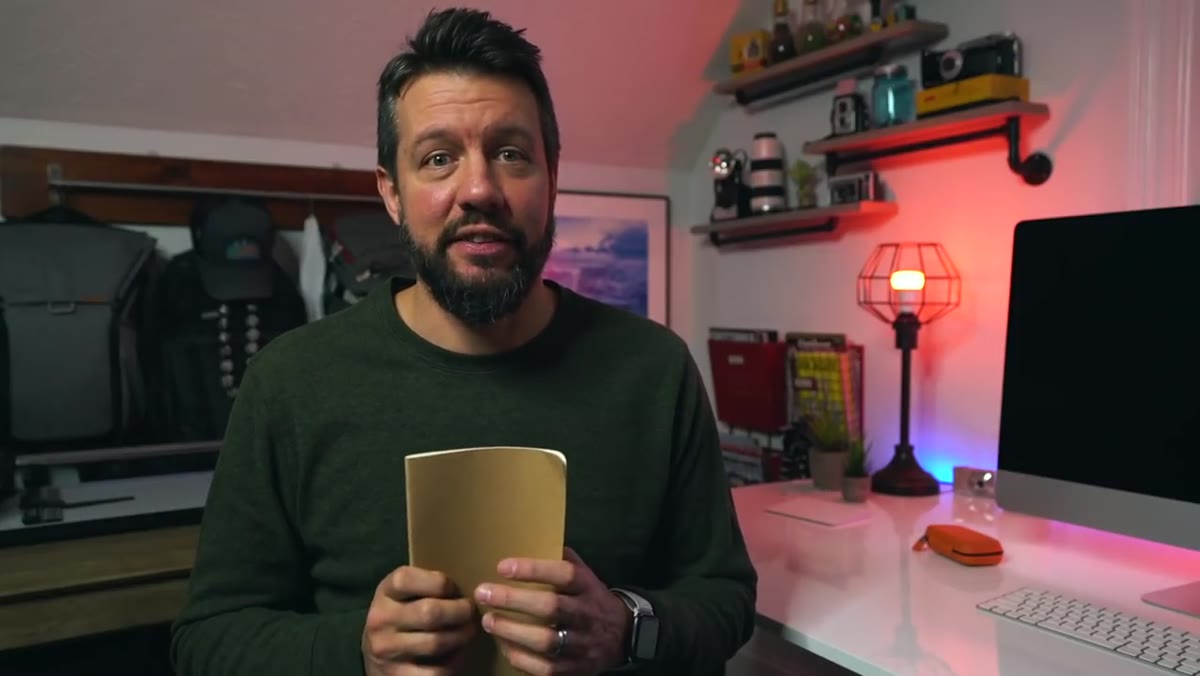 caption: Mark holding up his recovered goal-setting notebook
Mark uses a small physical notebook, one per year, to capture photography locations he wants to visit, shot ideas, YouTube concepts, and his core goals for the year. The act of writing by hand slows you down in a useful way. It forces a kind of commitment that typing into an app doesn’t. When Mark discovered he had accidentally started writing in the back of his notebook and then forgot he’d done it, the whole book went missing from his mental map for the entire year.
The lesson here isn’t about organization tips. It’s about how easy it is to drift when your intentions aren’t visible. I shoot film occasionally for a similar reason: when you only have thirty-six frames on a roll, you stop and think before you press the shutter. A physical notebook works the same way. Buy one you like enough to actually open. Label the cover. Keep it somewhere you’ll see it, not buried in a desk drawer.
Step 3: Establish a Single Overarching Theme
 caption: Mark explaining his 2018 theme, “consume less, create more”
Before listing specific goals, Mark sets one overarching theme for the year. For 2018, that theme was “consume less, create more.” The idea was to pull back from constantly watching other photographers’ work, absorbing tutorials, and scrolling through social feeds, and redirect that time and energy toward his own image-making. This isn’t about ignoring the work of others entirely. It’s about recognizing when consumption is feeding your growth versus when it’s feeding comparison.
This theme functions like a compass. When a decision comes up during the year, whether to spend a Saturday afternoon watching YouTube or driving out to scout a new ridgeline, the theme gives you a tiebreaker. I’ve started doing this myself and the shift is noticeable. My mentor once told me “the mountain doesn’t care about your schedule,” meaning conditions will humble you no matter how prepared you are. But the one thing you can control is whether you showed up.
Step 4: Review Goals Against Actual Output Before Writing New Ones
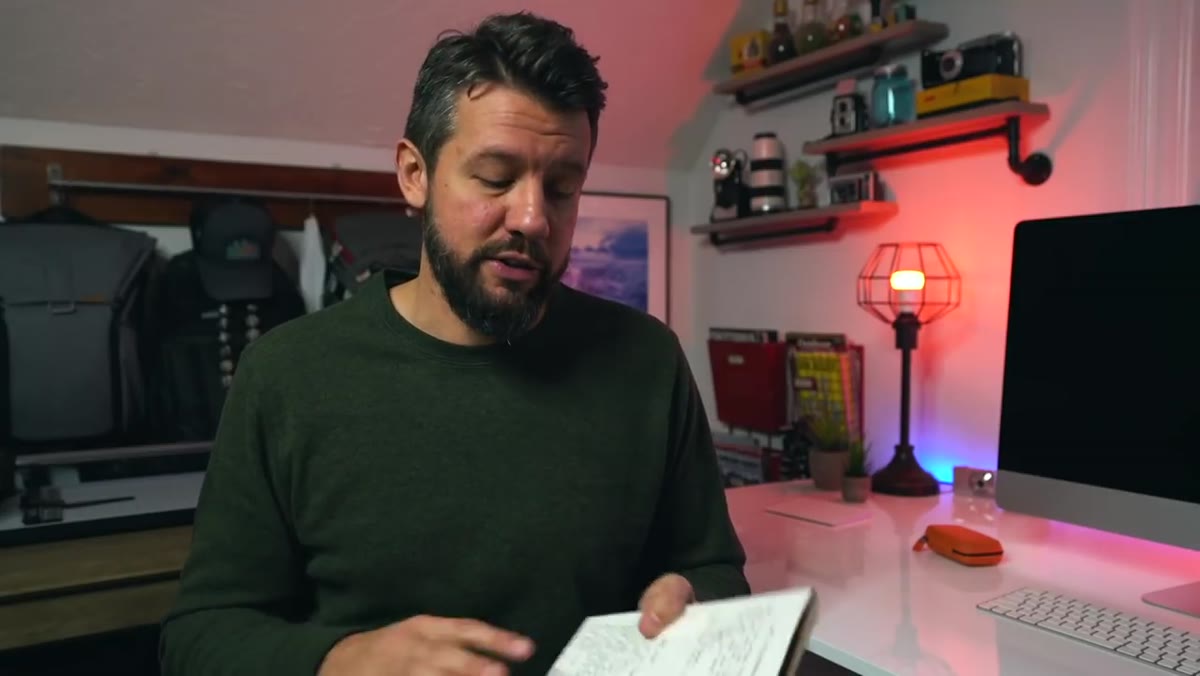 caption: Mark reviewing recovered 2018 goals at year end
Because Mark only rediscovered his goals during his end-of-year purge, he had the unusual experience of evaluating his actual output against his intentions simultaneously, without having consulted those goals at any point during the year. This created an unusually honest audit. He could see clearly where his natural creative momentum aligned with what he’d planned, and where it diverged.
The takeaway for the rest of us is to build this review into the process deliberately. Before you write next year’s goals, spend real time with this year’s output. Pull up your Lightroom catalog. Look at how many shoots you went on, which locations you returned to, which projects you abandoned. Ask what you made that you’re proud of and what you kept postponing. This review is not about judgment. It’s about honest data that makes next year’s goals more grounded.
Step 5: Separate Goals by Category
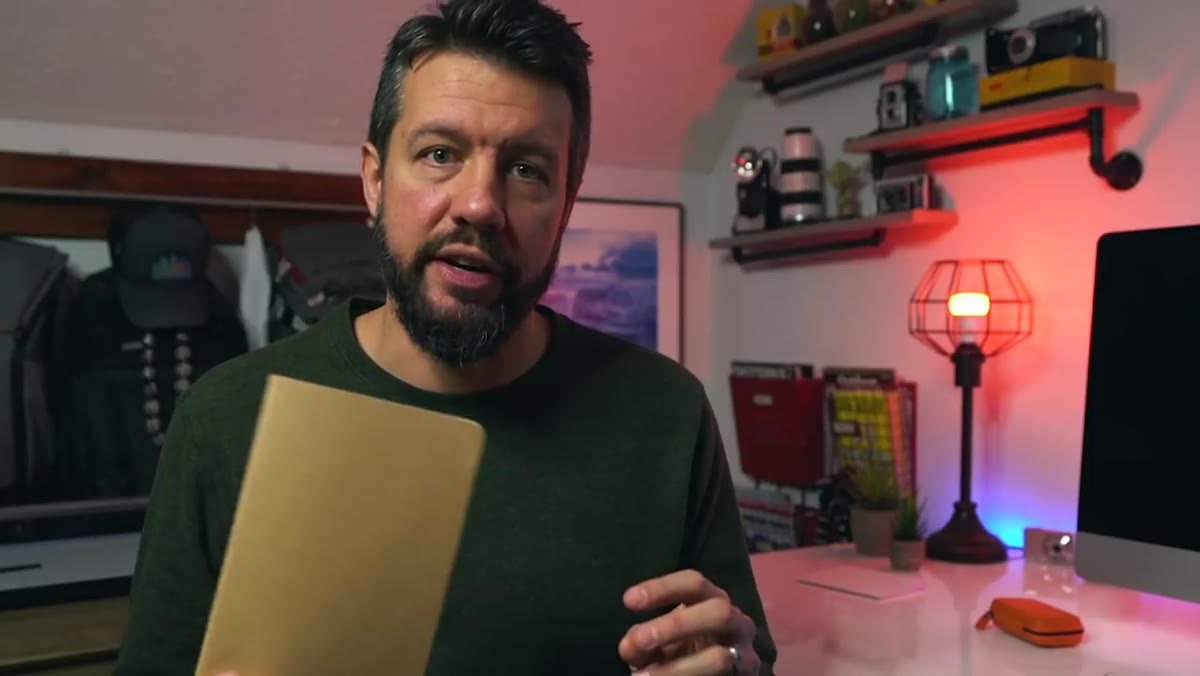 caption: Mark describing distinct goal categories in his notebook
Mark organizes his goals into distinct categories rather than dumping them into a single list. For a landscape photographer, useful categories might include technical skills, locations and scouting, creative projects, business or print sales, and education, whether teaching or learning. Breaking goals into buckets prevents the common problem of writing a list that’s really just one type of ambition repeated five times in different words.
Each category should have one to three specific goals, not wishes. “Get better at composition” is not a goal. “Study and apply the golden ratio in ten different shooting scenarios before June” is a goal. The specificity is what gives you something to actually evaluate at year’s end.
From My Own Experience: The Invisible Goal Problem
Here’s the thing nobody talks about when it comes to annual goal-setting for photographers. Some of your most important creative progress will happen in response to failure, not because of a goal you wrote down in January. I didn’t plan to become obsessed with fog. It was forced on me by bad weather on a trip I nearly cancelled. Now fog conditions are the first thing I look for when I’m planning a shoot.
The annual review process Mark describes is valuable precisely because it catches these unplanned developments. When you review your year honestly, you’ll often find that your best growth happened sideways, in a direction you weren’t tracking. Write that down. Let it inform what you intentionally pursue next year.
The single most important thing I took from this tutorial is deceptively simple: a goal you can’t find is a goal you can’t keep. Write it down, put it somewhere visible, and review it before it disappears into the bottom of a notebook. The structure Mark uses, overarching theme, categorized specific goals, honest year-end audit, is worth stealing wholesale.
Watch the full tutorial on YouTube and spend some time with your own notebook before the new year runs away from you.
Comments
Leave a Comment