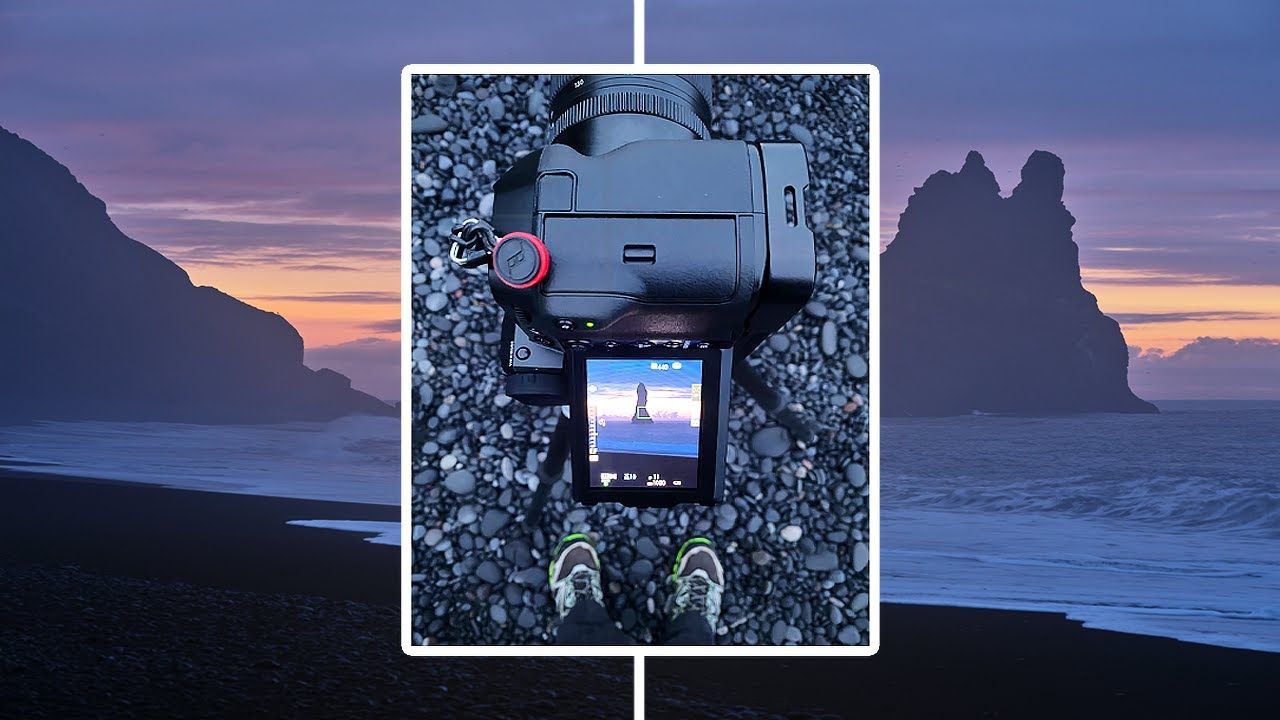
There’s a question I get more than almost any other, usually from photographers who are somewhere in that uncomfortable middle ground: good enough to know their work has value, but not yet sure how to translate that into anything resembling income. For years I didn’t talk much about the business side of what I do, mostly because when I started, I figured things out slowly and quietly on my own. I spent a long time shooting for the love of it before I asked whether the work could also pay. That was probably a mistake, not because money should be the point, but because testing your work against an audience, even a small local one, teaches you something about yourself that no amount of solo field time can.
That’s why I was genuinely glad to come across this Mark Denney tutorial on the exact topic. Mark is a full-time landscape photographer out of North Carolina who spent seventeen years in the corporate world before making the leap. In the video, he shares the first three concrete things he did to generate income locally, without plane tickets, hotel rooms, or any special travel budget. What I appreciate about his approach is the framing: he’s not chasing passive income fantasies. He’s talking about testing whether people care about what you make. Watch the full tutorial on YouTube to hear him walk through it in his own words. Below, I’ll break down the steps and add what I’ve learned from two decades of doing this work professionally.
Step 1: Host a Free Local Photography Walk
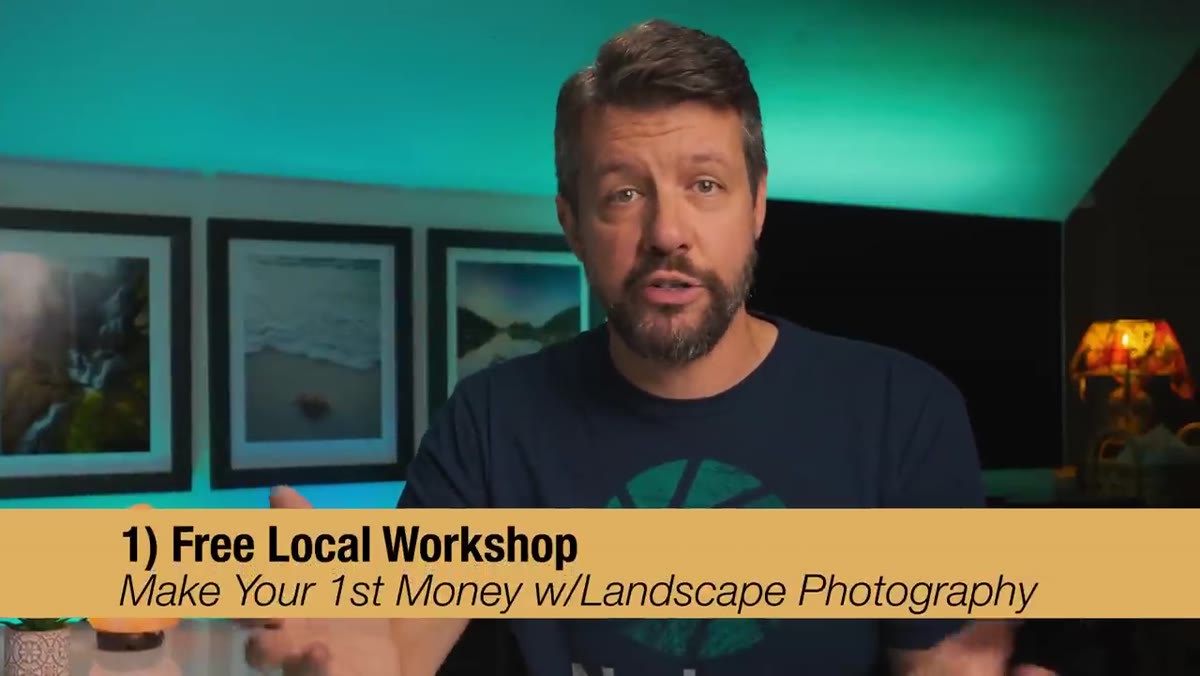 Mark announcing a free outdoor workshop at a local lake
Start simple. Pick a location you already know well, a reservoir, a local park, a stretch of river trail, and announce on social media or in local community groups that you’ll be shooting there on Saturday morning and anyone is welcome to join. Frame it as a free learning session, not a formal class. No curriculum, no pressure. Just you, the light, and whoever shows up.
Mark announcing a free outdoor workshop at a local lake
Start simple. Pick a location you already know well, a reservoir, a local park, a stretch of river trail, and announce on social media or in local community groups that you’ll be shooting there on Saturday morning and anyone is welcome to join. Frame it as a free learning session, not a formal class. No curriculum, no pressure. Just you, the light, and whoever shows up.
Mark is honest about the beginning: the first time he did this, no one came. But he kept going, and within a few sessions, he had eight to twelve people regularly joining him. Many of them, without being asked, left him tips for his time. The income was modest, but that wasn’t really the point. The point was discovering that people wanted to learn from him, and that knowledge changed what he believed was possible. I’ve run paid workshops for years now, and I can trace that confidence back to something similar, a few informal early morning shoots in the Columbia River Gorge where I realized I actually enjoyed teaching as much as I enjoyed shooting.
Step 2: Build Your Free Session into a Habit, Not a One-Off
 Mark describing repeat attendance growing over time
The mistake most photographers make is treating the first free session as a test with a pass-or-fail result. One session proves almost nothing. What you’re building is visibility and trust, and both take repetition. Mark made this a recurring thing, returning to local spots on weekends, and each time the turnout grew a little.
Mark describing repeat attendance growing over time
The mistake most photographers make is treating the first free session as a test with a pass-or-fail result. One session proves almost nothing. What you’re building is visibility and trust, and both take repetition. Mark made this a recurring thing, returning to local spots on weekends, and each time the turnout grew a little.
Pick a schedule you can actually keep. Once or twice a month is more sustainable than every week, especially if you’re also holding a day job. Vary the conditions when you can. The same lake looks entirely different at blue hour in fog versus golden hour in October. Showing participants how light and weather transform a familiar place is one of the most useful things you can teach, and it’s something only someone with real field time can demonstrate.
Step 3: Photograph Your Local Area with Intention
 Mark explaining printing and framing local images for sale
This is the step Mark calls the most important one, the thing he comes back to most often when he coaches photographers privately. Go out and photograph the places close to home with the same seriousness you’d bring to a destination shoot. Blue hour, golden hour, storm light, heavy fog. The conditions that make a scene extraordinary are usually fleeting, and chasing them in your own backyard costs nothing but time.
Mark explaining printing and framing local images for sale
This is the step Mark calls the most important one, the thing he comes back to most often when he coaches photographers privately. Go out and photograph the places close to home with the same seriousness you’d bring to a destination shoot. Blue hour, golden hour, storm light, heavy fog. The conditions that make a scene extraordinary are usually fleeting, and chasing them in your own backyard costs nothing but time.
The key word is “intention.” Don’t just document the place. Look for the frame that surprises even you. I’ve found that familiarity with a location is actually an advantage here. I know when the light hits a certain ridge near Bend in a way that lasts about four minutes. That knowledge only comes from showing up repeatedly, which you can only afford to do when you’re not flying somewhere to get the shot.
Step 4: Print, Frame, and Physically Deliver Your Work
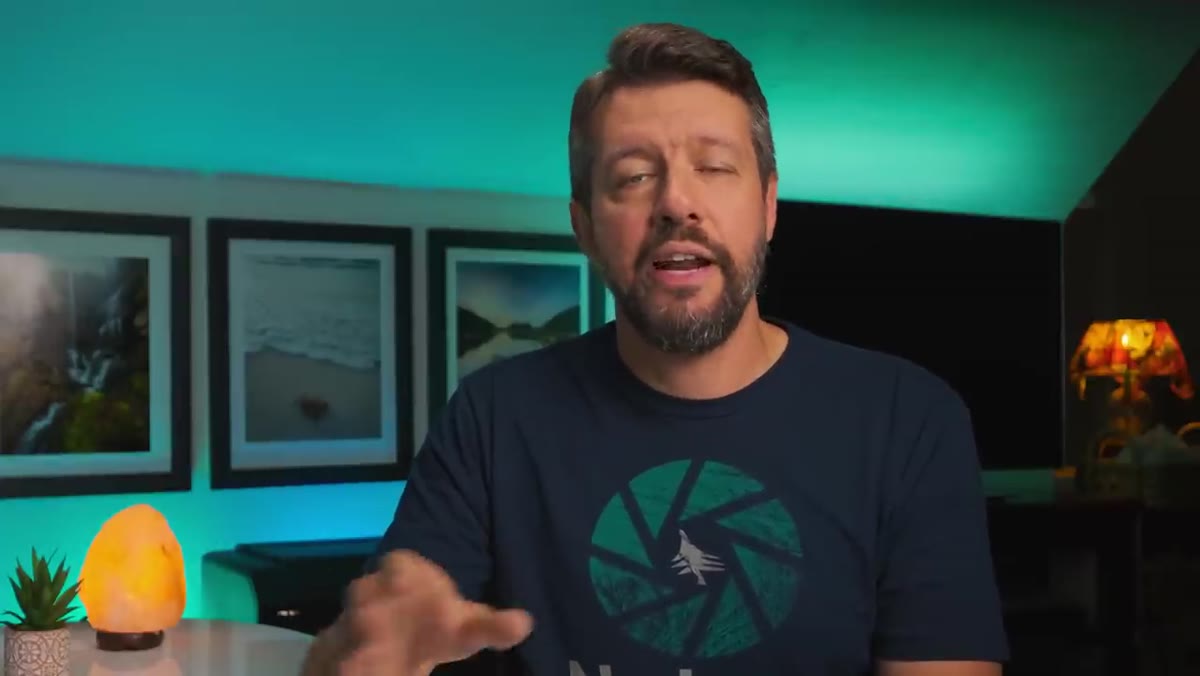 Mark describing walking into local businesses with a framed print
Once you have images you’re proud of, print them. Print them at home if your setup supports it, or use a local print lab. Then go one step further: buy a simple frame and turn the print into a finished piece. Hold something in your hands that looks like art on a wall, because that’s exactly what you’re going to pitch.
Mark describing walking into local businesses with a framed print
Once you have images you’re proud of, print them. Print them at home if your setup supports it, or use a local print lab. Then go one step further: buy a simple frame and turn the print into a finished piece. Hold something in your hands that looks like art on a wall, because that’s exactly what you’re going to pitch.
Mark’s approach here is direct and personal. He took finished, framed prints and walked into local hotels, coffee shops, and restaurants in person. Not emails, not Instagram DMs. He showed up. This matters more than most photographers realize. A business owner who can hold a piece and see how it might look on their wall is a completely different conversation than someone clicking through a portfolio link. Start with three or four of your strongest local images, framed consistently, and identify five businesses in your area whose aesthetic matches your work. Then go introduce yourself.
What I’d Add: The Confidence Feedback Loop
Mark mentions something in passing that I think deserves more attention. He says earning money wasn’t the real goal early on. It was the confidence. That framing rings completely true from my own experience. The first time a coffee shop in Bend put one of my prints on their wall, the amount they paid me was almost irrelevant. What mattered was that a stranger looked at something I made in the dark at four in the morning and decided it was worth putting in a place where other people would see it every day.
That feedback loop, making work, offering it, watching how people respond, is the actual curriculum of turning photography into a career. No online course replaces it. The local work, the small sessions, the framed print carried into a hotel lobby: these are the reps that build the muscle. I still occasionally shoot film for the same reason. It forces deliberateness, forces you to ask whether this frame is actually worth it before you press the shutter. Starting local and starting free operates on the same principle. It strips away the excuses and asks a clean question: does what you make matter to anyone else?
The single most actionable thing Mark says in this video is also the simplest. You do not need to travel. You do not need new gear. You need to go somewhere you already know, make something honest, and put it in front of people. The income follows the confidence, and the confidence follows the work.
Watch the full tutorial on YouTube to hear Mark walk through each of these steps with his own story behind them. It’s one of the more grounded conversations I’ve seen on the subject.
Comments
Leave a Comment