Twenty years of pre-dawn alarms, cold rivers, and dust-covered boots have taught me that the questions beginners ask out loud are rarely the ones actually slowing them down. The real friction lives somewhere quieter: the edit you’ve reopened fourteen times, the portfolio that looks fine but feels flat, the nagging sense that you’re putting in the hours without moving forward. I recognized all of it immediately when I sat down with this Mark Denney tutorial, Watch the full tutorial on YouTube, where he works through the most common questions he gets from photographers trying to find their footing. What struck me wasn’t the questions themselves but how directly he answered them. No hedging. No “it depends.” Just honest, experience-backed thinking from someone who clearly spends as much time teaching this craft as practicing it.
What follows is my own walkthrough of the ground he covers, filtered through two decades of making most of these mistakes myself. If you’ve ever felt like you’re doing everything right and still not getting anywhere, this one is worth your time.
Step 1: Recognize the Real Reason You’re Stuck
 Photographer listing the quiet reasons people plateau in landscape work
Before diagnosing any specific problem, Denney asks you to step back and question your assumptions about what’s holding you back. Most photographers point to location or gear. Neither is usually the culprit. The real blockers tend to be softer: an editing workflow that never quite resolves, a body of work that lacks cohesion, or a creative plateau that feels mysterious because nothing obvious is broken. Naming the actual problem is the first real step, and it requires more honesty than most of us bring to a gear review.
I spent my first few years convinced I needed better glass. What I actually needed was to slow down and study why my compositions weren’t working. The gear was fine. My eye wasn’t trained yet.
Step 2: Stop Over-Editing Your Images
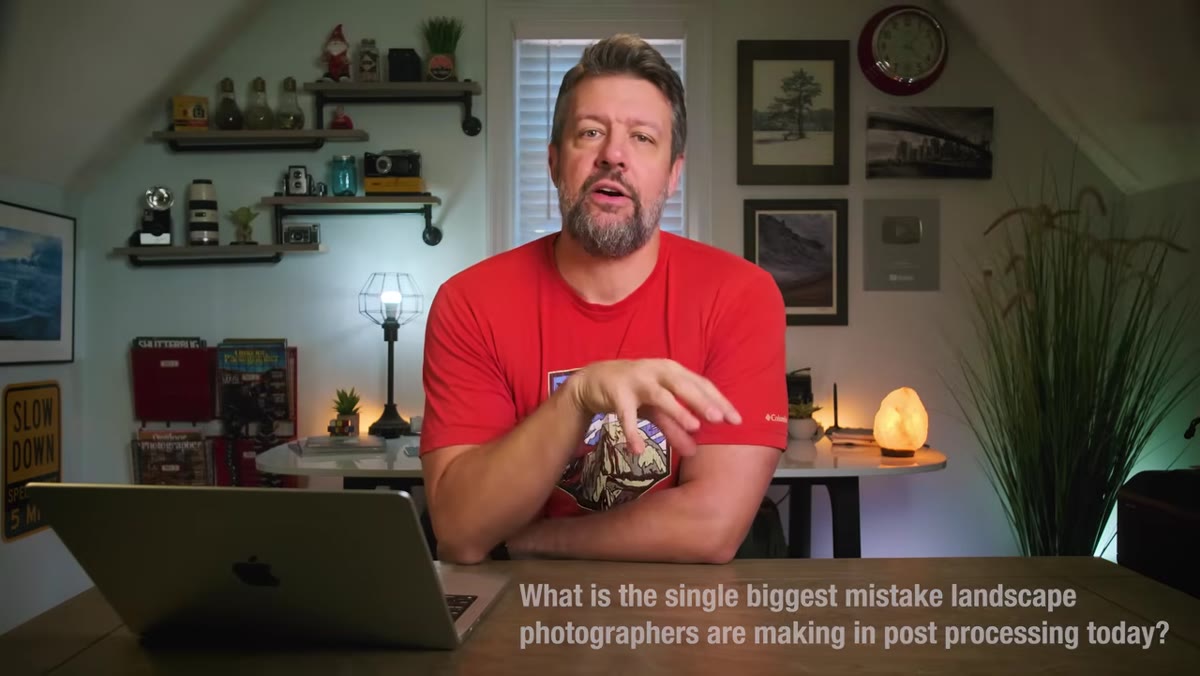 Discussion of post-processing tools and the temptation to over-process
Denney’s answer to the biggest post-processing mistake photographers make is blunt: over-editing. With the number of tools available across platforms today, it’s easier than ever to push sliders past the point where the image still looks like a photograph and into territory that just looks processed. He sees it consistently in his one-on-one sessions and his annual editing retreats. The abundance of options is exactly what makes restraint hard.
The fix isn’t to use fewer tools. It’s to edit toward a feeling rather than a look. When I finish a file, I zoom out, reduce the opacity on my adjustment layers by about 20 percent, and ask whether the image still reads as natural. Nine times out of ten, that reduction is the right call. The light in the original capture usually has more information in it than we give it credit for. Our job is to surface it, not manufacture it.
Step 3: Study Composition Before Anything Else
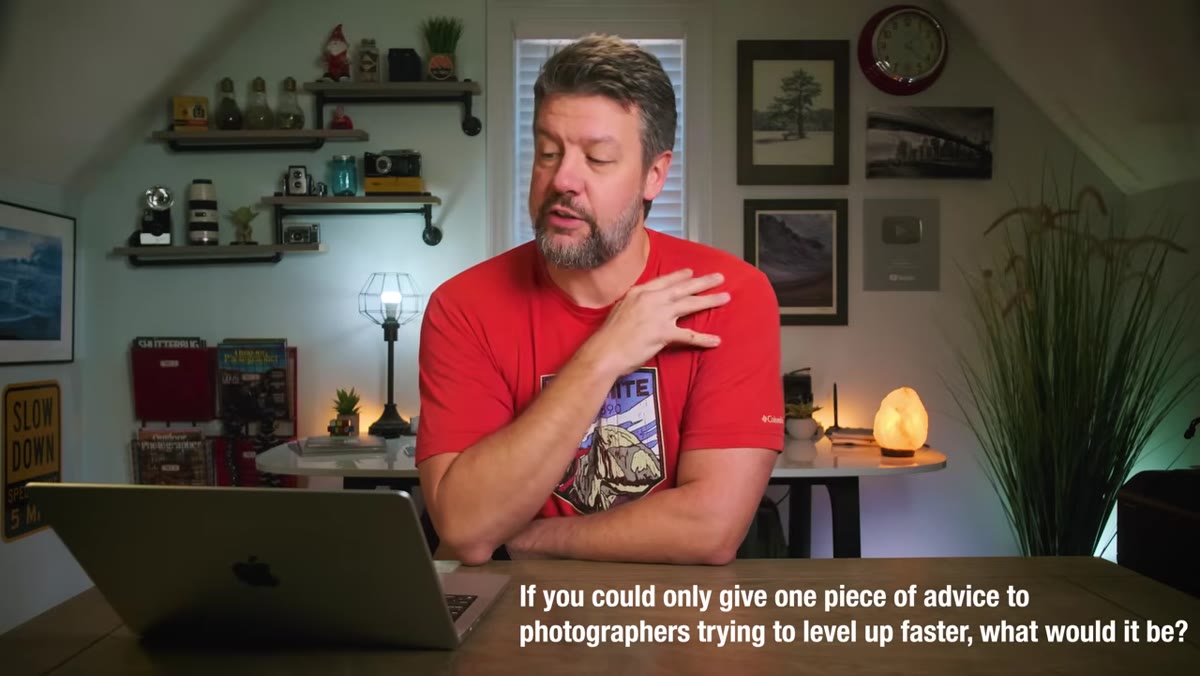 Advice on the single best way to improve photography faster
If you want to improve faster, Denney argues that composition is the highest-leverage place to put your attention. Not new glass, not a software upgrade, not a different camera body. Composition. And the resources are everywhere: YouTube channels, photography books, podcasts, magazine archives. All of it free or close to it.
This matches exactly what I wish someone had told me when I was starting out. I could have saved years. Composition is the one skill that transfers across every piece of gear you’ll ever own. Learning leading lines, negative space, layering foreground and background elements, understanding where the horizon sits and why it matters. These are the decisions that separate a snapshot from a photograph, and you can study them on your lunch break without touching a camera.
Step 4: Understand the Real Split Between Field and Darkroom Work
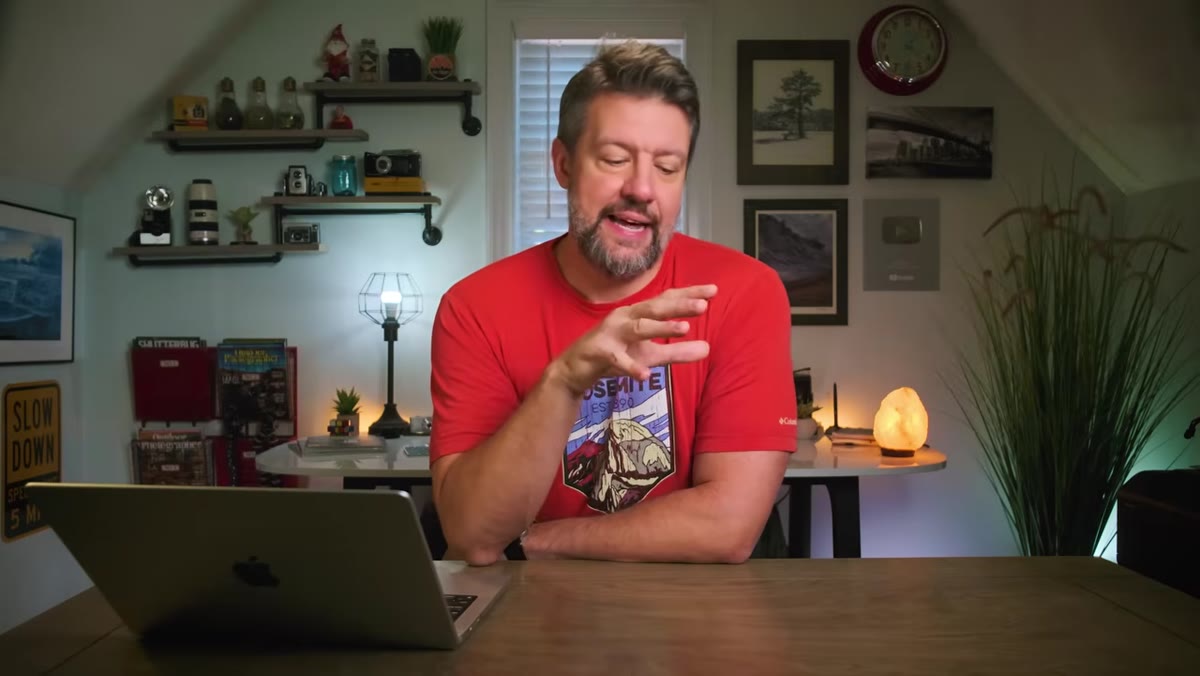 Breakdown of how much of the image is made in the field versus in post
Denney puts it at roughly 60 percent captured in the field, 40 percent finished in post. I’d land in the same neighborhood, maybe 65/35 on a great light day. The point isn’t the exact numbers. It’s that neither half can carry the other. He makes the case clearly: you can shoot a technically brilliant scene and ruin it in post, or you can shoot something modest and elevate it substantially with skilled processing, particularly through careful dodging and burning to shape where the eye travels.
What this means practically is that you can’t treat the field and the darkroom as separate hobbies. They’re one continuous process. When I’m standing in a creek at first light, I’m already thinking about where the shadows will need to open up and where the highlights have room to burn down. That mental model starts before I press the shutter.
Step 5: Be Honest About Gear Purchases
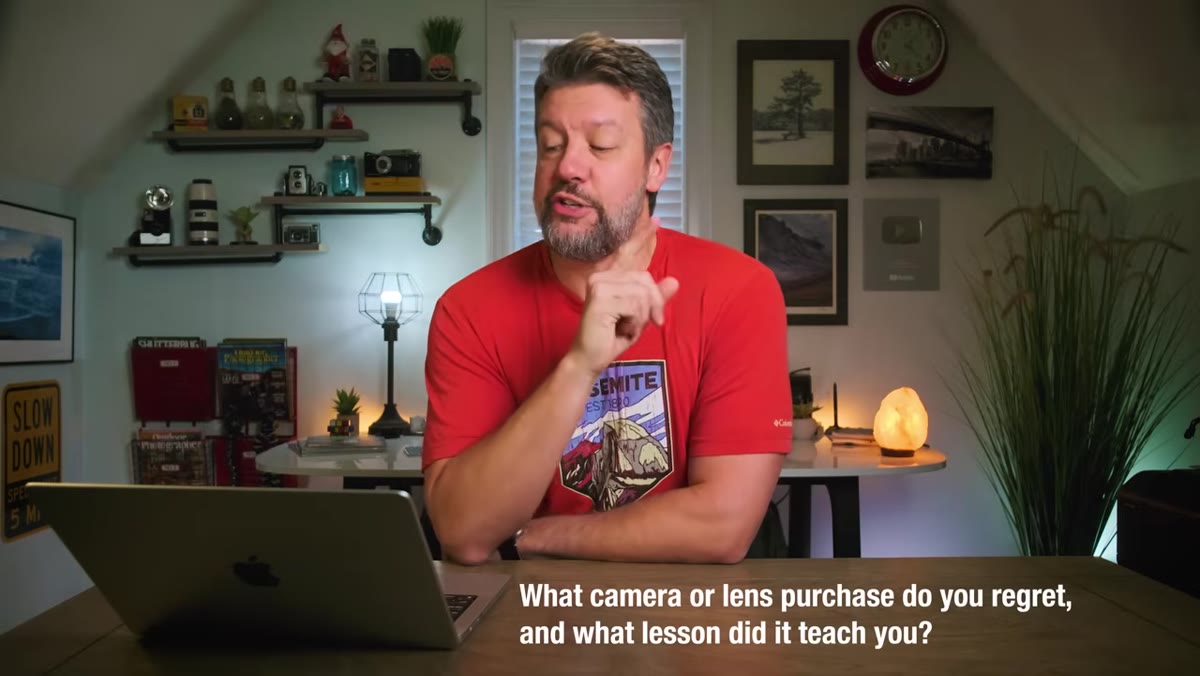 Reflection on buying prime lenses and the lesson learned from that decision
Denney’s gear regret is a good one: he bought prime lenses early on because he heard they were sharper and more affordable. They weren’t a bad choice, but modern zoom lenses have largely closed the sharpness gap, and the compositional flexibility of a zoom - being able to tighten or widen without moving your feet - is genuinely valuable in landscape work, especially when you’re locked onto a composition and the light is moving.
The lesson isn’t “don’t buy primes.” It’s “don’t make gear decisions based on received wisdom without testing it against your actual workflow.” I still shoot film occasionally, and when I do, every frame costs something, so I think harder before I shoot. That discipline carries over. Apply the same thinking to what you buy.
What I’d Add From the Field
After two decades, the throughline I see in everything Denney covers is this: photographers struggle most when they’re reacting instead of deciding. Over-editing is reactive - you keep pushing because you’re not sure when to stop. Weak compositions happen when you set up fast and hope. Gear purchases become regrettable when they’re made in response to doubt rather than need.
The best shift I made was learning to work from intention. Before I open a file, I write one sentence about what the image is supposed to feel like. Before I pack my bag, I decide what focal range I’m actually going to need for where I’m going. Small decisions, made deliberately, compound over time into a practice that actually feels like progress.
The single thing worth carrying out of this tutorial is that the gap between where you are and where you want to be is almost certainly not a gear gap. It’s a decision-making gap. Denney makes that case clearly, practically, and without any fluff.
Watch the full tutorial on YouTube - it runs through additional territory not covered here, and Denney’s direct delivery makes it worth watching start to finish.
Comments (1)
My workflow just got 10x faster. Not even kidding.
Leave a Comment