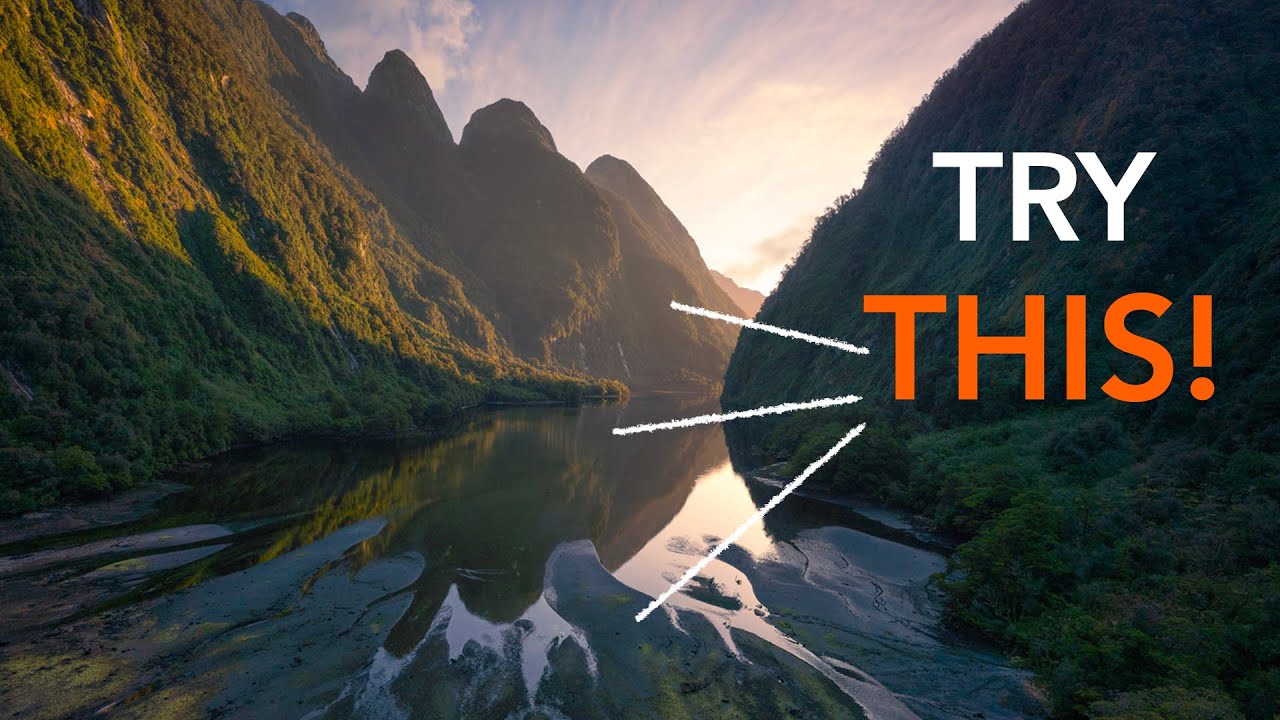
There’s a particular kind of frustration that comes from driving three hours to a location before sunrise, setting up in perfect light, and coming home with a memory card full of photographs that don’t work. The gear was right. The light was right. Something else wasn’t. After two decades of shooting landscapes full-time, I can tell you that “something else” is almost always composition, and it’s the one variable that no amount of gear spending or location scouting can compensate for.
That’s why I kept returning to this William Patino tutorial on landscape composition. Watch the full tutorial on YouTube. Patino distills ideas that took me years of field work to internalize, and he frames them in a way that’s immediately applicable. This isn’t theory for its own sake. These are the actual mental steps a working photographer runs through before the camera ever comes out of the bag.
What follows is my breakdown of the tutorial’s core steps, with some notes from my own practice folded in. If you’re newer to landscape work, treat this as a field checklist. If you’ve been at it a while, some of this might reframe habits you already have but haven’t made fully conscious.
Step 1: Ask Yourself What the Photograph Is Actually About
 Patino explaining the concept of subject before camera comes out
Before you touch the camera, stop and ask yourself one honest question: what is it about this scene that made me want to shoot it in the first place? It sounds obvious, but most photographers skip this step entirely and go straight to framing. The problem with that approach is that you end up with images that feel unfocused, not technically, but emotionally. The viewer’s eye wanders and doesn’t know where to land.
Patino explaining the concept of subject before camera comes out
Before you touch the camera, stop and ask yourself one honest question: what is it about this scene that made me want to shoot it in the first place? It sounds obvious, but most photographers skip this step entirely and go straight to framing. The problem with that approach is that you end up with images that feel unfocused, not technically, but emotionally. The viewer’s eye wanders and doesn’t know where to land.
Landscape scenes are genuinely overwhelming. You’re standing in front of a mountain range at golden hour, there are wildflowers at your feet, a river bending through the middle distance, storm clouds rolling in from the left. All of it is beautiful. None of it is your photograph yet. Your job is to decide, before anything else, what the single main subject is. That’s the resting place for the eye, the thing the viewer should ultimately settle on after the image has drawn them in. Everything else in the frame is in service of getting them there.
Step 2: Build the Composition Outward from the Subject, Not Inward from the Foreground
 Diagram or field view showing subject-to-foreground compositional flow
Most photographers, once they’ve identified their subject, immediately start hunting for foreground interest. That instinct isn’t wrong, but skipping straight to the foreground means you’re ignoring the middle ground entirely. And the middle ground is often where depth actually lives.
Diagram or field view showing subject-to-foreground compositional flow
Most photographers, once they’ve identified their subject, immediately start hunting for foreground interest. That instinct isn’t wrong, but skipping straight to the foreground means you’re ignoring the middle ground entirely. And the middle ground is often where depth actually lives.
Patino’s approach is to start at the subject and work toward the camera. Once you know where you want the viewer’s eye to finish, ask what exists between you and that subject that could add separation, texture, or lead-in. Trees arching overhead, boulders flanking a river bend, a line of reeds, a secondary ridge. These mid-ground elements are what create the sense of genuine three-dimensional space that separates a grand landscape from a postcard snapshot. Only after you’ve considered that zone should you start thinking about what’s happening close to your feet.
Step 3: Deliberately Add Foreground to Create Layered Depth
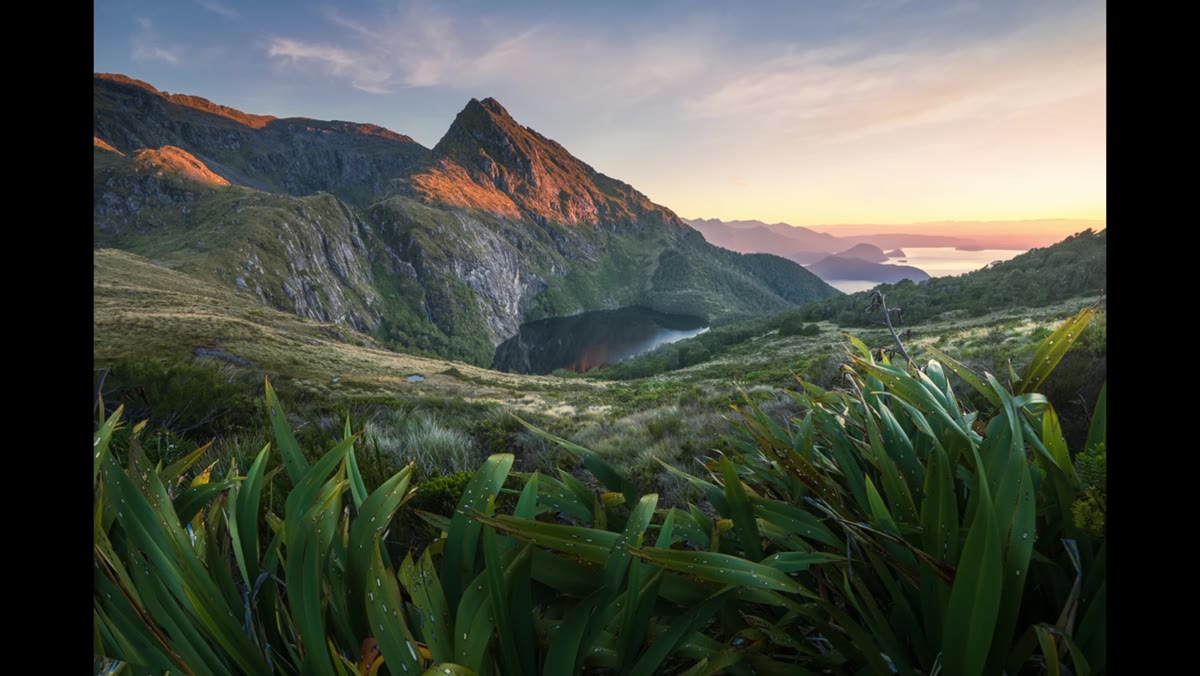 Wide landscape showing foreground, midground, and background layers
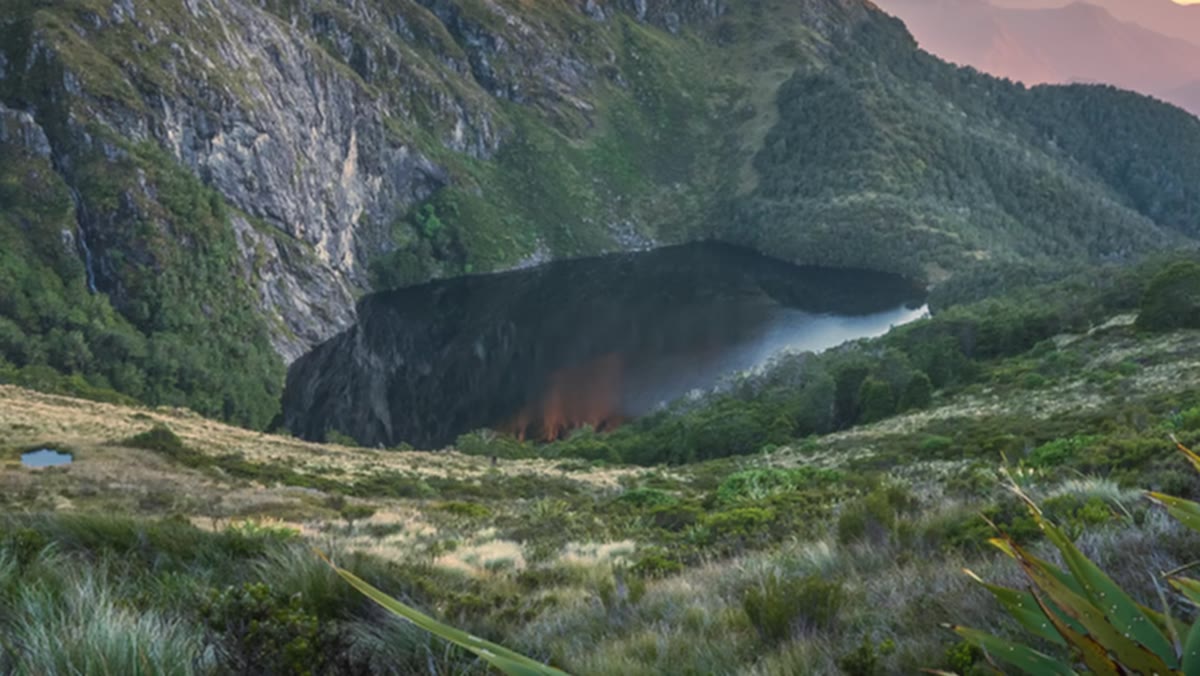
Once the subject and middle ground are accounted for, now the foreground becomes your tool. The goal is to create a composition with distinct layers, something close, something in the middle, something far, so the eye has a journey through the frame rather than just a single point to land on. This is what Patino describes as grand landscape photography, the wide, immersive kind that makes a viewer feel like they could step into the scene.
Wide landscape showing foreground, midground, and background layers
Once the subject and middle ground are accounted for, now the foreground becomes your tool. The goal is to create a composition with distinct layers, something close, something in the middle, something far, so the eye has a journey through the frame rather than just a single point to land on. This is what Patino describes as grand landscape photography, the wide, immersive kind that makes a viewer feel like they could step into the scene.
The foreground element doesn’t need to be dramatic. Wet rocks, a patch of textured grass, a cluster of leaves, flowing water over a flat stone shelf. What matters is that it gives the eye an entry point. Think of the foreground as the handshake that invites the viewer in, and the subject as the conversation they’ve been pulled toward from the moment they looked at the image.
Step 4: Use Physical Position to Frame the Subject Intentionally
 Photographer repositioning to align boulders as natural framing elements
Your camera position is a compositional decision, not just a logistical one. Once you know your subject and have a sense of what’s in the middle and foreground zones, move. Physically walk the scene. Try higher, try lower, try five steps left. Patino emphasizes using elements in the environment itself as natural frames within the frame, boulders on either side of a waterfall, overhanging branches above a mountain ridge, a curve in a river that leads directly to your subject.
Photographer repositioning to align boulders as natural framing elements
Your camera position is a compositional decision, not just a logistical one. Once you know your subject and have a sense of what’s in the middle and foreground zones, move. Physically walk the scene. Try higher, try lower, try five steps left. Patino emphasizes using elements in the environment itself as natural frames within the frame, boulders on either side of a waterfall, overhanging branches above a mountain ridge, a curve in a river that leads directly to your subject.
This is where having a clear subject pays off. If you know exactly what you’re trying to direct the viewer toward, you can evaluate every potential position by asking a single question: does this placement help the eye get to the subject more cleanly, or does it create confusion? Composition isn’t about capturing everything in the scene. It’s about organizing what you include so that the viewer feels guided, not lost.
A Note from Twenty Years of Getting This Wrong
I spent the first several years of my career doing what most people do, arriving at a location, finding the best light, and immediately starting to frame shots based on whatever looked impressive in the viewfinder. Some of those images worked by accident. Most of them had the same problem: no clear subject, no sense of hierarchy, just a collection of beautiful elements competing with each other for attention.
The shift that actually changed my work was learning to slow down before the camera came out. I still shoot film occasionally, partly because the cost-per-frame forces exactly this kind of discipline. When you know each click costs you something, you stop shooting reflexively and start seeing intentionally. My mentor once told me the mountain doesn’t care about your schedule, and he meant it as a lesson in patience, but it applies to composition too. The scene isn’t going to organize itself for you. That’s your job, and it starts before the shutter ever fires.
The single most important idea in this tutorial, and the one I come back to constantly in my own workshops, is that composition is a decision you make before you shoot, not a problem you solve afterward in post. Get clear on your subject first. Build outward from there. Let the foreground invite, the middle ground deepen, and the subject reward.
Watch the full tutorial on YouTube to see Patino walk through these ideas with his own imagery. It’s worth the full run time.
Comments (1)
Just used this on a wedding shoot edit. Client was thrilled.
Leave a Comment