Long Exposure Photography: A Complete Guide to Silky Water and Cloud Trails

Long Exposure Photography: A Complete Guide to Silky Water and Cloud Trails

Long exposure photography transforms moving elements into something the eye cannot ordinarily see. Flowing water turns to silk. Clouds streak across the frame in dramatic arcs. The technique is straightforward once you understand the variables involved. The Fundamentals A long exposure is any shot where the shutter stays open long enough for moving elements to blur while stationary elements remain sharp. For landscape work, this typically means exposures between 1 second and several minutes.

How Weather Makes or Breaks a Landscape Photo

How Weather Makes or Breaks a Landscape Photo

The most common mistake in landscape photography is waiting for perfect weather. Clear blue skies and calm conditions are pleasant to shoot in, but they rarely produce memorable photographs. The images that stop people, the ones that convey mood, drama, and a sense of place, almost always involve weather that most people would call unpleasant. Why “Bad” Weather Works Weather adds visual complexity. Clouds create structure in the sky. Rain darkens surfaces and saturates colors.

How to Photograph the Milky Way: A Complete Guide for Landscape Photographers

How to Photograph the Milky Way: A Complete Guide for Landscape Photographers

How to Photograph the Milky Way: A Complete Guide for Landscape Photographers There’s a moment that arrives around midnight when you’re standing alone in the darkness, your eyes finally adjusted to the starlight above, when the Milky Way reveals itself in all its glory. The first time I witnessed this—really witnessed it—was in the high desert of Utah, where the light pollution felt like a distant memory and the galaxy stretched across the entire sky like spilled milk.

Focus Stacking for Landscape Photography

Focus Stacking for Landscape Photography

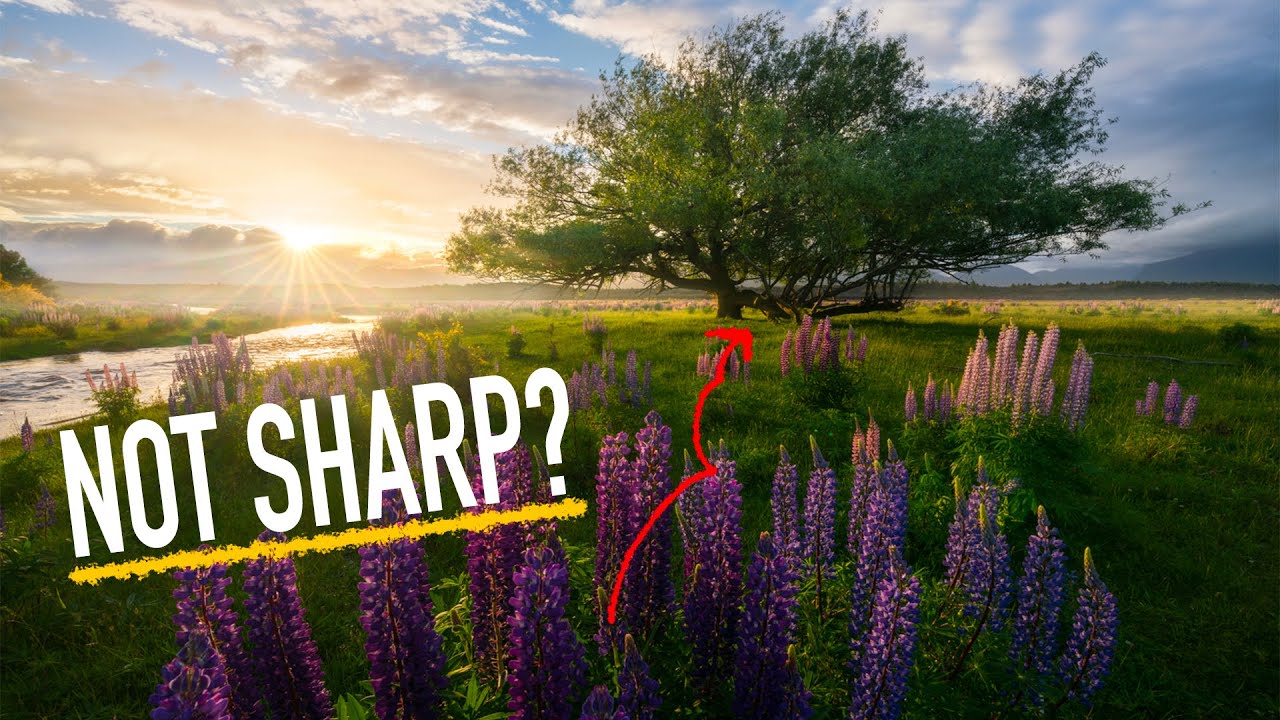
Landscape photography demands sharpness from foreground to horizon. A single exposure at f/16 or f/22 gets close, but diffraction softens the image at small apertures, and some scenes have foreground elements so close that even f/22 can’t hold everything sharp. Focus stacking solves this by merging multiple exposures focused at different distances. When You Need Focus Stacking Not every landscape requires stacking. If your nearest foreground element is 10 feet away and you’re shooting at f/11 on a full-frame camera, depth of field covers the entire scene.

Flash in Harsh Sunlight: Mastering Fill Light for Outdoor Portraits

Flash in Harsh Sunlight: Mastering Fill Light for Outdoor Portraits

I’ve stood in countless sun-drenched fields, squinting at LCD screens, watching my carefully composed portraits collapse under the weight of harsh shadows across my subject’s face. The midday sun is a merciless master, and for years I thought the answer was to find shade or wait for golden hour. But I was missing something fundamental about how light behaves, and how we can shape it. In this excellent tutorial, Joel Grimes shows us how to transform outdoor portraiture by harnessing flash—not as a primary light source, but as a subtle tool to fill shadows and reveal the dimensionality in our subjects.

Finding Your Focus: Why Bird Photography Transforms How We See Nature

Finding Your Focus: Why Bird Photography Transforms How We See Nature

There’s something transformative about spending hours in the field waiting for that perfect moment when a bird reveals itself. I’ve come to realize that bird photography isn’t simply another genre to master—it’s a gateway to understanding landscape and nature on an entirely different level. The Paradox of Challenge and Reward When I first began focusing my lens on avian subjects, I quickly discovered why so many photographers are drawn to this pursuit despite its inherent difficulties.

Finding Sacred Geometry in the Wild: Jon McCormack's New Visual Testament to Nature's Order

Finding Sacred Geometry in the Wild: Jon McCormack's New Visual Testament to Nature's Order

Nature’s Hidden Language There’s something profoundly moving about standing in the field and realizing you’re witnessing mathematics made visible. That’s the experience Jon McCormack captures in his striking new monograph, “Patterns: Art of the Natural World”—a collection that has me reconsidering how I approach composition during every outing. McCormack’s work reminds us that patterns aren’t something photographers impose on landscapes; they’re already there, woven into every ecosystem, waiting to be noticed.

Finding Magic in Mountain Light: A Landscape Photographer's Journey Through Oman

Finding Magic in Mountain Light: A Landscape Photographer's Journey Through Oman

The Art of Chasing Desert Dawns There’s something deeply transformative about standing alone on a mountainside as the world awakens. I recently encountered the work of Paulo Bizarro, a landscape photographer whose approach to capturing nature reminds us why we venture into remote places with cameras in hand. His recent image from Jebel Akhdar in Oman exemplifies what draws so many of us to landscape photography. A solitary tree silhouetted against the breaking dawn, bathed in that golden light that exists for mere minutes each morning—it’s the kind of shot that requires both patience and intention.

Finding Light in the Woods: The Art and Craft of Forest Photography

Finding Light in the Woods: The Art and Craft of Forest Photography

Finding Light in the Woods: The Art and Craft of Forest Photography There’s a peculiar silence that settles over me when I’m deep in a forest with my camera. The light filters through the canopy in ways that seem impossible to translate to a sensor, and yet that impossibility is exactly why I keep returning to these places. Forest photography demands something different from us than open landscape work. You’re not capturing expansive vistas or dramatic skies—you’re hunting for relationships between layers, textures, and the elusive moments when light finds its way through dense vegetation.

Finding Light in the High Country: A Mountain Photographer's Field Guide

Finding Light in the High Country: A Mountain Photographer's Field Guide

Finding Light in the High Country: A Mountain Photographer’s Field Guide I’ve spent enough mornings shivering in the pre-dawn darkness at 10,000 feet to know that mountain photography demands more than just showing up with a good camera. It requires patience, preparation, and an honest understanding of how light behaves in thin air. The mountains have taught me that the best shots aren’t about luck—they’re about reading the landscape like a map and positioning yourself where intention meets opportunity.

Finding Balance: The Art of Landscape Composition

Finding Balance: The Art of Landscape Composition

Finding Balance: The Art of Landscape Composition I’ve spent countless mornings standing in damp grass, camera in hand, staring at a vista that moved me deeply—only to review the images later and feel disappointed. The scene was breathtaking in person, but something was missing from the frame. It took me years to understand that what I was struggling with wasn’t technical skill. It was composition. Composition is the invisible architecture of a photograph.

Finding Balance in the Frame: The Art of Landscape Composition

Finding Balance in the Frame: The Art of Landscape Composition

Finding Balance in the Frame: The Art of Landscape Composition I’ve spent countless mornings standing in frost-covered fields, watching light transform an ordinary hillside into something extraordinary. But I’ve learned that even the most beautiful light can’t save a poorly composed image. The strongest landscape photographs balance technical skill with intentional visual structure—and that structure begins long before you press the shutter. The Three-Layer Approach When I arrive at a location, I resist the urge to immediately frame a shot.