
There’s a version of this problem I know embarrassingly well. After twenty years of waking before dawn and standing in cold rivers waiting for the light to do something worth photographing, I noticed something uncomfortable about myself: I’d stopped getting excited about ordinary mornings. Not bad mornings. Just ordinary ones. Soft overcast, no wind, no drama. I’d look at the scene, feel nothing, and start running through excuses to pack up early. It took me an embarrassingly long time to recognize that wasn’t about the light at all. It was about me.
That’s exactly the nerve Watch the full tutorial on YouTube Mark Denney hits in this recent video. He frames it around a specific experience: shooting the jaw-dropping peaks of Patagonia, then arriving in the Smoky Mountains days later and nearly walking past a scene of fog drifting through a quiet stand of trees. Almost dismissing it. The video isn’t a technical tutorial in the traditional sense. It’s a diagnostic. And for anyone who’s been shooting seriously for more than a few years, it lands with real weight. What follows is my breakdown of the core ideas he raises and how to actually act on them in the field.
Step 1: Recognize the Symptom Before You Can Fix It
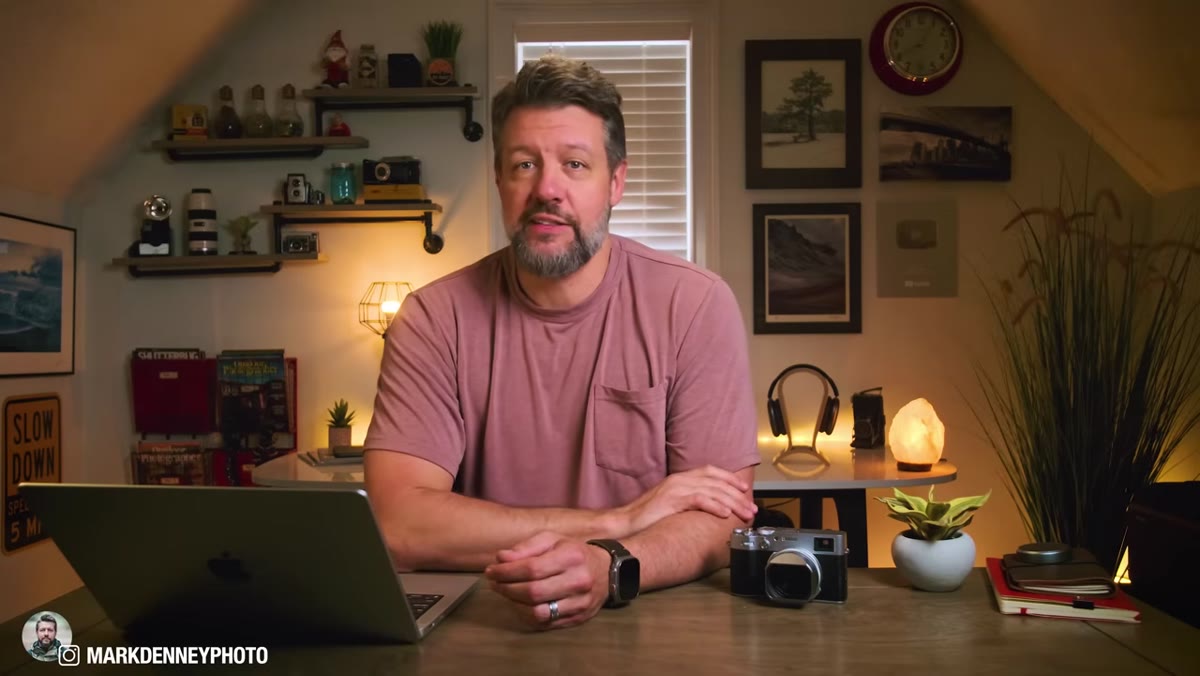 Photographer realizing they only feel inspired by dramatic scenes
The first thing Denney asks you to do is sit with an uncomfortable question: when was the last time a quiet, ordinary scene genuinely moved you? Not intellectually. Emotionally. He describes the mechanism clearly. Dramatic conditions do a lot of the creative work for you. Glowing peaks, explosive skies, massive scale. The emotion of those scenes is pre-loaded. You show up, you react, you shoot. That’s not a criticism. Those moments are real and worth chasing. But if that’s the only register you respond to, you’ve handed your creative instincts over to the weather.
Photographer realizing they only feel inspired by dramatic scenes
The first thing Denney asks you to do is sit with an uncomfortable question: when was the last time a quiet, ordinary scene genuinely moved you? Not intellectually. Emotionally. He describes the mechanism clearly. Dramatic conditions do a lot of the creative work for you. Glowing peaks, explosive skies, massive scale. The emotion of those scenes is pre-loaded. You show up, you react, you shoot. That’s not a criticism. Those moments are real and worth chasing. But if that’s the only register you respond to, you’ve handed your creative instincts over to the weather.
Ask yourself honestly: are you waiting for conditions to inspire you, or are you practicing the skill of finding what’s already there? Those are two very different photographers, and most of us slide between them without noticing.
Step 2: Understand Why Social Media Accelerates the Problem
 Scrolling feed of dramatic mountain and sunset photography
Denney makes a point here that deserves more attention than it usually gets. Constant exposure to the most extreme images from around the world recalibrates your baseline. Your brain starts associating “good photography” with spectacle. Craggy peaks, violent weather, colors that look almost impossible. When a scene in front of you doesn’t match that visual register, the instinct is to move on rather than look harder.
Scrolling feed of dramatic mountain and sunset photography
Denney makes a point here that deserves more attention than it usually gets. Constant exposure to the most extreme images from around the world recalibrates your baseline. Your brain starts associating “good photography” with spectacle. Craggy peaks, violent weather, colors that look almost impossible. When a scene in front of you doesn’t match that visual register, the instinct is to move on rather than look harder.
I’ve watched this happen in workshop participants too. Someone will walk right past a beautiful detail. a shaft of light cutting through mist on the forest floor, say. and they won’t even raise the camera. Not because they lack skill, but because they’ve unconsciously decided it doesn’t qualify. The fix isn’t to stop following great photographers. It’s to deliberately balance your intake with quieter, more restrained work so your eye stays calibrated to a wider range of possibility.
Step 3: Slow Down Your Arrival Ritual
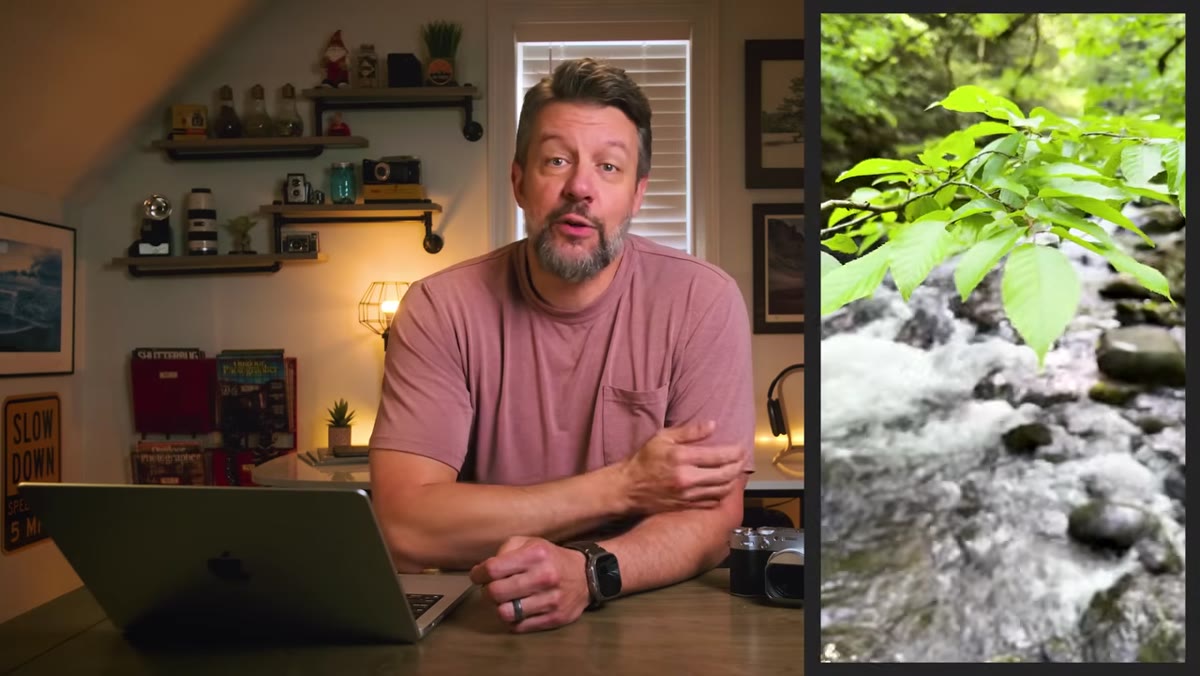 Photographer walking through forest without raising the camera
Denney describes spending twenty or thirty minutes walking through an area in the Smokies without taking a single shot. Not because conditions were poor, but because the scene required more observation time before it revealed itself. This is a concrete field practice worth adopting deliberately.
Photographer walking through forest without raising the camera
Denney describes spending twenty or thirty minutes walking through an area in the Smokies without taking a single shot. Not because conditions were poor, but because the scene required more observation time before it revealed itself. This is a concrete field practice worth adopting deliberately.
When you arrive at a location, resist the reflex to immediately start composing. Walk the space first. Let your eyes adjust to what’s subtle rather than obvious. In dramatic conditions, the subject announces itself. In quieter conditions, you have to find it. That finding process takes time. Give it the time it needs. I learned this from a mentor years ago who used to say something I repeat to myself on slow mornings: the mountain doesn’t care about your schedule. Neither does the fog.
Step 4: Train Your Attention on Small Atmospheric Shifts
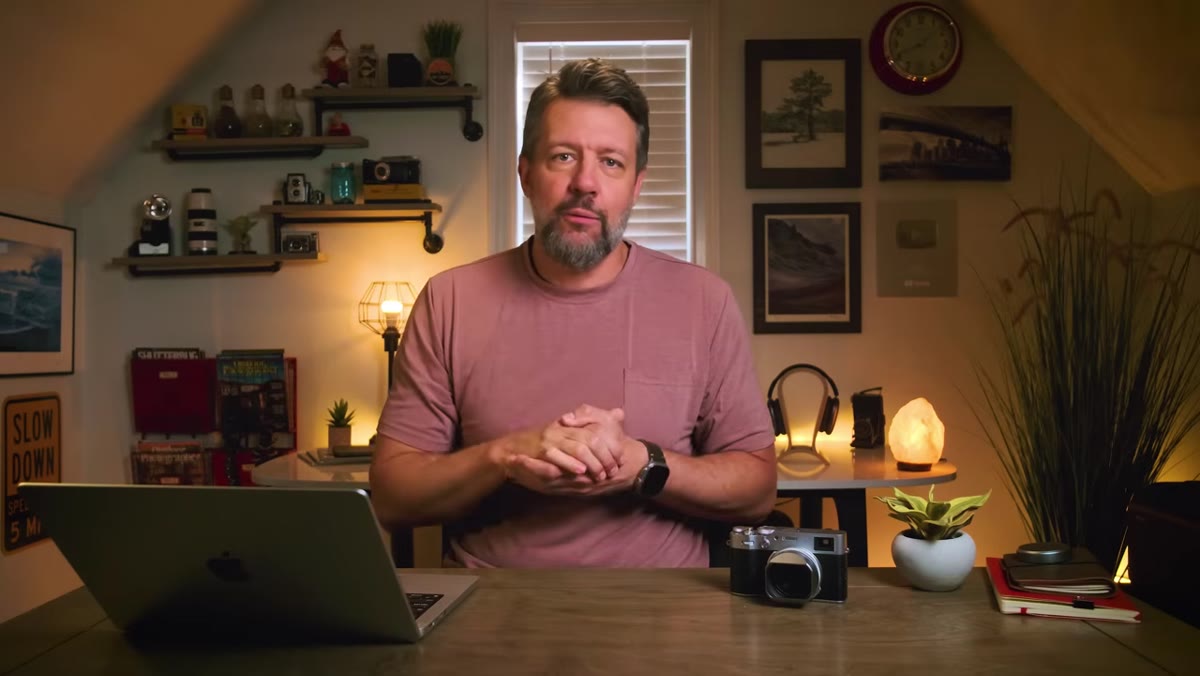 Fog moving slightly between layers of forest trees
This is where the practical technique becomes specific. Denney points to the way small environmental changes completely transform the emotional quality of a quiet scene. A slight shift in fog density. A single layer of light moving across a treeline. A gap opening in the canopy. These aren’t dramatic events. They last seconds. But if you’re paying attention, they’re the difference between a static frame and one that carries real feeling.
Fog moving slightly between layers of forest trees
This is where the practical technique becomes specific. Denney points to the way small environmental changes completely transform the emotional quality of a quiet scene. A slight shift in fog density. A single layer of light moving across a treeline. A gap opening in the canopy. These aren’t dramatic events. They last seconds. But if you’re paying attention, they’re the difference between a static frame and one that carries real feeling.
The field habit here is to watch before you shoot. Pick your composition, then wait and observe how the light and atmosphere move within it. Set your exposure for the scene as it is, then adjust as conditions shift. In misty or foggy conditions, I’ll often bracket my shutter speed rather than my aperture, because the movement of atmosphere matters as much as depth of field. Somewhere between 1/30s and 1/4s in gentle fog can capture just enough motion to feel alive without becoming a blur.
Step 5: Reframe What “Good Conditions” Actually Means
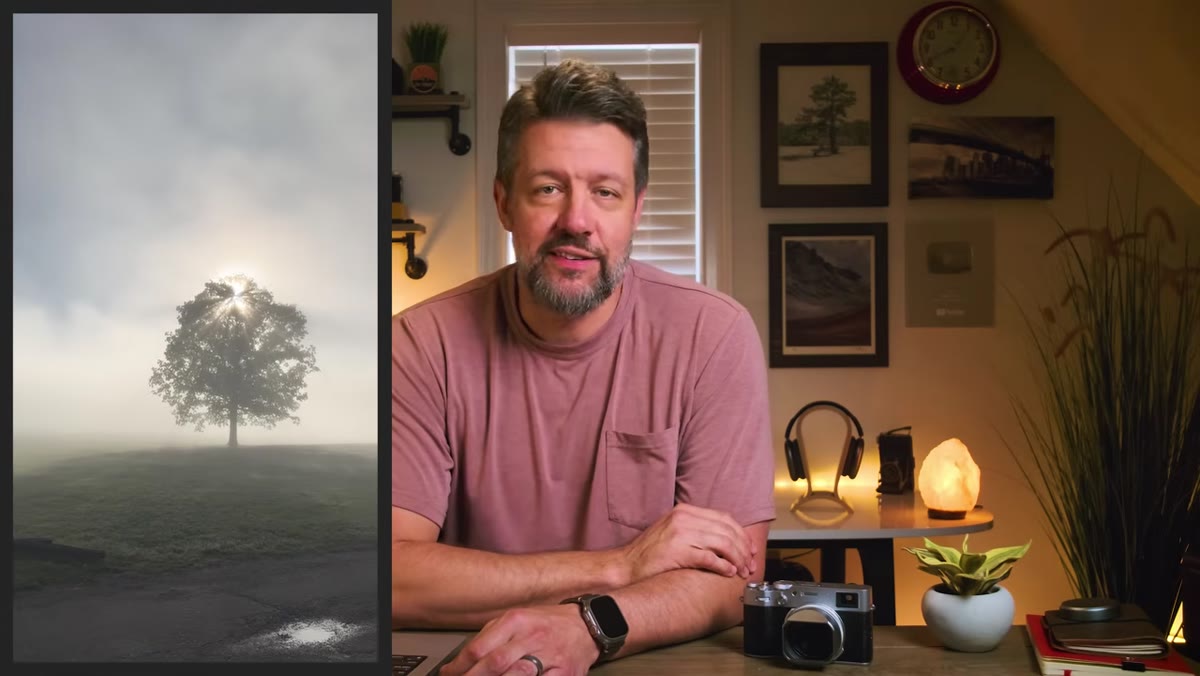 Quiet foggy forest scene replacing dramatic peak imagery
The conceptual shift Denney is pushing toward is this: quieter conditions aren’t lesser conditions. They’re harder conditions. They demand more patience, more observation, and more active participation from you as a photographer. Dramatic landscapes lower the skill threshold because so much is given. Subtle scenes raise it because almost nothing is given.
Quiet foggy forest scene replacing dramatic peak imagery
The conceptual shift Denney is pushing toward is this: quieter conditions aren’t lesser conditions. They’re harder conditions. They demand more patience, more observation, and more active participation from you as a photographer. Dramatic landscapes lower the skill threshold because so much is given. Subtle scenes raise it because almost nothing is given.
This reframe matters practically because it changes how you prepare and how you evaluate a session. Stop grading a morning by whether the sky put on a show. Grade it by whether you were present enough to notice what the scene was actually offering. Some of my best-selling prints have come from mornings I nearly wrote off. One of them came from two full days of sitting in fog at a location I’d driven six hours to reach. One usable frame. But that frame is the one people keep asking about, because it has a stillness that the dramatic shots don’t.
Step 6: Use Restraint as a Compositional Tool
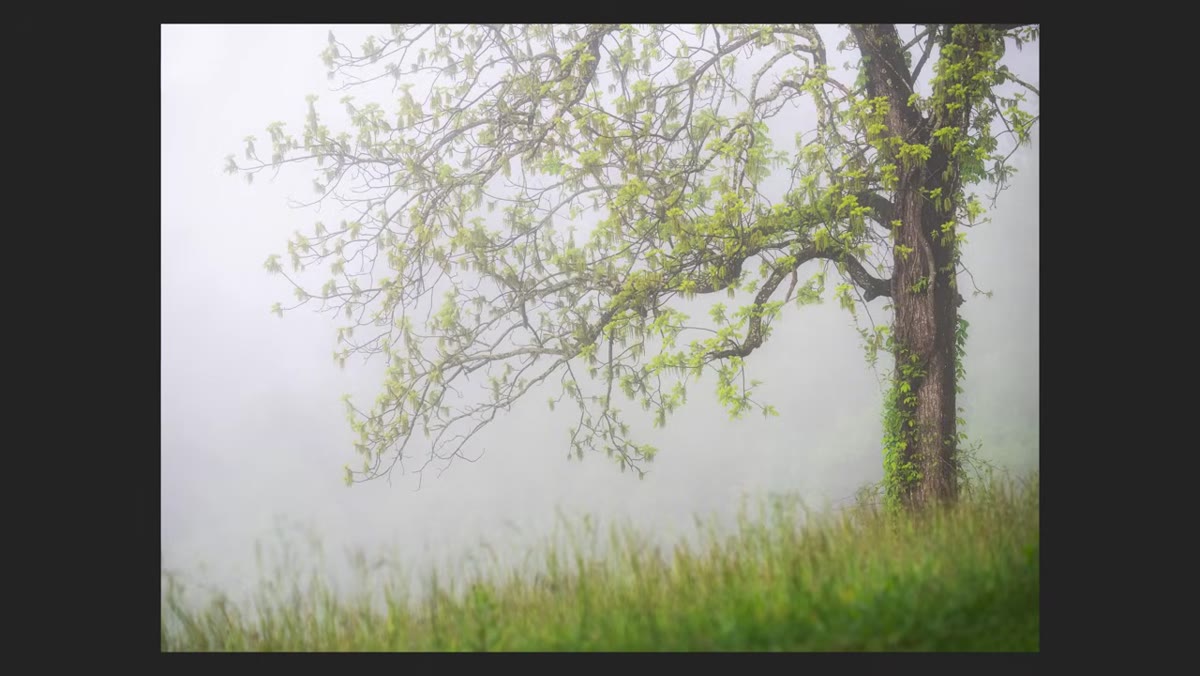 Simple forest composition without dramatic foreground or sky
Denney mentions simpler compositions specifically. this is worth unpacking. When a scene isn’t screaming for attention, the temptation is to overcrowd the frame in an attempt to manufacture drama. More foreground elements, tighter zoom, forced leading lines. Resist that. Quiet scenes often need compositional breathing room. Negative space. A single layer of detail against a clean background. Restraint isn’t settling for less. It’s a choice that can make a subtle scene feel intentional rather than accidental.
Simple forest composition without dramatic foreground or sky
Denney mentions simpler compositions specifically. this is worth unpacking. When a scene isn’t screaming for attention, the temptation is to overcrowd the frame in an attempt to manufacture drama. More foreground elements, tighter zoom, forced leading lines. Resist that. Quiet scenes often need compositional breathing room. Negative space. A single layer of detail against a clean background. Restraint isn’t settling for less. It’s a choice that can make a subtle scene feel intentional rather than accidental.
What I’d Add from My Own Experience
After twenty years of this, I’d add one caveat to everything Denney covers. The ability to see in quiet conditions is a perishable skill. You have to practice it regularly, not just when you happen to be in a location without dramatic light. I shoot film occasionally for exactly this reason. When you’re working with a limited number of frames and no instant feedback, you slow down and look harder. You stop shooting reactively and start thinking compositionally. Even if you shoot digital exclusively, the discipline of asking “would I spend one of twelve frames on this?” before pressing the shutter will change how carefully you observe.
The single most important idea in this video is also the most uncomfortable one: if you only feel inspired when everything in front of you looks spectacular, you’ve stopped being a photographer and started being a spectator. The craft is in the seeing, not the scenery.
Watch the full tutorial on YouTube and sit with it somewhere quiet.
Comments (4)
Been doing this wrong for years apparently. Thanks for the wake-up call.
My workflow just got 10x faster. Not even kidding.
Love this. I referenced a similar technique in one of my recent posts. Always good to see other perspectives.
My workflow just got 10x faster. Not even kidding.
Leave a Comment