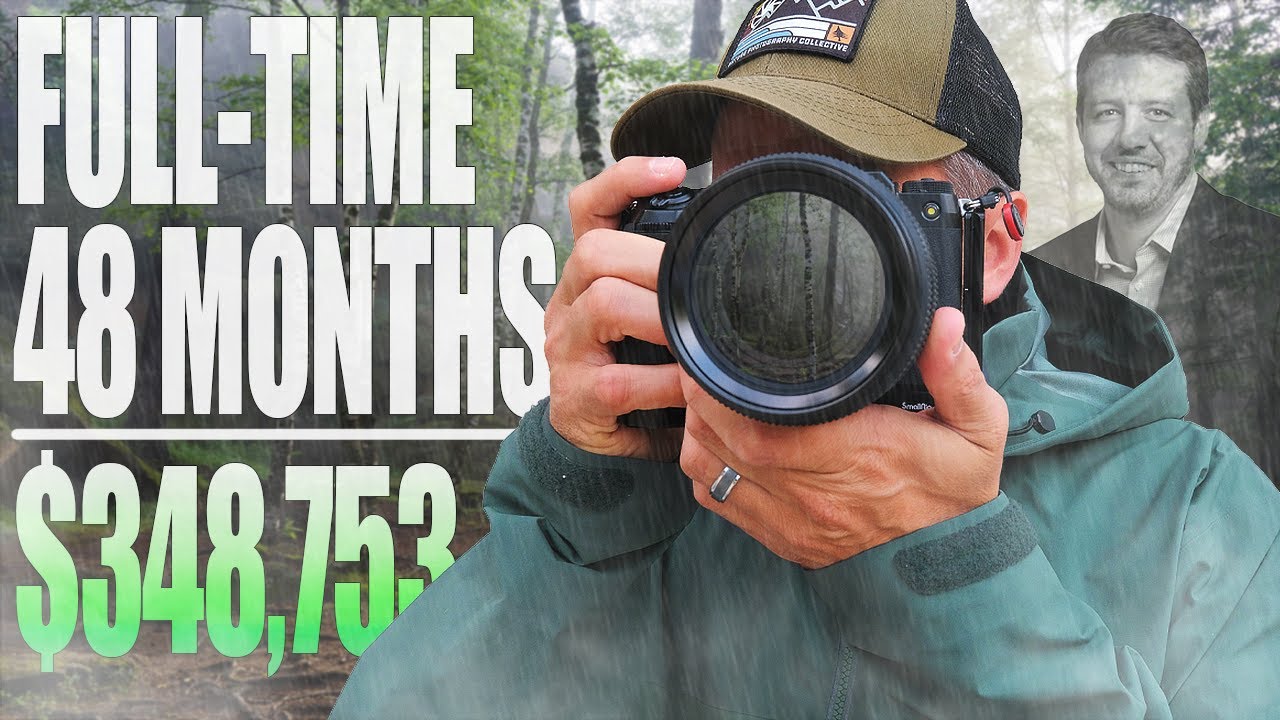
I spent the better part of my first decade as a landscape photographer convincing myself that the money would figure itself out if the images were good enough. It didn’t. Good images are the price of entry, not the business model. I had prints on my website, I had a mailing list I barely used, and I had a vague plan to “grow my audience” that amounted to posting on Instagram and hoping. It took me an embarrassingly long time to start treating this like an actual profession rather than a passion with a Stripe account.
So when I came across this Mark Denney tutorial, Watch the full tutorial on YouTube, I sat with it for a while. Mark isn’t selling a course or pitching a blueprint. He’s walking through four years of real financial data, channel by channel, and being honest about what failed. For someone like me who’s been doing this twenty years and still finds the business side uncomfortable, that kind of transparency lands differently than most photography business content. What follows is my breakdown of what he covers and how I’d apply it if I were starting over, or rebuilding, which honestly some years feel the same.
Step 1: Accept That Landscape Photography Has No Obvious Client
 Mark explaining the unique challenge of targeting landscape photography clients
The first thing Mark addresses, and the thing most photographers skip past too quickly, is the structural problem with landscape photography as a business. Wedding photographers have a clear audience. Real estate photographers have a clear audience. But who do you call when you shoot mountains? You can’t pitch the mountain. This sounds like a limitation, and for years I treated it like one, but Mark reframes it as a creative business problem rather than a dead end. The market for landscape photography as a product is narrow. The market for what landscape photography represents, the experience, the feeling, the education around it, is enormous. Once that distinction clicked for me, it changed how I thought about almost everything.
Mark explaining the unique challenge of targeting landscape photography clients
The first thing Mark addresses, and the thing most photographers skip past too quickly, is the structural problem with landscape photography as a business. Wedding photographers have a clear audience. Real estate photographers have a clear audience. But who do you call when you shoot mountains? You can’t pitch the mountain. This sounds like a limitation, and for years I treated it like one, but Mark reframes it as a creative business problem rather than a dead end. The market for landscape photography as a product is narrow. The market for what landscape photography represents, the experience, the feeling, the education around it, is enormous. Once that distinction clicked for me, it changed how I thought about almost everything.
Step 2: Build for Diversification from Day One, Not After You Need It
 Revenue diversification concept introduced with 15 potential income streams
Mark researched roughly fifteen potential revenue streams before committing to any of them. I didn’t do this. I added revenue channels reactively, whenever something stopped working or I got desperate. He built a map first. The practical takeaway here is to sit down before you launch anything and list every possible way someone might pay you in connection to what you do. Prints, licensing, YouTube, workshops, presets, online courses, affiliate links, speaking, editorial work. Not all of them will suit you, but knowing the full terrain means you’re making choices, not stumbling into them.
Revenue diversification concept introduced with 15 potential income streams
Mark researched roughly fifteen potential revenue streams before committing to any of them. I didn’t do this. I added revenue channels reactively, whenever something stopped working or I got desperate. He built a map first. The practical takeaway here is to sit down before you launch anything and list every possible way someone might pay you in connection to what you do. Prints, licensing, YouTube, workshops, presets, online courses, affiliate links, speaking, editorial work. Not all of them will suit you, but knowing the full terrain means you’re making choices, not stumbling into them.
Step 3: Study Your Revenue Spread Like a Pie Chart, Not a Bank Statement
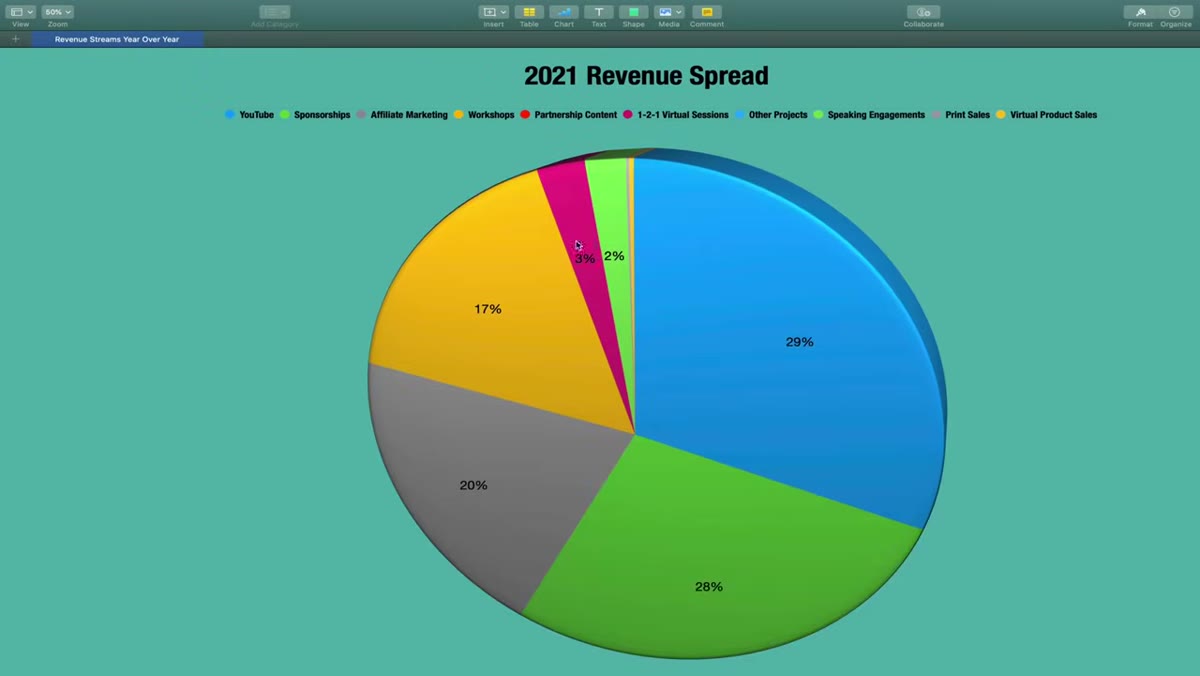 2021 revenue pie chart showing diversified income breakdown on screen
Mark shows his actual 2021 revenue breakdown as a visual pie chart, and the point isn’t the numbers. It’s the shape of it. A few years earlier, over sixty percent of his income came from a single source: YouTube ad revenue. One platform, one algorithm, one policy change away from a very bad year. By 2021, that same channel accounted for only twenty-nine percent of his total revenue, and the rest was spread across several categories. I’ve made the same mistake he describes, not intentionally, just by following the path of least resistance. When something works, you lean on it. When you lean on it too hard, it becomes a liability.
2021 revenue pie chart showing diversified income breakdown on screen
Mark shows his actual 2021 revenue breakdown as a visual pie chart, and the point isn’t the numbers. It’s the shape of it. A few years earlier, over sixty percent of his income came from a single source: YouTube ad revenue. One platform, one algorithm, one policy change away from a very bad year. By 2021, that same channel accounted for only twenty-nine percent of his total revenue, and the rest was spread across several categories. I’ve made the same mistake he describes, not intentionally, just by following the path of least resistance. When something works, you lean on it. When you lean on it too hard, it becomes a liability.
Step 4: Understand Which Channels Failed and Why
 Mark beginning the breakdown of revenue channels that did not work out
Mark spends real time on the channels that didn’t pan out for him, which is the part most business-of-photography videos skip. He’s specific without being discouraging. Some revenue ideas that look logical on paper don’t survive contact with reality. Stock photography, for instance, is a channel many landscape photographers assume will be passive income. For many it generates almost nothing at scale. The lesson I take from this part of his video is to run small experiments rather than full commitments, and to set a timeline for evaluation. If a revenue channel hasn’t shown real traction in twelve months, that’s data. Don’t wait three years hoping it turns a corner.
Mark beginning the breakdown of revenue channels that did not work out
Mark spends real time on the channels that didn’t pan out for him, which is the part most business-of-photography videos skip. He’s specific without being discouraging. Some revenue ideas that look logical on paper don’t survive contact with reality. Stock photography, for instance, is a channel many landscape photographers assume will be passive income. For many it generates almost nothing at scale. The lesson I take from this part of his video is to run small experiments rather than full commitments, and to set a timeline for evaluation. If a revenue channel hasn’t shown real traction in twelve months, that’s data. Don’t wait three years hoping it turns a corner.
Step 5: Take Workshops Seriously as a Long-Term Revenue Pillar
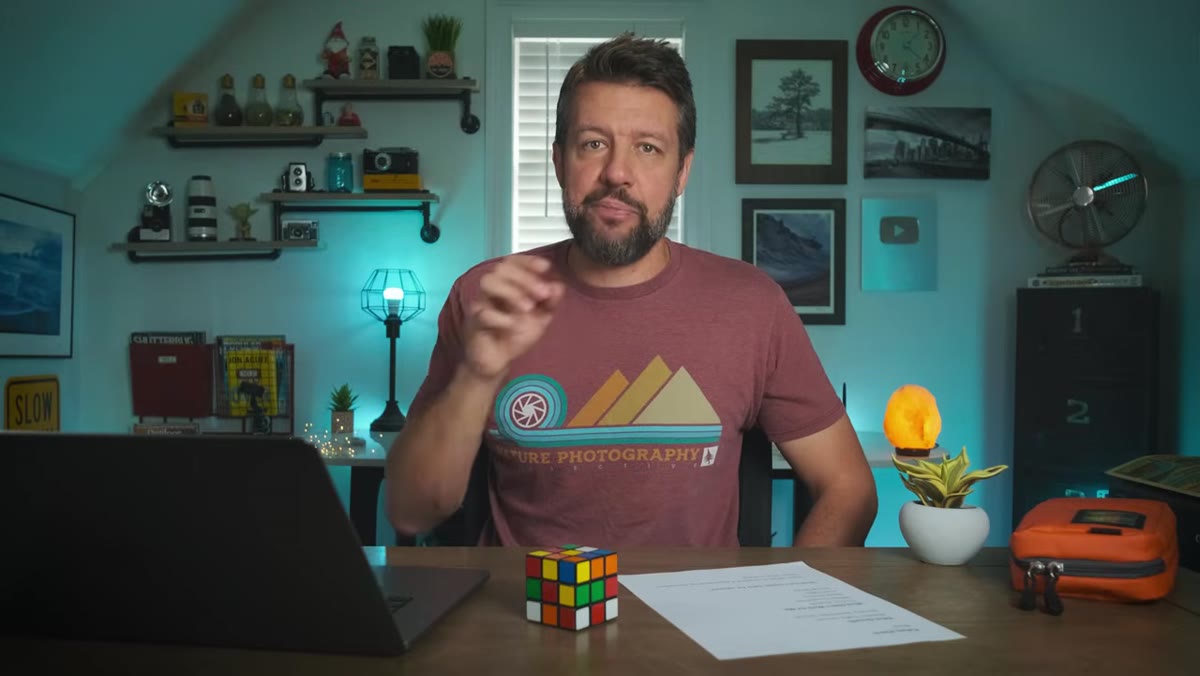 Workshop revenue at 17 percent of income with projected growth discussed
This is the part of Mark’s breakdown I found most useful and most validating. Workshops accounted for seventeen percent of his 2021 revenue, up from zero in prior years, and he projects that number climbing toward thirty percent within a couple of years. Workshops are not a quick fix. They take time to build reputation, logistics, trust. But they are also the most direct expression of what he describes as the market for the landscape photography experience. People don’t just want your print on their wall. Some of them want to stand where you stood, in the cold, before sunrise, learning how to see the way you see. I’ve been running workshops out of Central Oregon for years, and the relationships that come out of those mornings in the field are the most durable part of my business. They also generate word-of-mouth that no ad spend can replicate.
Workshop revenue at 17 percent of income with projected growth discussed
This is the part of Mark’s breakdown I found most useful and most validating. Workshops accounted for seventeen percent of his 2021 revenue, up from zero in prior years, and he projects that number climbing toward thirty percent within a couple of years. Workshops are not a quick fix. They take time to build reputation, logistics, trust. But they are also the most direct expression of what he describes as the market for the landscape photography experience. People don’t just want your print on their wall. Some of them want to stand where you stood, in the cold, before sunrise, learning how to see the way you see. I’ve been running workshops out of Central Oregon for years, and the relationships that come out of those mornings in the field are the most durable part of my business. They also generate word-of-mouth that no ad spend can replicate.
Step 6: Use the Anniversary Mark, Not Just the Calendar Year, for Honest Reviews
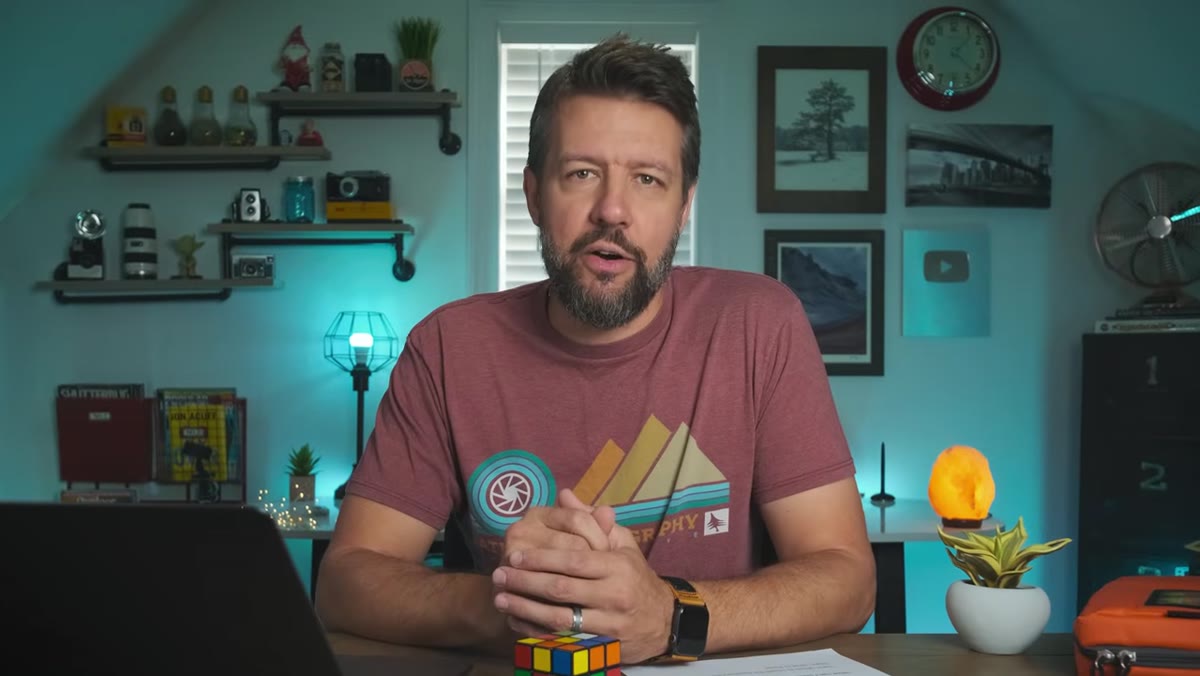 Mark explaining four-year anniversary as the review milestone instead of year-end
A small structural note from the video that I think matters more than it seems: Mark chose to do this review at the four-year mark of his experiment rather than at a calendar year-end. It forced him to look at the full arc rather than a twelve-month slice. Annual reviews are useful, but they can also be misleading. A bad weather year, a platform algorithm shift, a personal health issue can make a good long-term trajectory look terrible in a single annual snapshot. Looking at four years together shows you whether you’re actually building something.
Mark explaining four-year anniversary as the review milestone instead of year-end
A small structural note from the video that I think matters more than it seems: Mark chose to do this review at the four-year mark of his experiment rather than at a calendar year-end. It forced him to look at the full arc rather than a twelve-month slice. Annual reviews are useful, but they can also be misleading. A bad weather year, a platform algorithm shift, a personal health issue can make a good long-term trajectory look terrible in a single annual snapshot. Looking at four years together shows you whether you’re actually building something.
What I’d Add from Twenty Years in the Field
Mark’s video focuses on the financial architecture, which is exactly what it should do. What I’d layer on top of it is this: the revenue diversification he describes only works if the creative work stays honest. I’ve watched photographers chase income channels that slowly bent their subject matter and their voice toward whatever sold. Prints of obvious sunsets, workshops that promise magic-hour shots on day one. The audience can feel when the work becomes transactional. The photographers I know who have built genuinely durable businesses, the ones still shooting what they love after fifteen or twenty years, treat the creative integrity as load-bearing. Everything else is built on top of it. Don’t let the diversification strategy become the tail wagging the dog.
The single most important idea in Mark’s entire breakdown is the one buried in an email he received: the market for landscape photography things is small, but the market for the landscape photography experience is massive. Everything worth building in this business grows from that distinction.
Watch the full tutorial on YouTube to see Mark’s complete four-year financial breakdown, including the exact numbers by channel and his projections for where the business goes next.
Comments (1)
The tip about four years 348k and the mindse was the missing piece for me. Thank you.
Leave a Comment