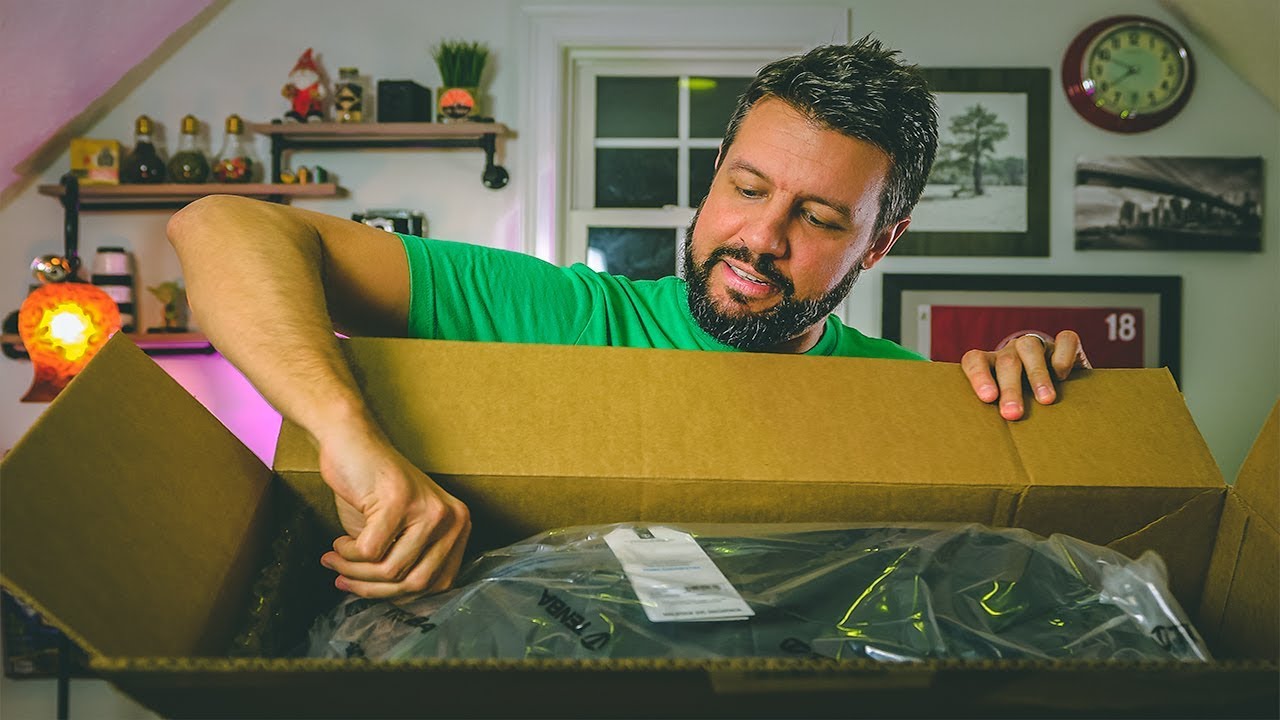
I’ve gone through more camera bags than I care to admit. After twenty years of pre-dawn starts in the Oregon high desert, wading creeks in the Cascades, and hauling gear through airport security more times than I can count, I’ve developed strong opinions about what belongs on my back. The wrong bag doesn’t just cause discomfort. It slows you down, makes you hesitate, and on a shoot where the light lasts maybe eight minutes, hesitation is the whole ballgame.
So when I came across this Mark Denney tutorial covering the unboxing and first impressions of the Tenba Solstice 24L backpack, I paid close attention. Watch the full tutorial on YouTube. Mark is methodical and honest in his gear reviews, and this one is no exception. The Solstice is positioned squarely in the small-to-mid-size landscape photography bag market, competing with familiar names like the Lowepro Pro Tactic, the MindShift Gear BackLight 26L, and the Trail Scape 18L. That’s a crowded space, and knowing where a bag actually sits in that lineup matters before you spend the money.
What follows is a breakdown of everything Mark covers in the unboxing, with notes from my own experience on what each feature means when you’re actually standing somewhere cold and dark with a shot to make.
Step 1: Understand Who Made This Bag and Why That History Matters
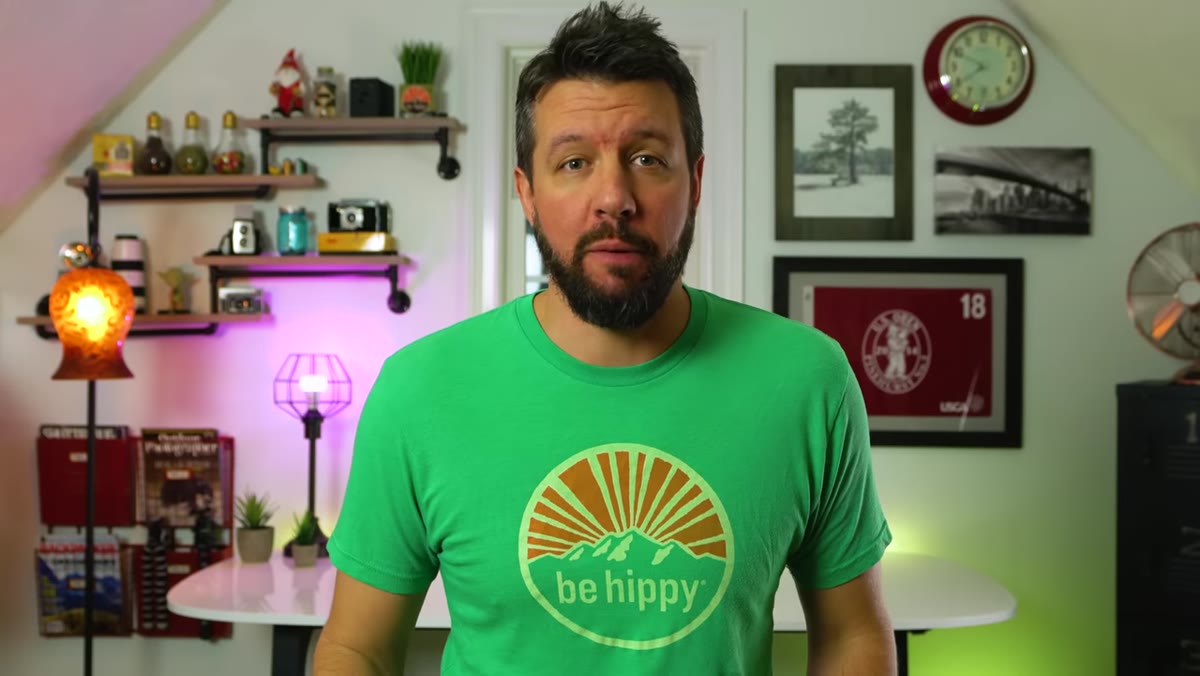 Tenba branding on box, Mark introducing the company’s history
Tenba has been manufacturing professional soft-sided camera bags since 1977. That’s not a throwaway detail. Longevity in this market means they’ve survived multiple generations of camera systems, format shifts, and photographer demands. It means their construction decisions are usually deliberate rather than trendy. When Mark points this out at the top of the video, he’s setting a baseline expectation: this isn’t a startup bag built around an Instagram aesthetic. It’s a bag from a company that has had decades to figure out what working photographers actually need.
Tenba branding on box, Mark introducing the company’s history
Tenba has been manufacturing professional soft-sided camera bags since 1977. That’s not a throwaway detail. Longevity in this market means they’ve survived multiple generations of camera systems, format shifts, and photographer demands. It means their construction decisions are usually deliberate rather than trendy. When Mark points this out at the top of the video, he’s setting a baseline expectation: this isn’t a startup bag built around an Instagram aesthetic. It’s a bag from a company that has had decades to figure out what working photographers actually need.
For me, that kind of institutional knowledge matters. I still occasionally shoot film because it forces me to slow down and think before I press the shutter. I apply the same logic to gear: I’d rather trust a manufacturer with forty-plus years of iteration than chase whatever’s new.
Step 2: Identify the Bag’s Intended Market Before Comparing It to Anything Else
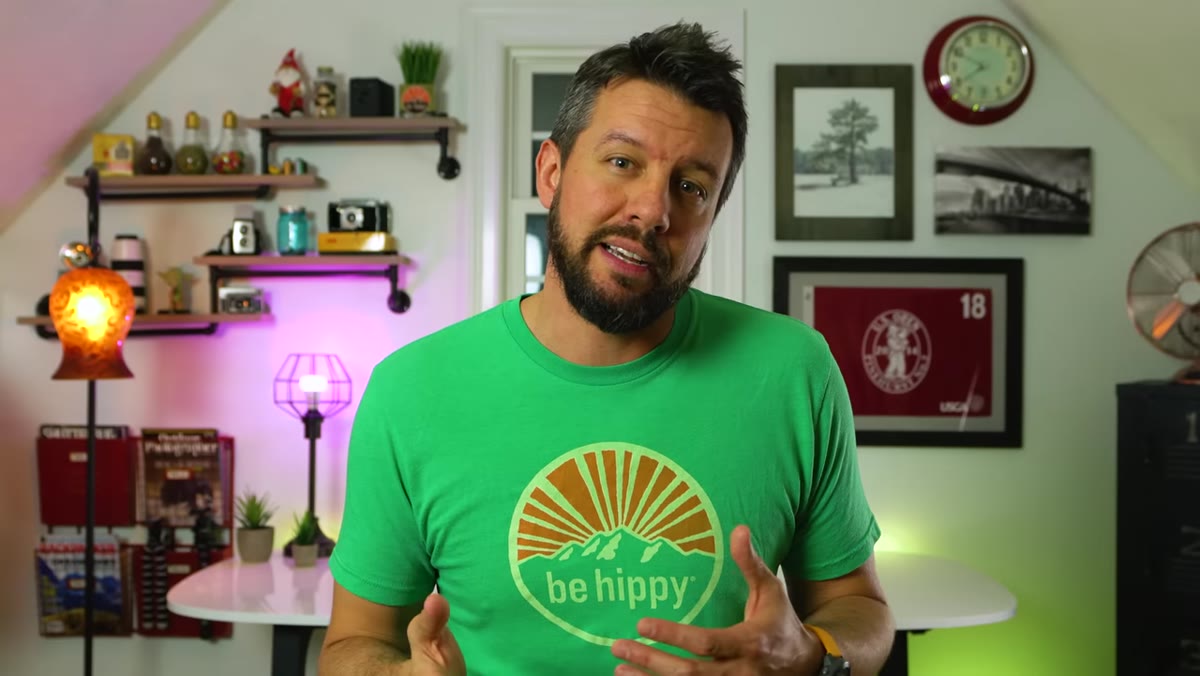 Mark holding the 24L bag, gesturing to compare size against larger adventure packs
Mark is careful here, and it’s worth paying attention. The Solstice is not trying to be an f-stop Tilopa or a Shimoda Explorer. Those are 40-liter-and-up adventure packs built for multi-day expeditions. The Solstice 24L is built for the photographer who needs enough room for a full camera kit, a laptop, and day-hike essentials, without the bulk of a dedicated expedition pack. It comes in 12L, 20L, and 24L versions, which tells you something about the audience: people who move fast, travel light, and don’t want to commit to a massive rig for every shoot.
Mark holding the 24L bag, gesturing to compare size against larger adventure packs
Mark is careful here, and it’s worth paying attention. The Solstice is not trying to be an f-stop Tilopa or a Shimoda Explorer. Those are 40-liter-and-up adventure packs built for multi-day expeditions. The Solstice 24L is built for the photographer who needs enough room for a full camera kit, a laptop, and day-hike essentials, without the bulk of a dedicated expedition pack. It comes in 12L, 20L, and 24L versions, which tells you something about the audience: people who move fast, travel light, and don’t want to commit to a massive rig for every shoot.
If you’re driving to a trailhead at 4am and hiking three miles to a ridgeline for sunrise, the 24L is the kind of bag that makes sense. It won’t carry your whole studio, but it was never supposed to.
Step 3: Assess Build Quality on First Contact
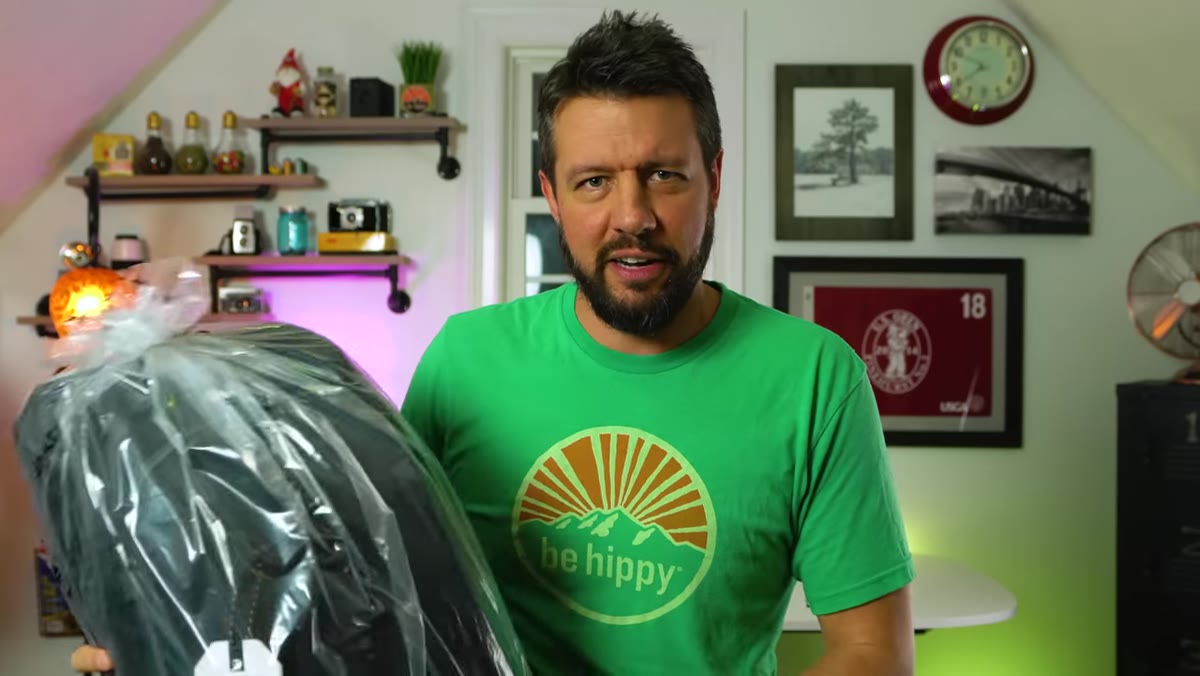 Mark lifting the bag out of the box, feeling the exterior material
One of the first things Mark notices when pulling the bag from the box is that it’s stiffer than he expected. That stiffness comes from the water-resistant nylon construction and, likely, internal structure designed to keep the bag’s shape even when partially loaded. He also flags the YKK zippers throughout. YKK is not a premium add-on, it’s a baseline requirement for any bag going into the field. If you’ve ever had a zipper fail on a bag while rain is moving in, you understand why this matters.
Mark lifting the bag out of the box, feeling the exterior material
One of the first things Mark notices when pulling the bag from the box is that it’s stiffer than he expected. That stiffness comes from the water-resistant nylon construction and, likely, internal structure designed to keep the bag’s shape even when partially loaded. He also flags the YKK zippers throughout. YKK is not a premium add-on, it’s a baseline requirement for any bag going into the field. If you’ve ever had a zipper fail on a bag while rain is moving in, you understand why this matters.
The bag also passes what I’d call the standing test: set it down empty and it stays upright. That sounds minor until you’re swapping lenses on a rocky slope and you need somewhere to set your bag that isn’t the mud.
Step 4: Note the Bag’s Understated Appearance as a Feature, Not an Afterthought
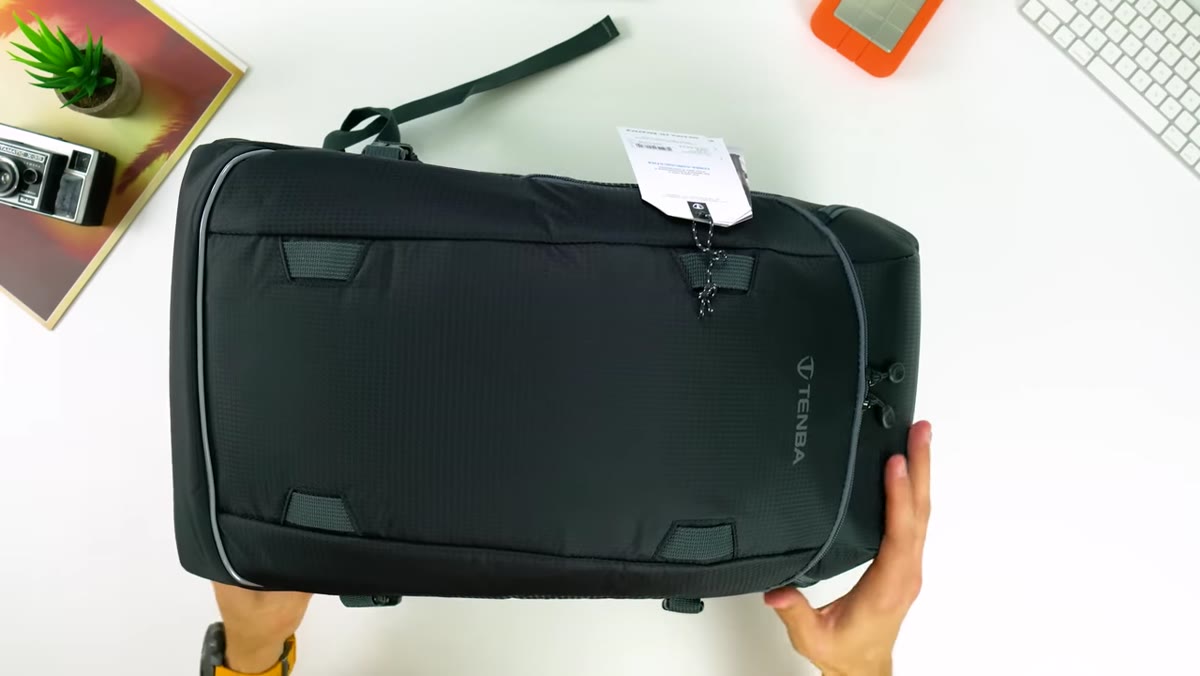 Mark showing the exterior of the bag, noting it doesn’t look like a camera bag
Mark makes a point that resonates with me completely: the Solstice doesn’t look like a camera bag. That’s a genuine advantage. When you’re traveling, in a city, or even just parked at a trailhead, broadcasting that you’re carrying several thousand dollars of camera equipment is never ideal. A bag that reads as a standard hiking or travel pack draws less attention and causes less friction at airport security. It also just feels more versatile when you’re wearing it somewhere that isn’t a photography workshop.
Mark showing the exterior of the bag, noting it doesn’t look like a camera bag
Mark makes a point that resonates with me completely: the Solstice doesn’t look like a camera bag. That’s a genuine advantage. When you’re traveling, in a city, or even just parked at a trailhead, broadcasting that you’re carrying several thousand dollars of camera equipment is never ideal. A bag that reads as a standard hiking or travel pack draws less attention and causes less friction at airport security. It also just feels more versatile when you’re wearing it somewhere that isn’t a photography workshop.
The bag comes in two colorways, including blue, which leans further into that outdoors-without-the-camera-brand-signaling aesthetic.
Step 5: Evaluate the Front Organizational Pocket for Travel Usefulness
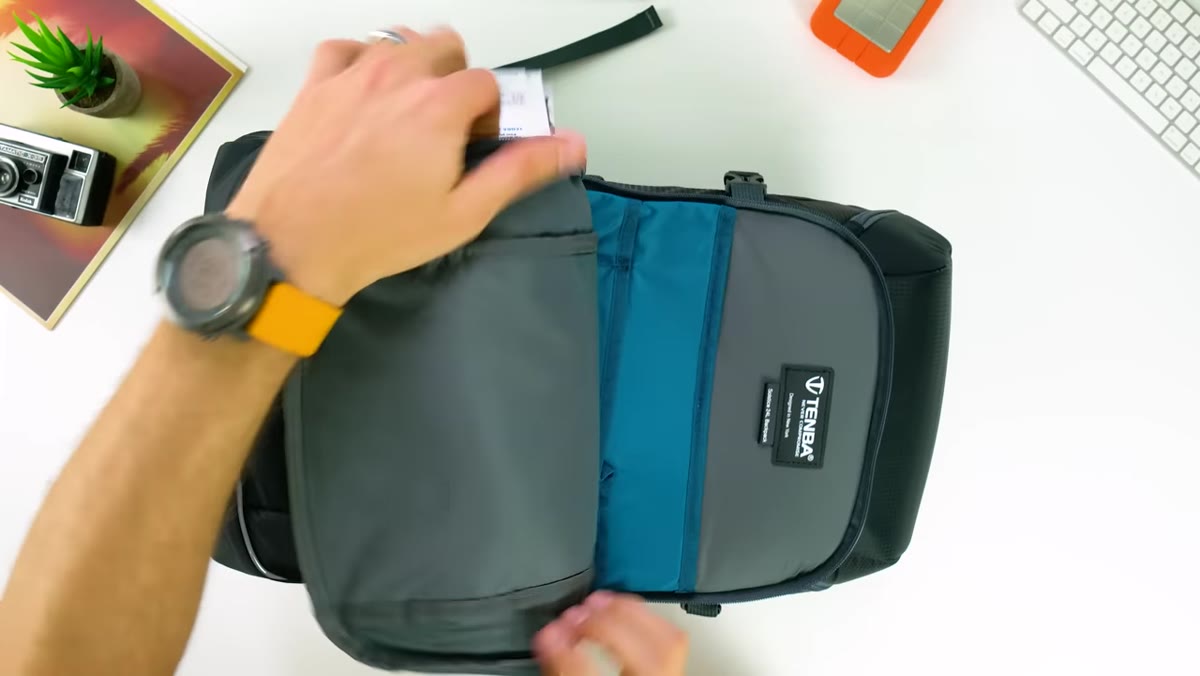 Mark opening the front pocket, showing laptop sleeve and smaller organizer pockets
The front compartment includes a padded sleeve for a 13-inch laptop and three smaller pockets sized for pens, backup drives, memory cards, and similar items. Mark specifically calls out how useful this is for air travel, and he’s right. When your bag is under the seat in front of you or shoved in an overhead bin, you want your laptop and travel documents accessible without unpacking the whole bag. Having dedicated organization at the front means you’re not digging past lens pouches to find a boarding pass.
Mark opening the front pocket, showing laptop sleeve and smaller organizer pockets
The front compartment includes a padded sleeve for a 13-inch laptop and three smaller pockets sized for pens, backup drives, memory cards, and similar items. Mark specifically calls out how useful this is for air travel, and he’s right. When your bag is under the seat in front of you or shoved in an overhead bin, you want your laptop and travel documents accessible without unpacking the whole bag. Having dedicated organization at the front means you’re not digging past lens pouches to find a boarding pass.
This is the kind of feature that feels obvious once you’ve traveled without it.
What I’d Add From the Field
The Solstice checks a lot of the boxes I care about: durable materials, smart organization, honest sizing, and a profile that doesn’t announce itself. But there’s one thing no unboxing video can tell you, and that’s how a bag distributes weight over five miles of uneven terrain with a full kit inside. Hip belt construction and load transfer matter enormously once you’re past the two-mile mark, and that’s the detail I’d want to know before committing.
I’ve shot in enough places, including some where I stood in a freezing river at dawn while my family questioned my life choices from the bank, to know that comfort compounds over distance. If the shoulder harness doesn’t move weight onto the hips efficiently, even a well-built 24L bag becomes a liability by the time you reach your location. That’s the real test, and it’s one that comes after the unboxing.
The single most important thing Mark’s review communicates is this: the Tenba Solstice 24L is a serious bag built for a specific kind of photographer, and it doesn’t try to be something it isn’t. In a market full of bags that overpromise, that kind of focused design deserves attention.
Watch the full tutorial on YouTube to see everything Mark covers in real time, including the full interior layout and his detailed first impressions of the camera compartment.
Comments
Leave a Comment