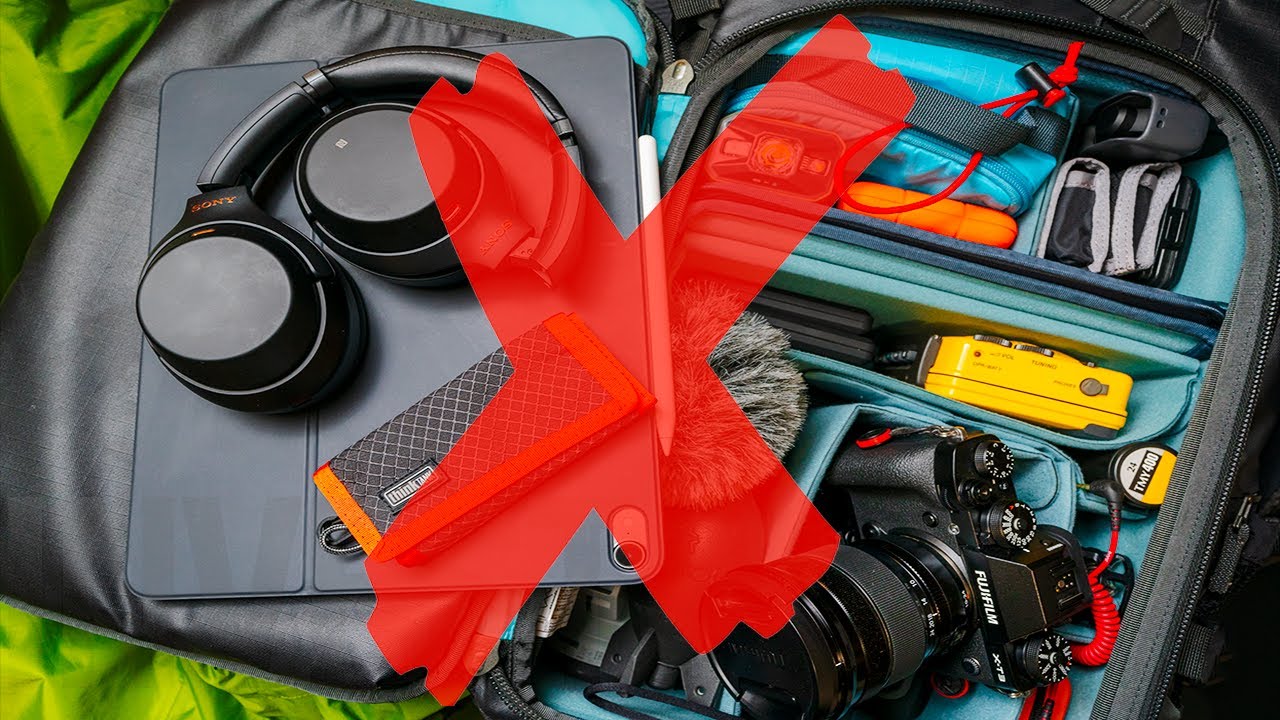
I’ve been doing this long enough to know the feeling. You’re out before dawn, the light does something extraordinary, and you come home with a frame that falls just short of what you saw. The instinct is immediate: the lens wasn’t sharp enough, the sensor wasn’t resolving enough, something in the kit held you back. After twenty years shooting landscapes full-time, I still catch myself thinking it. The gear itch is real, and the photography industry is very good at feeding it.
That’s why a recent tutorial from Mark Denney stopped me mid-scroll. Watch the full tutorial on YouTube — it’s worth your time before you read another word of a camera review. His argument is simple and a little uncomfortable: the $2,000 most photographers are quietly saving for a new body or lens would produce a far greater return if spent somewhere else entirely. He breaks that spending down into three categories, and the logic behind each one is hard to argue with.
I’m not someone who hands out recommendations lightly. But what Denney lays out here maps almost exactly onto what I wish someone had told me in year three of shooting, when I was convinced a full-frame upgrade would solve problems that were actually sitting somewhere between my ears.
Step 1: Reframe the Question Before You Open Your Wallet
 Title card with text challenging the gear-upgrade assumption
Before Denney gets into the specifics, he asks you to sit with a question that most photographers skip: what is the actual goal of the purchase? If the answer is “to improve my photography,” then the burden of proof falls on the gear to demonstrate it can do that better than any other use of the same money. Most of the time, it can’t. The camera doesn’t choose the light, read the conditions, or know when to wait. You do. Start there.
Title card with text challenging the gear-upgrade assumption
Before Denney gets into the specifics, he asks you to sit with a question that most photographers skip: what is the actual goal of the purchase? If the answer is “to improve my photography,” then the burden of proof falls on the gear to demonstrate it can do that better than any other use of the same money. Most of the time, it can’t. The camera doesn’t choose the light, read the conditions, or know when to wait. You do. Start there.
Step 2: Set a Concrete Budget and Hold It Steady
 On-screen text showing $2,000 hypothetical investment scenario
Denney anchors the whole conversation around a specific number, $2,000, because vague intentions produce vague results. He isn’t saying you can never buy gear. He’s saying take whatever you’ve earmarked and run it through a different filter before you spend it. The discipline of committing to a number forces honesty. If you have $2,000 ready to go, that’s enough to make meaningful investments in your development as a photographer. Hold the number firm and decide intentionally how to allocate it.
On-screen text showing $2,000 hypothetical investment scenario
Denney anchors the whole conversation around a specific number, $2,000, because vague intentions produce vague results. He isn’t saying you can never buy gear. He’s saying take whatever you’ve earmarked and run it through a different filter before you spend it. The discipline of committing to a number forces honesty. If you have $2,000 ready to go, that’s enough to make meaningful investments in your development as a photographer. Hold the number firm and decide intentionally how to allocate it.
Step 3: Invest in Video and Educational Content From Photographers You Actually Admire
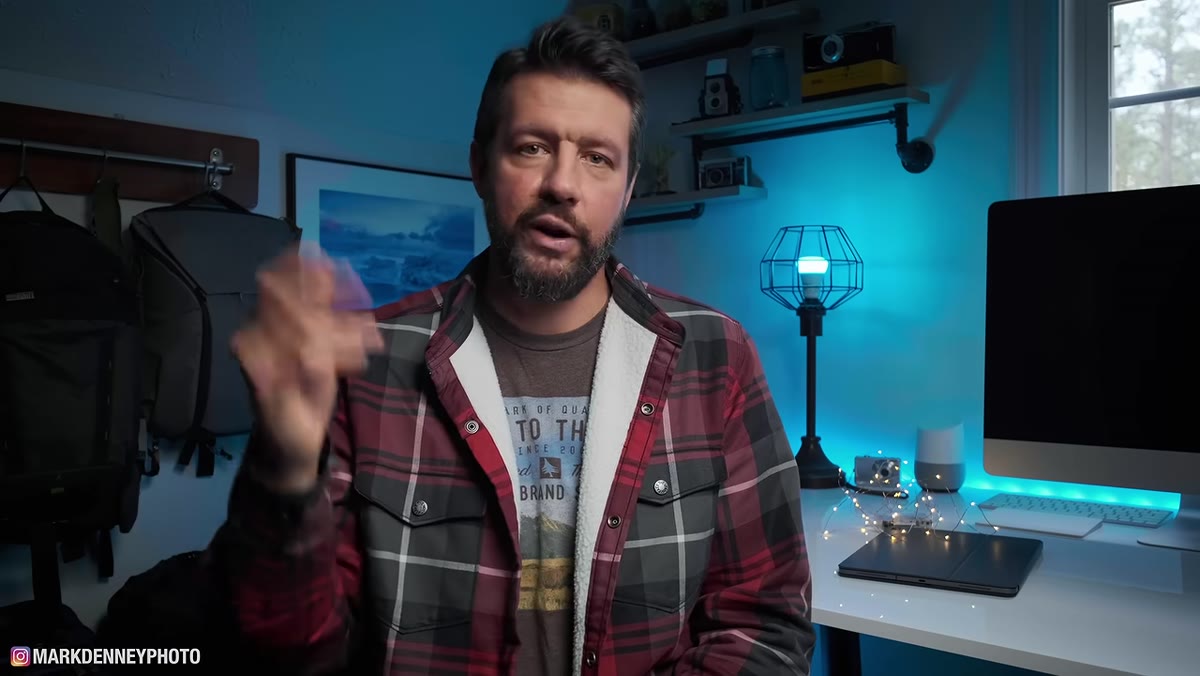
 Denney gesturing while explaining video tutorial investment category
This is Denney’s first category, and it’s the one I’d argue gives you the fastest return. With that $2,000 budget, you could purchase somewhere between 25 and 40 premium video tutorial series from working landscape photographers. Topics might include on-location field technique, post-processing workflows in Lightroom or Photoshop, luminosity masking, exposure blending, focus stacking, or astrophotography from capture through edit.
Denney gesturing while explaining video tutorial investment category
This is Denney’s first category, and it’s the one I’d argue gives you the fastest return. With that $2,000 budget, you could purchase somewhere between 25 and 40 premium video tutorial series from working landscape photographers. Topics might include on-location field technique, post-processing workflows in Lightroom or Photoshop, luminosity masking, exposure blending, focus stacking, or astrophotography from capture through edit.
The key is to buy from photographers whose actual work you respect, not just whoever has the biggest YouTube channel. You like their images for a reason. That reason is embedded in their process. Let them show you how it works. These tutorials are downloadable, permanently yours, and can be revisited six months later when you finally start shooting the Milky Way and need a refresher on the whole workflow.
Step 4: Create a Local Library You Can Return To
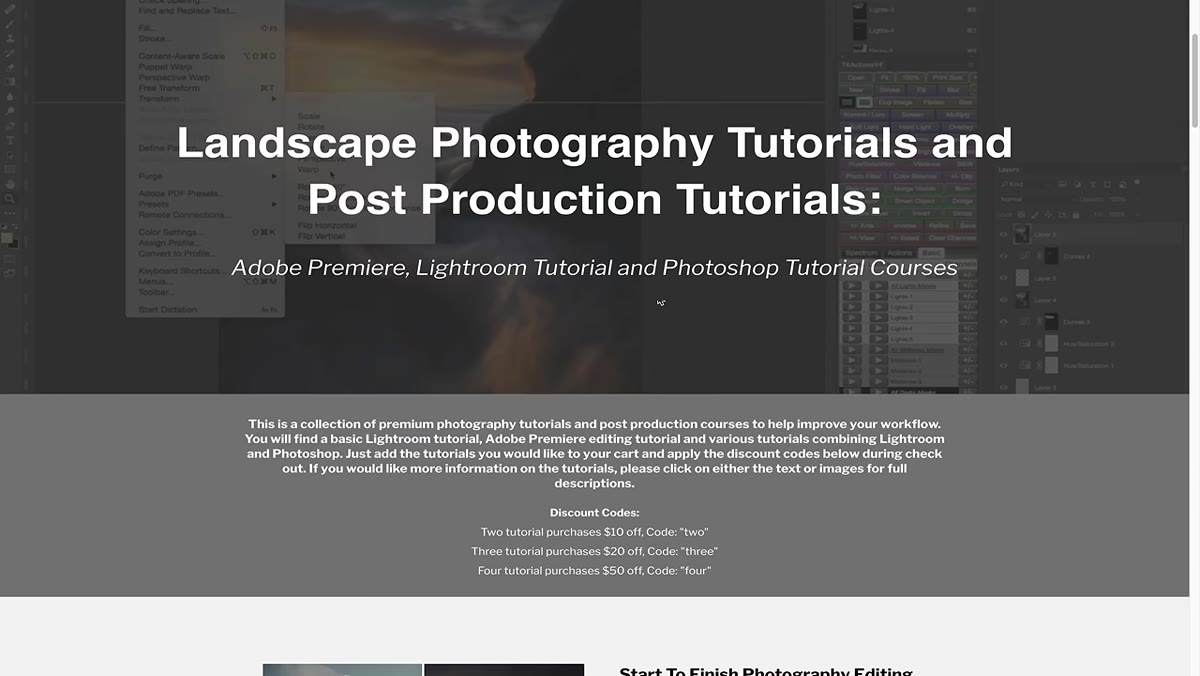
 Suggestion to organize tutorials in a dedicated desktop folder
Denney’s practical advice here is easy to overlook but genuinely useful. Create a dedicated folder on your computer and treat it like a reference library. Name it something you’ll actually use: “Field Tutorials,” “Processing Guides,” whatever sticks. Then when you’re preparing for a new genre or revisiting a technique you haven’t used in months, you pull it up rather than starting a YouTube search at midnight.
Suggestion to organize tutorials in a dedicated desktop folder
Denney’s practical advice here is easy to overlook but genuinely useful. Create a dedicated folder on your computer and treat it like a reference library. Name it something you’ll actually use: “Field Tutorials,” “Processing Guides,” whatever sticks. Then when you’re preparing for a new genre or revisiting a technique you haven’t used in months, you pull it up rather than starting a YouTube search at midnight.
I do something similar with field notes. After every workshop I lead, I write up the things that surprised me during the shoot, conditions I didn’t anticipate, decisions I’d make differently. That folder has become more valuable to me than any piece of gear I own. The principle is the same: information you can return to compounds over time.
Step 5: Recognize That Knowledge Transfers, Gear Doesn’t
 Denney explaining long-term return on educational investment
There’s a line of thinking in Denney’s argument that doesn’t get said explicitly but runs through everything: camera gear depreciates the moment you buy it, and the knowledge you build from good instruction only grows. A new lens might give you a marginally sharper image under the right conditions. A deep understanding of light, composition, and post-processing gives you better images in every condition, with every body, for the rest of your life.
Denney explaining long-term return on educational investment
There’s a line of thinking in Denney’s argument that doesn’t get said explicitly but runs through everything: camera gear depreciates the moment you buy it, and the knowledge you build from good instruction only grows. A new lens might give you a marginally sharper image under the right conditions. A deep understanding of light, composition, and post-processing gives you better images in every condition, with every body, for the rest of your life.
This is the part that took me years to internalize. I still shoot film occasionally, specifically because it slows me down and forces me to commit to each frame before pressing the shutter. That habit, which cost me almost nothing to develop, has made me a better digital photographer. Skills transfer. Sensor sizes don’t.
What I’d Add From the Field
Denney’s framework is solid, and my one extension to it is this: pair whatever educational investment you make with a deliberate shooting practice. Watching a tutorial on exposure blending is worthwhile. Watching it on Monday and then going out Thursday morning to try it while the light is doing something real, that’s where the learning actually takes root.
I’ve had students come to workshops who have watched hundreds of hours of instructional content and still hesitate at every decision point in the field. The gap isn’t knowledge. It’s repetition under real conditions. So allocate your educational budget, yes, but protect your shooting time just as fiercely. One without the other moves slowly.
The single most important thing I took from this tutorial is something photographers at every level need to hear: buying gear feels like progress because it’s measurable and immediate. Learning feels slower and harder to quantify, but it’s the only investment that actually follows you into the field and compounds over a career.
Watch the full tutorial on YouTube and listen to how Denney builds the case. Then sit with the question honestly before your next gear purchase.
Comments (3)
Printing this out and pinning it next to my monitor. That good.
I keep coming back to this article. It's that useful.
Finally someone explains this in a way that actually makes sense.
Leave a Comment