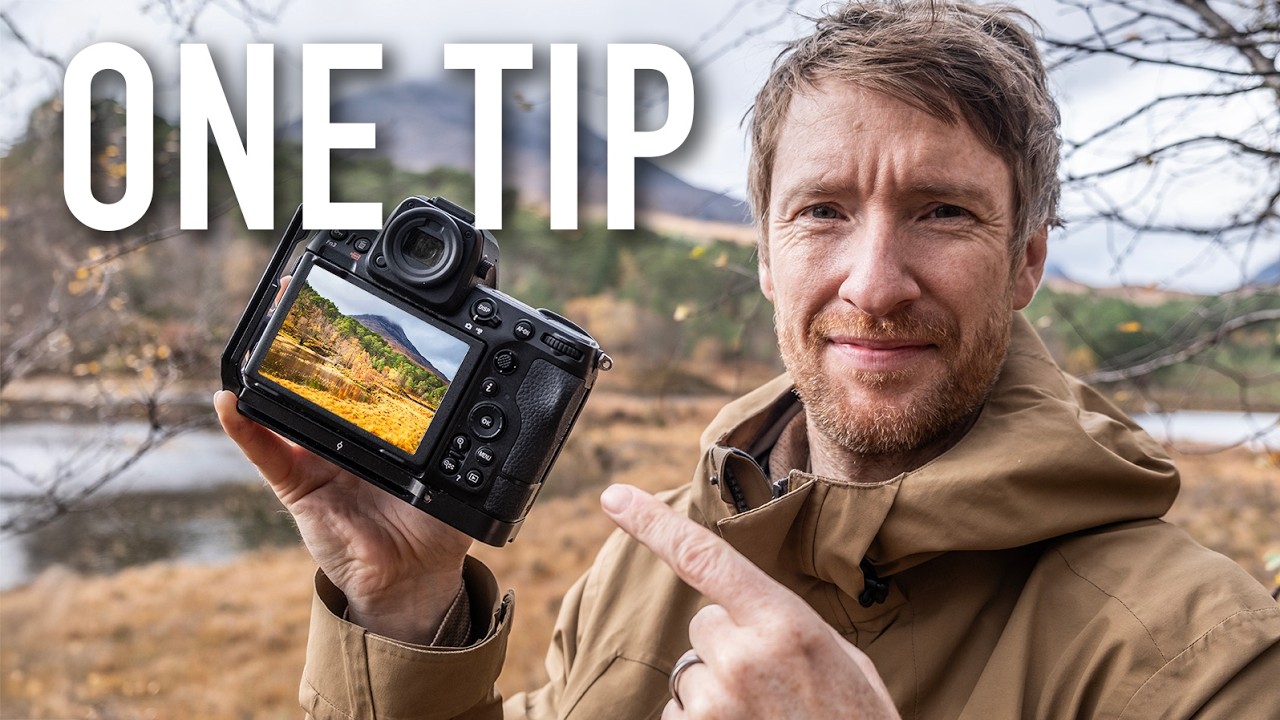
I’ve been waking up at 4am for shoots for two decades now, and I still have mornings where I lie there running the math in my head. Drive time, weather odds, the probability that I’ll come home with anything worth keeping. Early in my career, I let that mental arithmetic talk me out of more shoots than I’d like to admit. The irony is that one of my best-selling prints came from a trip where I sat in coastal fog for two full days and drove six hours each way. One usable image. I would have skipped that trip based on the forecast.
That’s why something Thomas Heaton says in this tutorial landed hard when I first watched it. It’s simple advice, almost frustratingly so, but it cuts straight to the reason most photographers plateau. Watch the full tutorial on YouTube before or after reading this breakdown. Either way, what follows is the practical framework I pulled from it, expanded with how I’ve actually applied it in the field.
The core argument is this: the biggest obstacle in landscape photography isn’t technical. It’s the gap between knowing what to do and actually leaving the house to do it. A poll Heaton ran inside his photography community confirmed it. Motivation and getting out were the top struggles, followed closely by finding interesting locations. Gear and post-processing barely registered. We spend money on lenses and presets when what we actually need is a reason to show up consistently.
Step 1: Reframe What You’re Going Out For
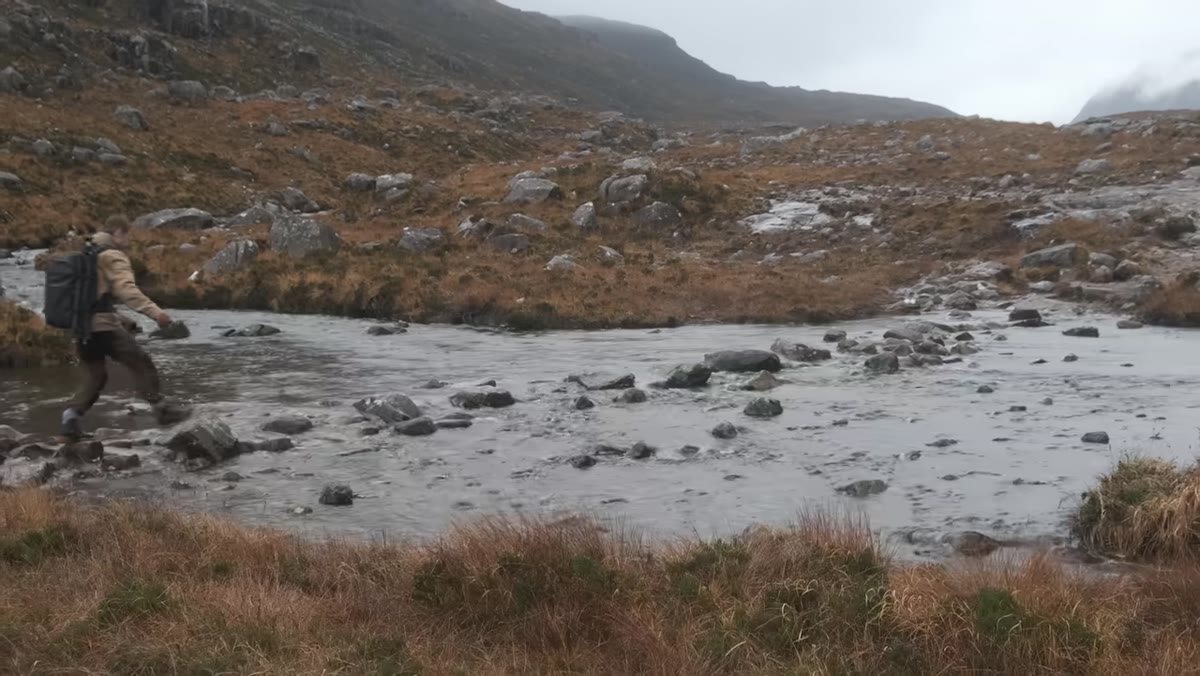 Thomas walking remote Scottish valley in winter light
Stop treating the photograph as the product and start treating the outing as the product. This is the actual mindset shift the tutorial is built around, and it’s not soft advice. It’s practical. When the image is your only reward, every uncertain forecast becomes a reason to stay home. When the walk, the cold air, the predawn quiet, and the act of looking carefully are themselves the reward, nothing can talk you out of going.
I keep a short list in the notes app on my phone of non-photographic reasons I love being out early. Morning light on frost. The specific silence of a forest at 5am. The way my eyes adjust to darkness on the approach to a location. Reading that list on a reluctant morning has more pull than any motivational quote. Build your own version of it.
Step 2: Commit to Showing Up Without a Shot in Mind
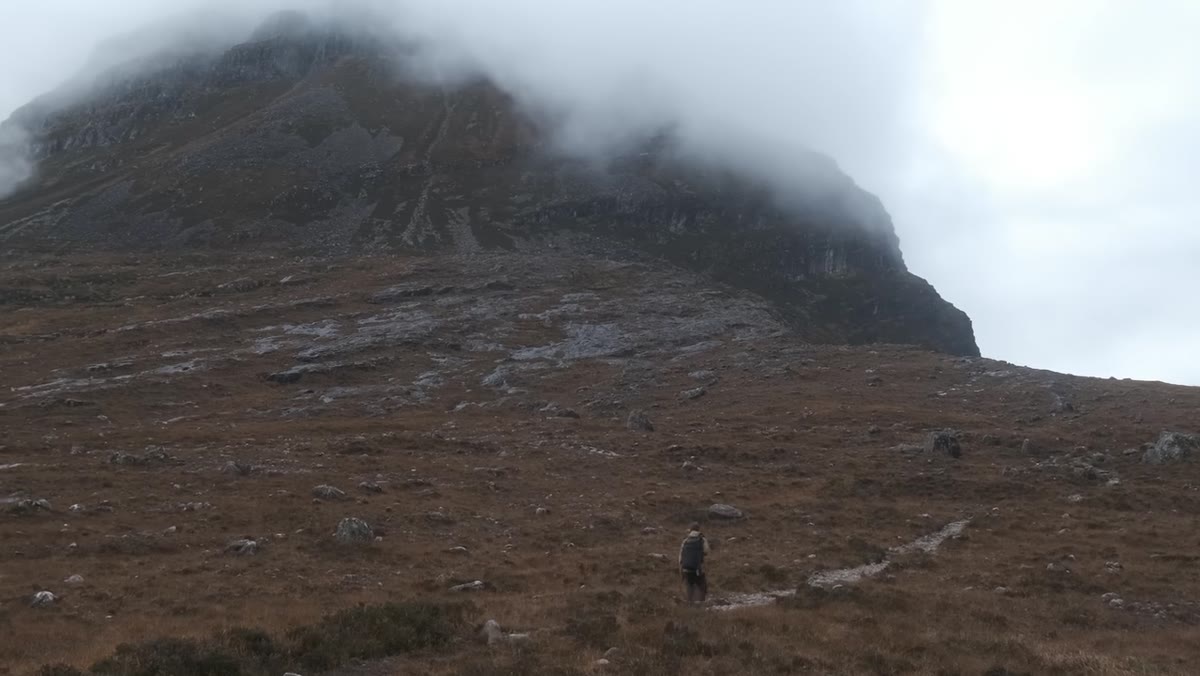 Heaton acknowledging he may not get an image on this outing
The tutorial makes a point that takes some getting used to: Heaton heads out knowing he might come home empty. He’s filming a video about how to improve your photography while openly admitting he may not photograph anything worth keeping that day. That’s not irony, that’s the model.
Going out without a guaranteed shot in mind forces you to actually look. When you’ve pre-visualized a specific hero image and the light doesn’t cooperate, you’ve essentially failed before you started. When you go out open, you notice the mossy boulders near the waterline, the unexpected color in a gray sky, the composition that only exists because you wandered thirty feet off your original path.
Step 3: Scale the Challenge to Your Own Life
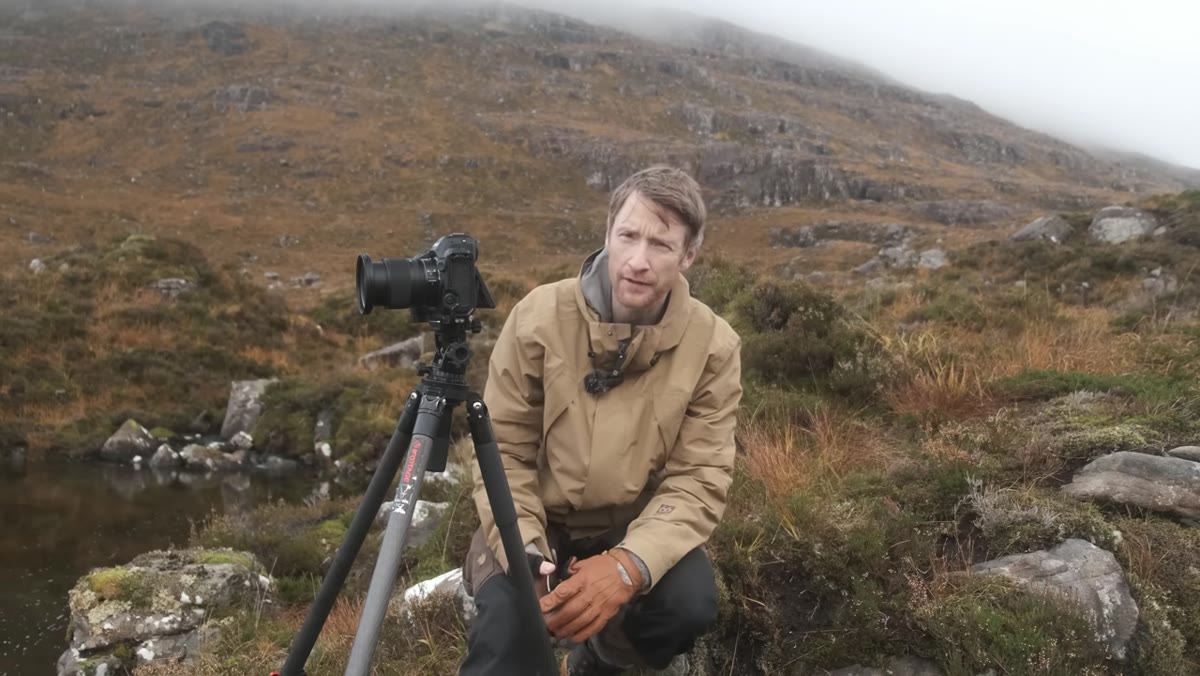 Heaton comparing remote hike to a local nature reserve visit
A 3.5-mile hike into a remote Scottish glen is Heaton’s version of showing up. Yours might be a fifteen-minute drive to a local wetland at sunrise. The video is explicit about this: the commitment scales. What doesn’t scale is the excuse that your situation isn’t dramatic enough to produce good work.
The photographers I know who improve fastest are almost never the ones who travel furthest. They’re the ones who return to the same local spots in different seasons, different weather, different light, until they understand that place deeply. Familiarity with a location is an underrated competitive edge. You stop navigating and start seeing.
Step 4: Use the Walk as Active Pre-Visualization
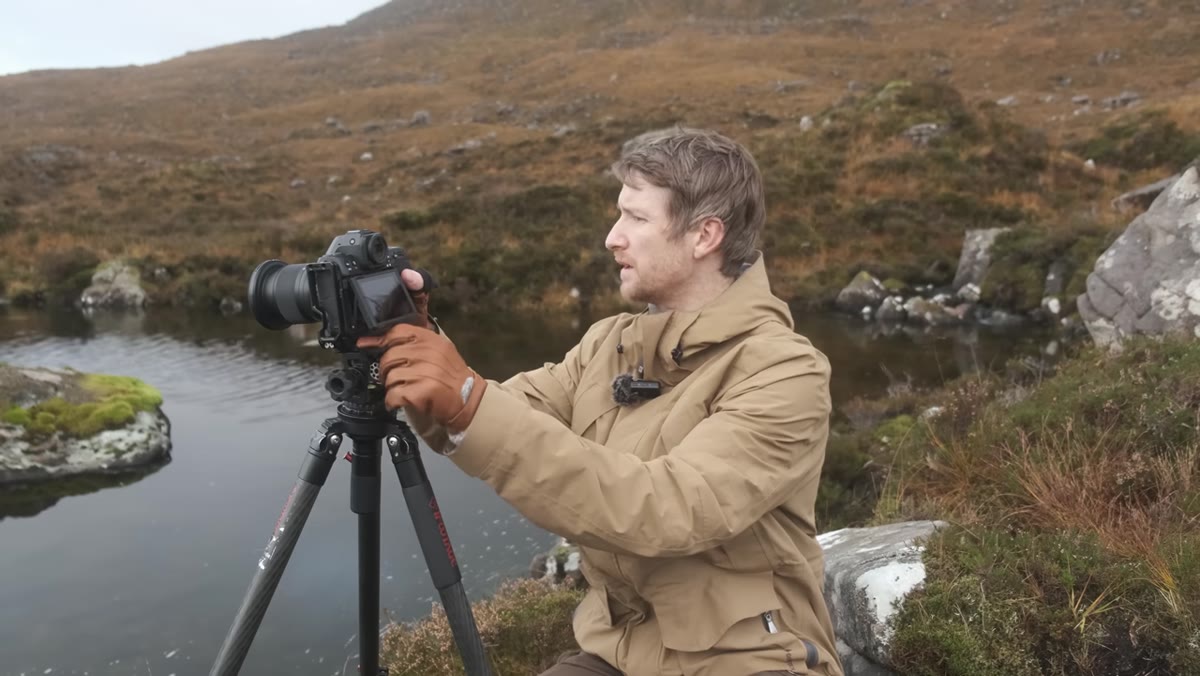 Heaton scouting around the loch edge, examining boulders and moss
While you’re out, before you’ve lifted the camera, your brain is already composing. Heaton walks the loch edge, notes the boulders with green moss, starts thinking about foreground interest. This isn’t dead time between parking and shooting. It’s the most important part of the process.
Walk slowly. Stop often. Look behind you, which landscape photographers forget to do constantly. I’ve made a habit of standing still for a full two minutes at any location before I touch my bag. It feels uncomfortable. It’s also where I find shots I would have walked straight past. The first composition that presents itself is almost never the best one.
Step 5: Let Field Time Replace Tutorial Time
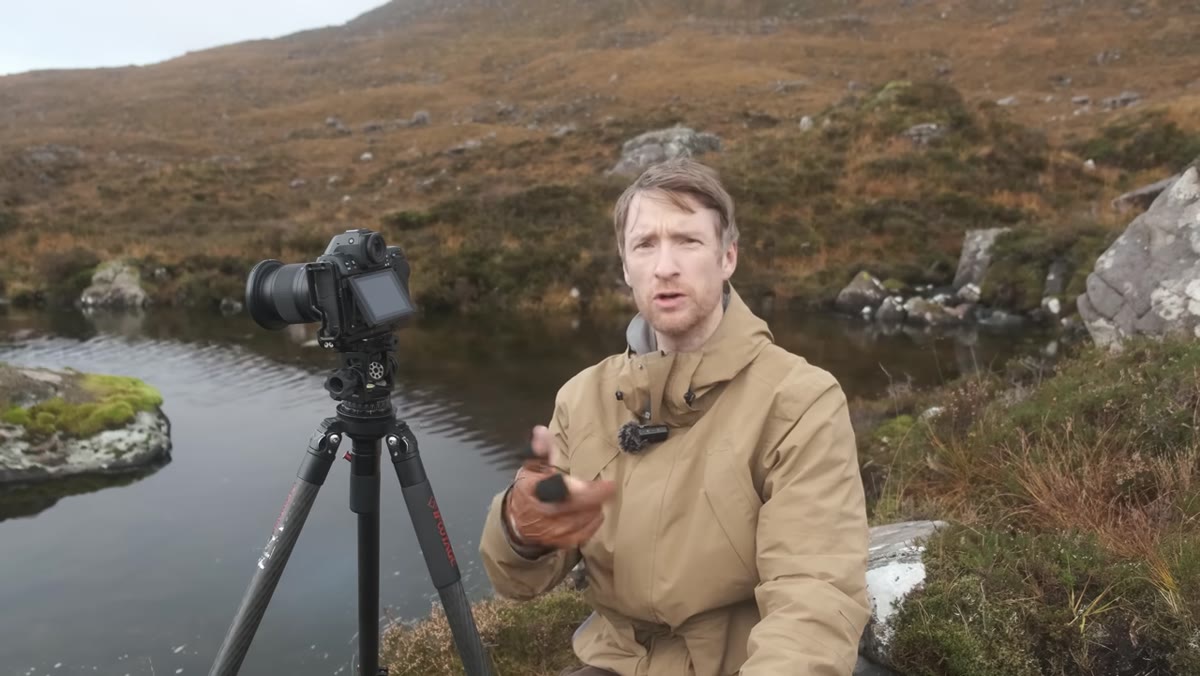 Heaton noting that tutorials are useless without field application
Here’s where Heaton says something that every photographer who spends hours watching YouTube videos, myself included at times, needs to hear. The craft knowledge you pick up from tutorials, books, and courses is completely inert until you take it outside. You cannot learn to read light from a screen. You cannot develop compositional instincts without making bad compositions first.
This doesn’t mean stop learning. It means set a ratio. For every hour of tutorial content you consume, spend at least two hours in the field applying it. The feedback loop only closes when you’re standing somewhere with a camera, making decisions in real light.
Step 6: Measure Progress in Outings, Not Images
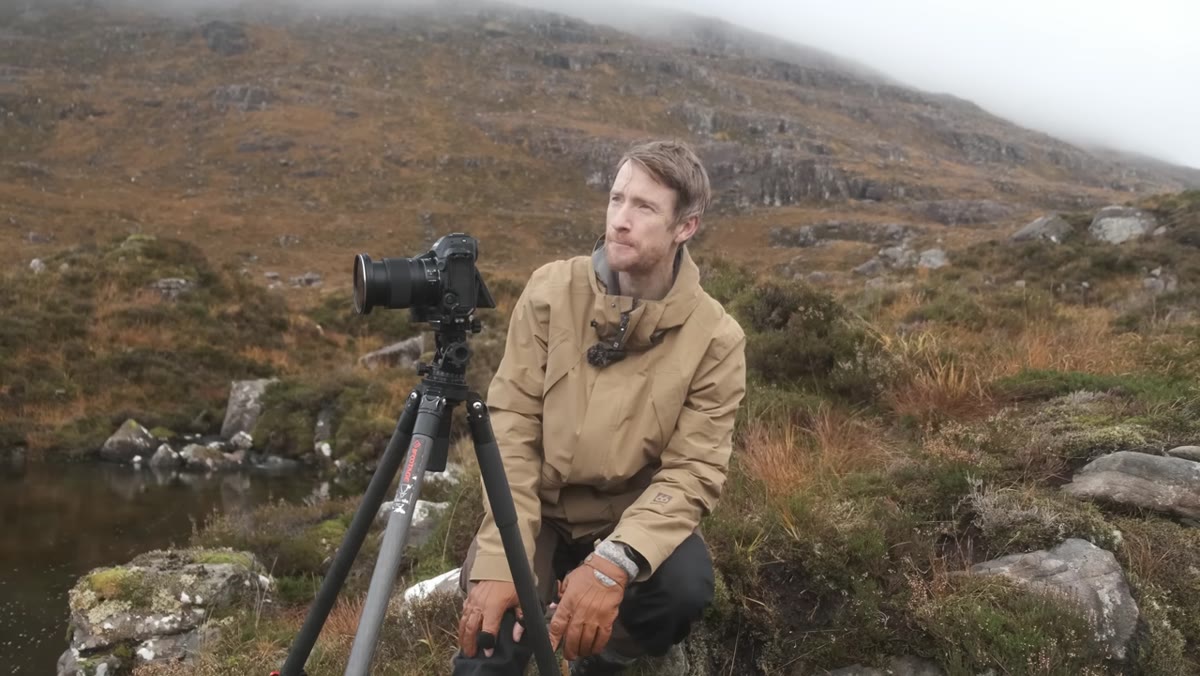 Heaton reinforcing that frequency of going out drives improvement
The more you get out, the better you get. That’s the closing logic of the tutorial, and it’s also the most falsifiable claim in it. Track it. Keep a simple log of outings, not by how many keepers you got but by how many times you went. After a month, look at the relationship between frequency and your satisfaction with the work. You’ll see it immediately.
Heaton’s framing throughout the video is consistent: the process builds the photographer. The images are evidence of the process, not the goal of it.
What I’d Add From Twenty Years of Early Mornings
The tutorial focuses on motivation and physical presence, and it’s exactly right to do so. What I’d layer on top of it is the value of a standing commitment. I have a rule in my own practice: two mornings per week, I am outside before sunrise regardless of forecast. No decision to make, no negotiation with myself. The lucky hat goes on, the coffee goes in the thermos, and I go. Some of those mornings produce nothing. Some produce everything. But the habit removes the activation cost entirely, which is the hidden enemy Heaton is describing.
My mentor once told me the mountain doesn’t care about your schedule. That stuck. The light is going to do what it does. The question is only whether you’ll be standing in it.
The single most important thing to take from this tutorial is deceptively small: showing up is the technique. Everything else, composition, exposure, post-processing, is downstream of the decision to be in the field consistently. Make that decision easier and you make every other part of your photography better.
Watch the full tutorial on YouTube to see Heaton work through this in real time, in a cold Scottish valley, not quite knowing what he’ll find.
Comments
Leave a Comment