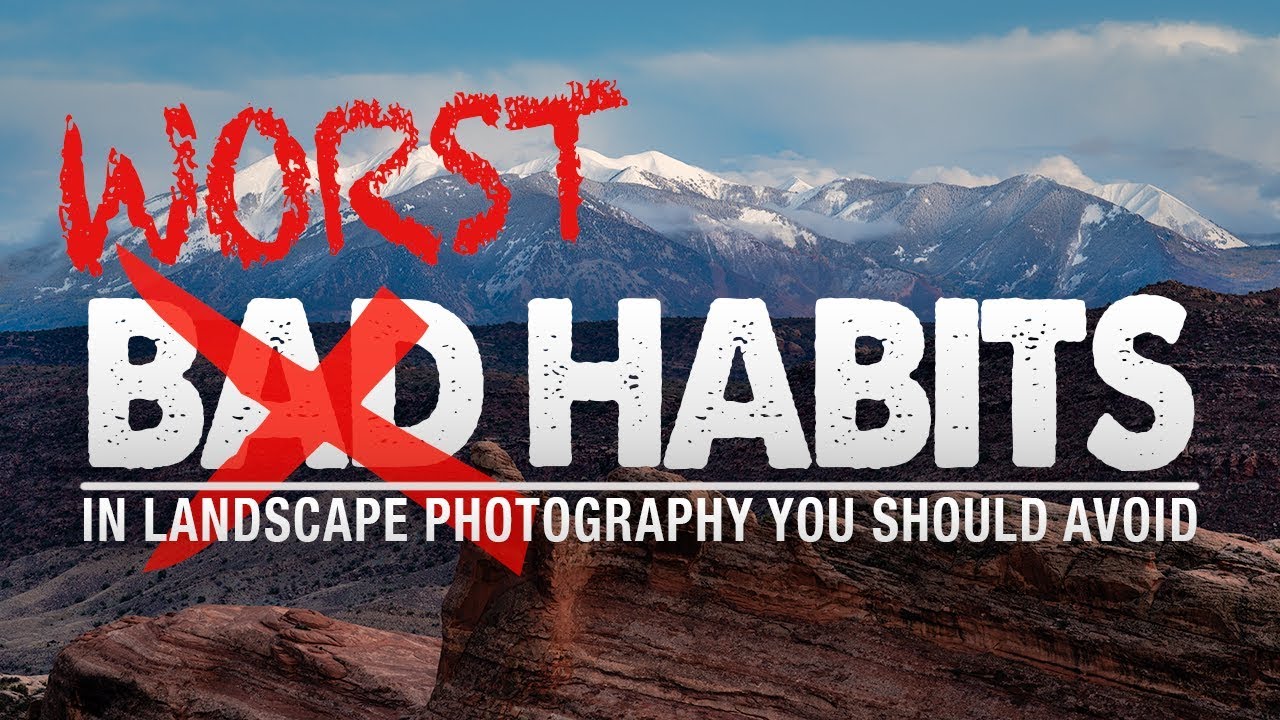
Bad habits are strange things. They rarely announce themselves. They just quietly accumulate until one day you’re standing knee-deep in the Deschutes River at 5am, reviewing a memory card full of nearly identical shots, wondering why your work has felt stagnant for months. I’ve been shooting landscapes full-time for two decades, and I still fight the same patterns that tripped me up when I was starting out. That’s why when I came across this honest, self-aware tutorial from Mark Denney, it landed differently than most technique videos. He’s not talking about gear or software. He’s talking about the invisible patterns that quietly undermine photographers who actually know what they’re doing.
In this Mark Denney tutorial, he walks through the nine worst habits he’s identified in his own landscape photography practice, ranked from least to most damaging. What makes it useful is that he owns every single one. These aren’t cautionary tales about other photographers. They’re confessions, and that specificity makes them instructive in a way that generic advice rarely is. Watch the full tutorial on YouTube and then come back here for a closer look at the habits that hit me hardest and what I’ve actually done about them in the field.
Step 1: Stop Editing Photos Immediately After a Trip
 Lightroom catalog open with fresh import, star ratings visible
The impulse to open Lightroom the moment you get home from a shoot is almost biological. You transfer the files, make a backup, and then somehow two hours have passed and you’ve already processed your favorite frames. I do this constantly, and the results are almost always worse for it.
The issue is not technical. Your eyes are fatigued, your emotional attachment to the conditions you just experienced is at its peak, and you’re likely to favor shots that remind you of the feeling rather than shots that actually work as photographs. Mark’s advice mirrors what I tell students in my workshops: treat your post-shoot catalog the way you treat a fresh edit. Walk away. Let it breathe for at least a day, ideally two or three. When you return, you’ll cull with clearer eyes and edit toward the image, not toward the memory.
Step 2: Break Out of Single-Lens Shooting
 Tripod set up at location, single lens attached, wide static composition
This one stings because it’s so easy to rationalize. You arrive at a location, nail a composition, dial in your settings, and then spend the next hour making micro-adjustments to the same frame. Tripod up a few inches. Tilt slightly left. Zoom in a touch. You feel productive because you’re shooting, but when you get home, you have forty versions of the same photograph.
What Mark describes, and what I’ve had to train myself out of, is the tunnel vision that sets in once a composition feels “right.” The fix is deliberate: before you settle into a final setup, give yourself a 15-minute exploration window. Put on a different focal length. Get low, get high, step back further than feels comfortable. The scene you almost ignored is often more interesting than the one you locked in on first. I now keep a 70-200mm on my second body specifically to force myself to see the same location differently before I commit to anything on the tripod.
Step 3: Resist the Pull of the Obvious Composition
 Photographer moving to common tourist viewpoint, shooting same angle as others
There’s a composition at every popular location that you’ve already seen a hundred times. The postcard angle. The shot everyone takes because the light hits it well and the foreground interest is obvious. I’ve taken it. You’ve taken it. And it’s not wrong to take it, but if that’s the only frame you come home with, you haven’t really photographed the place.
The habit Mark flags here is arriving with a preconceived image already in your head, usually assembled from other people’s photos, and then simply recreating it. The antidote is scouting without your camera first, or at minimum arriving well before the light and walking the area before you set up. My mentor used to say the mountain doesn’t care about your schedule, meaning the shot you planned for rarely shows up on cue, and the one worth making is usually somewhere you weren’t looking. That lesson took me years to absorb.
Step 4: Diversify Your Shooting Conditions
 Overcast flat light, photographer packing up gear early
Most of us gravitate toward golden hour because golden hour is reliable. Soft warm light, long shadows, forgiving dynamic range. But chasing the same quality of light every time you go out produces a body of work that feels one-note, no matter how technically clean the images are.
Mark pushes back against the habit of only shooting in “ideal” conditions, and I’d extend that further. Some of my most interesting work has come from situations I didn’t choose. Fog that wouldn’t lift. Rain moving through a canyon at noon. Flat grey light over snow. These conditions require more from you technically and compositionally, and that pressure tends to produce more thoughtful images. If you’re only going out when the forecast looks perfect, you’re training yourself to depend on conditions doing the work for you.
Step 5: Stop Over-Editing Toward an Imagined Image
 Lightroom develop module, heavy-handed saturation and contrast sliders pushed far
The habit here is subtle: you have a vision of what the photo should look like, often influenced by the heavily processed work that dominates social media, and you push your edits toward that vision rather than toward what the raw file is actually telling you. Shadows get crushed past the point of detail. Saturation climbs until the colors stop looking real. Clarity gets stacked until the texture looks like a video game.
The discipline Mark advocates for, and one I enforce with myself, is editing to reveal rather than to construct. Start by asking what drew you to the scene in the first place, and edit to serve that quality specifically. If it was the softness of morning fog, don’t sharpen and clarify it out of existence. If it was the subtlety of a pastel sky, don’t punch the vibrance until it glows. Your raw file is evidence. Work with it, not against it.
A Word From the Field
I’d add one thing Mark doesn’t cover directly: bad habits are almost always responses to anxiety. Editing quickly after a trip is about fear of losing the files. Shooting one composition for an hour is about fear of missing the moment. Chasing ideal conditions is about fear of wasting the drive. I once spent two days sitting in fog at a location six hours from home and came home with a single usable frame. That image became my best-selling print. The fog forced patience I wouldn’t have chosen on my own. Most of the habits on Mark’s list are forms of impatience, and the correction for impatience is almost always the same: slow down and trust the process.
The single most useful thing I took from this tutorial is the reminder that growth in photography is rarely about learning new techniques. It’s about identifying the automatic behaviors that bypass your judgment and replacing them with deliberate choices. Watch the full tutorial yourself and see which of these nine habits you recognize in your own work: Watch the full tutorial on YouTube.
Comments (2)
Solid advice. Especially the part about taking your time with it.
Great breakdown. The step-by-step approach really helps.
Leave a Comment