Standing Before the Moment
There’s a particular kind of silence that comes when you’re alone in a landscape with your camera. The light is changing. Your feet are sore. And you’re staring at a vista that your eyes find beautiful, but your viewfinder won’t quite capture it—at least, not yet.
This is where composition matters most. Not as a rule book, but as a conversation between what you see and how you translate it into an image that others can feel.
I’ve spent enough mornings in mountain valleys and coastal marshes to know that composition isn’t something you apply to a landscape. It’s something you discover within it.
The Power of Leading Lines
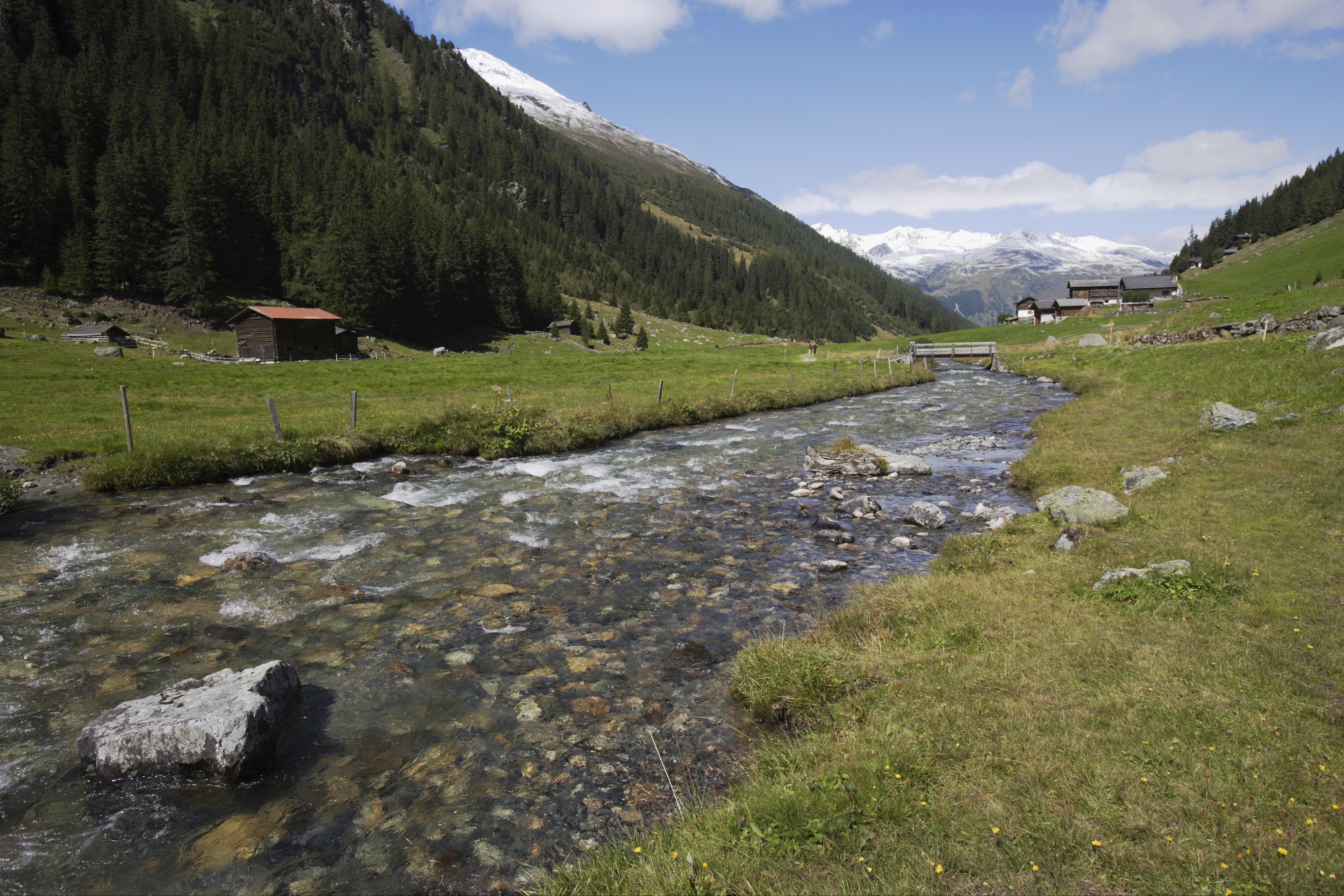
The first thing I look for when I arrive at a location is a line. Not an obvious border or a painted road—I mean the subtle architectures that already exist: a stream cutting through a meadow, a ridge catching first light, a fence line that disappeared into perspective decades ago.
These lines are your conversation partners. They tell your viewer’s eye where to travel through the frame.
When I photographed a ravine last autumn, the creek wasn’t just water—it was a pathway that could draw someone from the foreground into the depths of the image. I positioned myself low, letting the water’s curve lead upward through fallen branches and into the forest beyond. By using a 35mm focal length rather than a wide-angle, I maintained compression; the line felt continuous rather than fragmented.
Here’s the practical part: scout for lines before you commit to a composition. Walk around your subject. Does the line guide the eye where you want it to go, or does it lead off the frame awkwardly? Adjust your position in increments of a few feet. Small movements create significant changes in how lines align.
Layering Depth Without Distraction
I used to believe that a “good” landscape needed everything in focus from foreground to horizon. I’d stop my aperture down to f/16 or f/22, treat depth of field like insurance against failure.
What I learned was this: layers create depth far more effectively than sheer detail.
Stand in any landscape and you’ll naturally see depth—the tree closest to you, the middle distance of fields or water, the distant mountains. Your job is to separate these layers visually, not collapse them into equal importance.
On a recent morning in a Scottish glen, I placed lichen-covered rocks in sharp focus in my immediate foreground, let the middle distance (a loch and moorland) fall slightly soft, and kept the distant mountains crisp. By using f/8 instead of trying to achieve infinite sharpness, each layer retained its own character. The image breathed.
Try this: Position yourself where you have something genuinely interesting within arm’s reach of your lens. Use an aperture between f/5.6 and f/11. Let the foreground and background do the compositional work while the middle ground connects them.
The Discipline of Subtraction
The hardest lesson I’ve learned about composition is that the elements you exclude matter more than those you include.
When you’re standing in a beautiful place, there’s a human impulse to capture all of it—to somehow prove you were there, that it was as magnificent as you felt. But a photograph isn’t a inventory. It’s a selection.
I once returned to the same coastal cliff four times in a week, cropping tighter each visit. The first version included a lighthouse, a beach, birds, and clouds. It was busy. By the fourth visit, I’d composed the image to show only the cliff face, a slice of sea, and the quality of light on stone. That version—stripped down and focused—became the one people actually connected with.
The Practice
Composition becomes instinct only through repetition. Spend time with landscapes. Return to the same places. Reframe the same scenes obsessively. Pay attention to how a shifted perspective changes meaning.
Your camera is just a tool for documenting what your eye has already learned to see.
Comments (2)
Clear and practical. No fluff. Appreciate that.
I've been looking for exactly this kind of tutorial. Perfect timing.
Leave a Comment