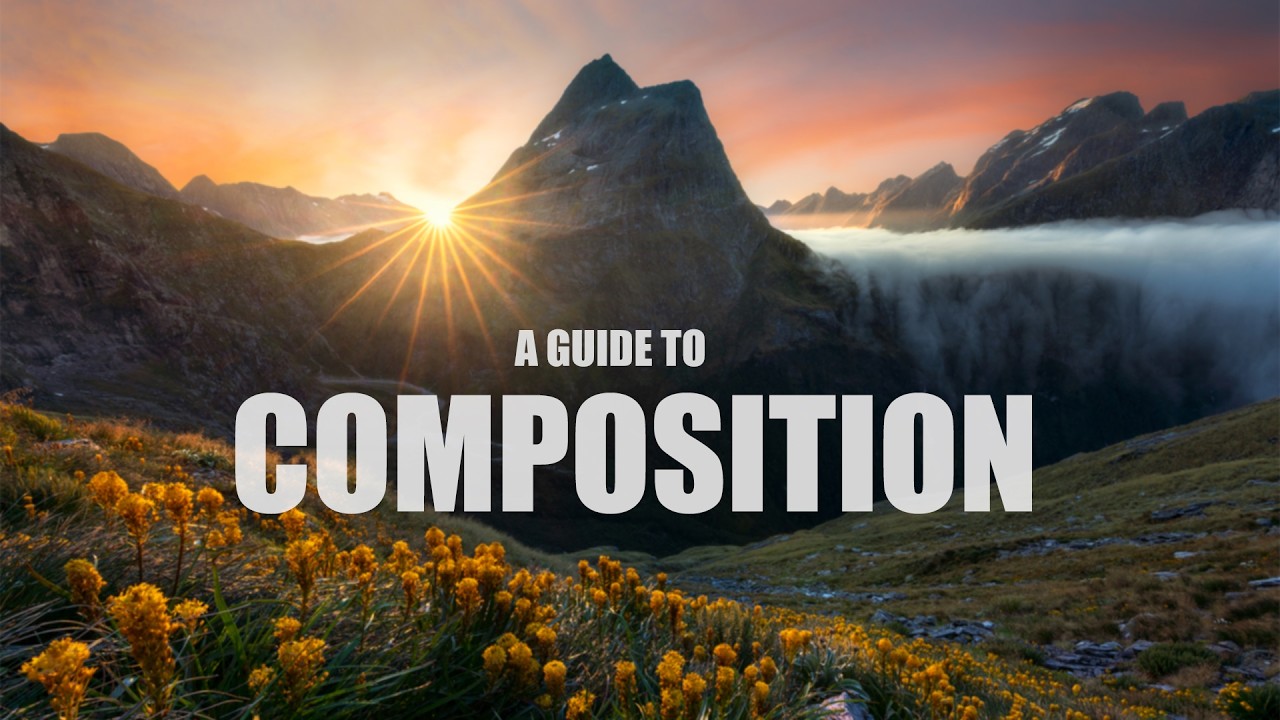
I spent last autumn second-guessing almost every frame I made in the Cascades. Not the exposure, not the light. The composition. I’d get home, pull up the files, and feel that nagging sense that something wasn’t sitting right. The images were competent. They weren’t compelling. There’s a difference, and I knew it.
That frustration is what sent me back to fundamentals. And this William Patino tutorial on landscape composition is the clearest breakdown of those fundamentals I’ve found in a long time.
It’s not a bag of tricks. It’s a framework. There’s a difference there too.
Why Most Landscape Frames Feel Flat Before You’ve Even Pressed the Shutter
Patino’s central argument is that weak landscape compositions usually fail at the structural level, before any question of light or gear enters the picture. The frame doesn’t have balance. It doesn’t have depth. And nothing is guiding the viewer’s eye through the scene.
These three problems, balance, depth, and visual flow, are what his framework addresses directly. He treats them as interdependent, not as separate checklists to run through. That framing is useful, because it matches how a scene actually works. A strong foreground element that creates depth also tends to anchor one side of the frame, which contributes to balance. Pull on one thread and the others move.
After twenty years of doing this, I know that instinctively on a good morning. On a bad morning, or after three sleepless nights at a workshop, I need a structure to lean on. That’s what this tutorial gives you.
Balancing the Frame Without Making It Symmetrical
Patino walks through visual weight, the idea that different parts of a frame carry different amounts of visual attention, and how to distribute that weight so the image feels stable without feeling static. A large dark rock on the left needs something to answer it on the right, even if that something is just tonal variation in the sky or a secondary point of interest in the midground.
The practical takeaway here is to look at your frame in terms of quadrants. Before you shoot, mentally divide the scene into four sections and ask yourself whether any one quadrant is completely empty of weight. That emptiness isn’t always a problem, negative space has value, but it should be a choice, not an accident.
He also makes a point I think gets undersold in most composition tutorials: balance is not symmetry. Symmetry is one tool. Balance is the broader goal, and you can achieve it with contrast, with light, with scale differences between subjects. A tiny human figure standing before a massive ridgeline is balanced precisely because the scale contrast registers as intentional tension.
Building Depth From Foreground to Horizon
This is where the tutorial earns its keep for me personally. Patino breaks depth creation into a layered approach: foreground, midground, background. Not groundbreaking as a concept, but the way he describes how each layer needs to do a specific job is genuinely useful.
The foreground anchors the viewer and creates a sense of entry into the scene. It should be strong enough to hold attention for a beat without pulling all the attention permanently. The midground transitions the eye and often carries the primary subject. The background, typically sky or distant peaks, provides scale and context.
Where photographers get this wrong, and where I got it wrong repeatedly last autumn, is treating the foreground as decoration rather than structure. You drop a rock or a patch of wildflowers at the bottom of the frame and hope it reads as depth. It doesn’t, unless it’s positioned and lit in a way that creates a clear visual path from the viewer’s eye inward. Patino shows how to evaluate that path before you commit to a position.
Leading the Eye: Flow Is a Direction, Not a Shape
The section on leading lines and visual flow is where Patino separates this tutorial from generic composition advice. He’s not just saying “use leading lines.” He’s talking about the direction and pace of visual movement through the frame.
A straight path from foreground to background moves the eye fast. A river bend slows it down and gives the viewer something to follow. A diagonal ridge creates energy. A horizontal line creates rest. The question isn’t which shape to use; it’s what experience you want to create and whether the shapes in front of you can be used to create it.
He suggests physically walking the scene before setting up the tripod. Move left, move right, crouch down, look at where the natural lines in the landscape converge or diverge. The strongest composition position is often not the first place you stop. I’ve spent twenty years waking up at four in the morning to have more time to do exactly this, to walk the scene before the light hits and understand the geometry of it. Patino’s framing of the process affirms that the physical scouting is compositional work, not just logistical prep.
Where I’d Push Back, or Push Further
The framework is excellent. My one honest extension: it works best in relatively open terrain where you have control over your position. In dense forest or canyon environments, you often can’t find the “correct” balance position because trees or walls block you. In those situations, I lean harder on tonal contrast within the frame to create implied depth, using shafts of light or shadow separation to build layers when physical distance between elements isn’t available.
It’s not a gap in Patino’s teaching. It’s just where the practitioner has to adapt the principle to terrain that doesn’t cooperate.
The core lesson, evaluate balance, depth, and visual flow as a system before you shoot, is something you can apply tomorrow morning regardless of where you are or what the conditions look like.
Watch the full tutorial to see Patino demonstrate these principles on actual images. The visual examples make the written concepts click in a way that’s hard to replicate in text: How To Effectively Compose Your Landscape Images.
Comments
Leave a Comment