
There’s a particular kind of quiet that settles in at the end of a hard year. Not peaceful exactly, more like the silence after a long exhale. I’ve been shooting landscapes for two decades, and 2020 tested the kind of patience my old mentor used to talk about when he’d say, “the mountain doesn’t care about your schedule.” Trailheads closed. Workshop seasons evaporated. The usual rhythm of pre-dawn drives and cold river wading got replaced by something slower and stranger. What kept me anchored, honestly, was the photography community online. The people still sharing frames, still asking questions, still caring about the light.
That’s the spirit running underneath this Mark Denney tutorial, Watch the full tutorial on YouTube, which marks a significant milestone for his channel and closes out the year with a genuine gesture of gratitude. It’s a short video, but it carries real weight. Denney crosses 150,000 subscribers on Christmas Eve of 2020, and rather than simply celebrating, he turns the moment outward toward the people who got him there. For anyone building a long-term practice in outdoor photography, whether that’s a YouTube channel, a print business, or a workshop calendar, there’s a working lesson buried in how he handles this moment.
Step 1: Acknowledge the Year Honestly Before Moving Forward
 Mark speaking to camera as the year draws to a close
Denney opens by naming 2020 directly, not vaguely. He doesn’t soften it or spin it. He calls it tumultuous, acknowledges the weight of the headlines, and then pivots to something specific that cut through all of it for him: the weekly connection with his audience. This is worth paying attention to if you’re building any kind of public-facing photography practice. Authenticity isn’t about oversharing. It’s about being precise. He doesn’t say “it was a rough year.” He says the community was a consistent source of inspiration amid the noise, and he means it.
Mark speaking to camera as the year draws to a close
Denney opens by naming 2020 directly, not vaguely. He doesn’t soften it or spin it. He calls it tumultuous, acknowledges the weight of the headlines, and then pivots to something specific that cut through all of it for him: the weekly connection with his audience. This is worth paying attention to if you’re building any kind of public-facing photography practice. Authenticity isn’t about oversharing. It’s about being precise. He doesn’t say “it was a rough year.” He says the community was a consistent source of inspiration amid the noise, and he means it.
If you’re writing a year-end post for your own site or wrapping up a workshop season, start by naming the actual texture of the year. Vagueness reads as filler. Specificity reads as trust.
Step 2: Tie the Milestone to the Community, Not to Yourself
 Mark referencing crossing 150,000 subscribers on Christmas Eve
When Denney mentions hitting 150,000 subscribers, he frames it as something that happened to him on Christmas Eve, almost like a gift he didn’t expect. He describes it as mind-boggling, and he means that in the most grounded way possible. The milestone isn’t a trophy he’s displaying. It’s a prompt to say thank you. The distinction matters. Photographers who build audiences over time tend to do so because they’re genuinely curious about other people’s work, not because they’re broadcasting their own resume.
Mark referencing crossing 150,000 subscribers on Christmas Eve
When Denney mentions hitting 150,000 subscribers, he frames it as something that happened to him on Christmas Eve, almost like a gift he didn’t expect. He describes it as mind-boggling, and he means that in the most grounded way possible. The milestone isn’t a trophy he’s displaying. It’s a prompt to say thank you. The distinction matters. Photographers who build audiences over time tend to do so because they’re genuinely curious about other people’s work, not because they’re broadcasting their own resume.
If you’re running a newsletter, a YouTube channel, or even just an Instagram presence around your landscape work, train yourself to measure milestones in terms of what they represent about your audience, not just what they represent about you. That reframe changes how you communicate and how people receive it.
Step 3: Make the Ask Specific and Tied to Value
 Mark explaining the giveaway entry requirements
The giveaway entry mechanic here is smarter than it looks on the surface. Denney asks people to subscribe, like the video, and then leave a comment describing a video topic they’d genuinely find helpful for outdoor landscape photography. He’s not just collecting entries. He’s running a free audience research session. Every comment becomes a data point about what his viewers actually want to learn. That’s the kind of double-purpose thinking that separates photographers who sustain a platform from those who burn out trying to guess what to create next.
Mark explaining the giveaway entry requirements
The giveaway entry mechanic here is smarter than it looks on the surface. Denney asks people to subscribe, like the video, and then leave a comment describing a video topic they’d genuinely find helpful for outdoor landscape photography. He’s not just collecting entries. He’s running a free audience research session. Every comment becomes a data point about what his viewers actually want to learn. That’s the kind of double-purpose thinking that separates photographers who sustain a platform from those who burn out trying to guess what to create next.
If you run workshops or produce any kind of educational content, consider building moments like this into your annual rhythm. Ask your audience what they’re struggling with. The answers will shape your next teaching season better than any trend report.
Step 4: Choose Gear You Can Recommend Without Hesitation
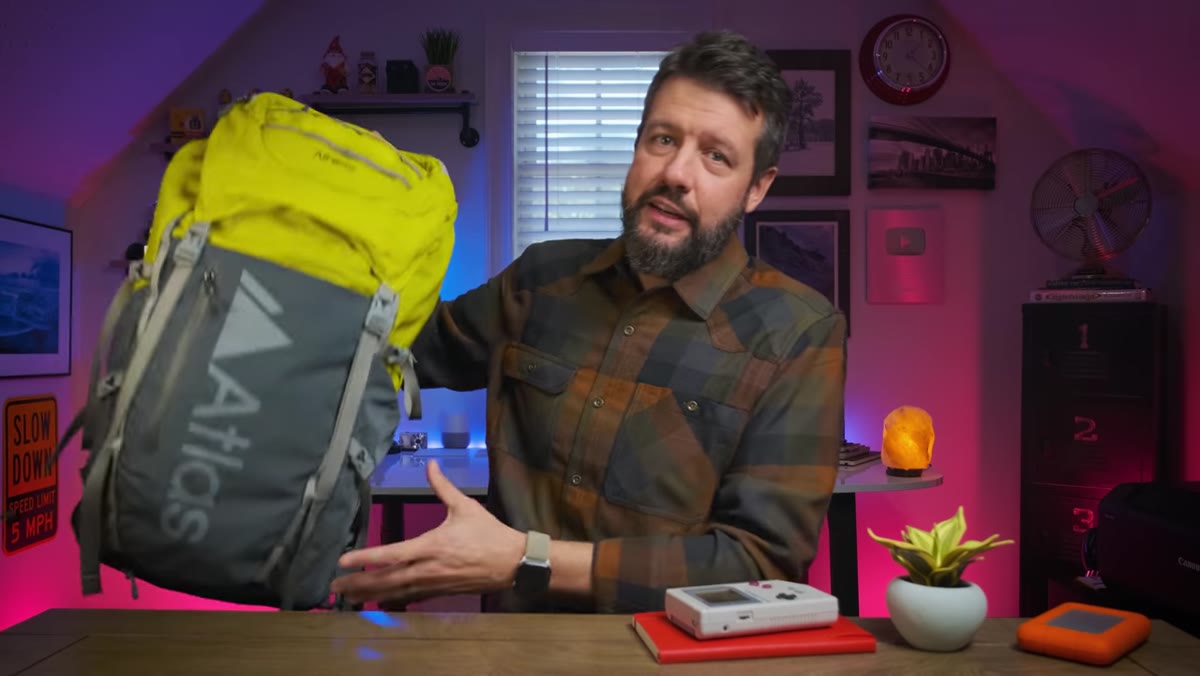 Mark holding the Atlas Athlete Pack on camera
The prize Denney is giving away is the Atlas Athlete Pack, which retails around $395. He’s not diplomatic about it. He says flat out that it’s his favorite bag from that company, and he describes its craftsmanship and functionality with the kind of specificity that only comes from actually using something in the field. He doesn’t hedge. He doesn’t say “it might be good for some people.” He says whoever wins it will be genuinely impressed.
Mark holding the Atlas Athlete Pack on camera
The prize Denney is giving away is the Atlas Athlete Pack, which retails around $395. He’s not diplomatic about it. He says flat out that it’s his favorite bag from that company, and he describes its craftsmanship and functionality with the kind of specificity that only comes from actually using something in the field. He doesn’t hedge. He doesn’t say “it might be good for some people.” He says whoever wins it will be genuinely impressed.
I think about this every time someone asks me what bag I’m carrying on a workshop. I only recommend gear I’ve used in the dark, in the rain, on steep terrain. If I can’t say “this thing has never let me down at 4am on a switchback,” I don’t say anything at all. Your reputation as a photographer extends to every recommendation you make, gear included.
Step 5: Close with Warmth, Not Polish
 Mark wrapping up the video wishing viewers well for the new year
Denney ends simply. He wishes people well for the holidays and the new year, acknowledges the video is short but intentional, and signs off with the same low-key warmth that runs through the whole thing. There’s no cinematic outro, no hard sell. Just a person wrapping up a conversation. That tone is harder to achieve than it looks. It requires actually caring about the people on the other side of the screen, and it shows.
Mark wrapping up the video wishing viewers well for the new year
Denney ends simply. He wishes people well for the holidays and the new year, acknowledges the video is short but intentional, and signs off with the same low-key warmth that runs through the whole thing. There’s no cinematic outro, no hard sell. Just a person wrapping up a conversation. That tone is harder to achieve than it looks. It requires actually caring about the people on the other side of the screen, and it shows.
When you’re closing out any communication with your audience, resist the urge to make it bigger than it needs to be. Sometimes the most powerful thing you can say is a clean, direct thank you.
What I’d Add From Twenty Years in the Field
The gear-as-giveaway format works because the item actually fits the audience. A landscape photography channel giving away a serious camera pack makes sense. I’ve seen brands and creators miss this badly, offering prizes that have nothing to do with what their community cares about. If you’re running a giveaway tied to a milestone, pick something you’d carry on your own next shoot. Ask yourself: would I drive six hours to a foggy shoreline with this thing on my back and trust it to still function on day two? If the answer is yes, you’ve got your prize.
The deeper takeaway from Denney’s video isn’t about the giveaway mechanics or even the subscriber milestone. It’s about what he does with a moment of success: he gives it back, and he does it in a way that generates more value for everyone involved. That’s a philosophy worth carrying into the next year and the one after that, right alongside the lucky hat and the manual settings and the alarm you stopped needing years ago.
Watch the full tutorial on YouTube and see how Denney wraps up the year in his own words. Sometimes the shortest videos carry the most worth watching for.
Comments
Leave a Comment