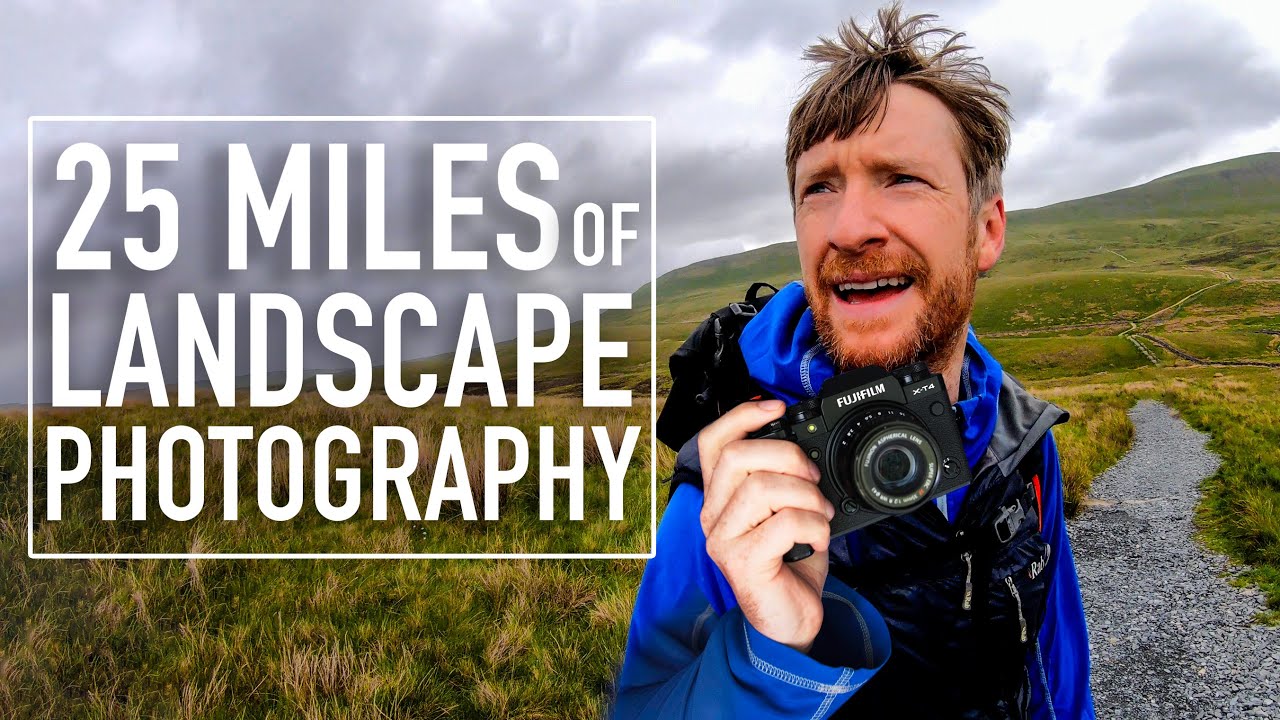
There’s a particular kind of creative rut that doesn’t feel like a rut at first. You’re still going out. You’re still shooting. But somewhere between the trailhead and the composition, you realize you’re just collecting frames rather than making photographs. I’ve been there more times than I’d like to admit, usually in late autumn when the light is flat and my motivation has started to match it. What snaps me out of it isn’t a new piece of gear or a different location. It’s constraint. And that’s exactly what made a recent Thomas Heaton tutorial stop me mid-scroll and watch it twice before breakfast.
Watch the full tutorial on YouTube
In this Thomas Heaton tutorial, he takes on the Yorkshire Three Peaks challenge with his old university friend Higgy - 25 miles, three summits, 1,600 meters of ascent, all inside 12 hours. The twist he adds to the physical challenge is a creative one: 12 photographs in 12 hours. No cherry-picking afterward. No staying in one spot until the light turns perfect. Just moving, observing, and committing. What he ends up documenting isn’t really a hiking video. It’s a masterclass in what sustained creative attention looks like when you strip away the comfort of unlimited time and options.
I’ve spent two decades doing this work, selling prints, running workshops, standing in cold Oregon rivers at hours that make my family question my sanity. And still, this video landed on something I keep having to relearn. The walkthrough below pulls out each step of Heaton’s approach so you can apply it to your own next long day in the field.
Step 1: Build a Creative Constraint Before You Leave the Car Park
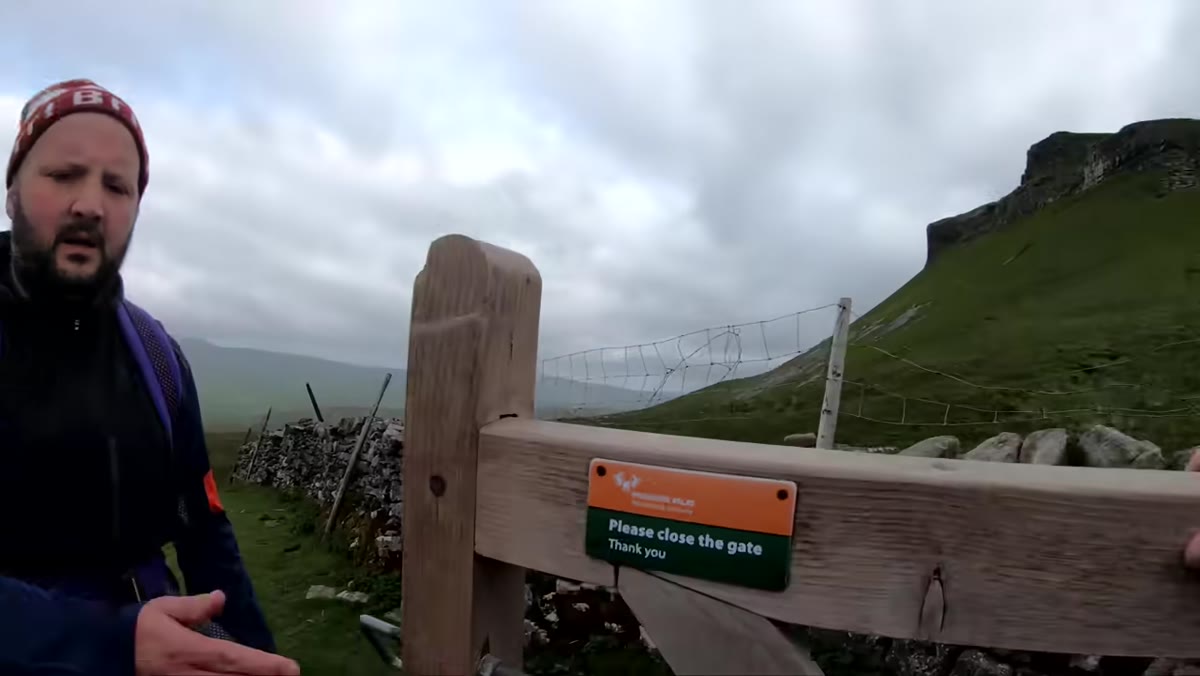 Heaton stating his challenge rules at the trailhead
Before Heaton takes a single step, he defines the terms of the exercise out loud: three peaks, 25 miles, 12 images, 12 hours. That specificity matters. A vague goal like “I’ll shoot whatever looks good” collapses under fatigue. A defined constraint - 12 images, no more, no less - forces every potential frame to earn its place. Before your next long shoot, write your constraint down. It could be a shot count, a single focal length, or a rule like “only shoot within 50 feet of the trail.” The container shapes the creativity.
Step 2: Take the First Shot Even When You’re Not Feeling It
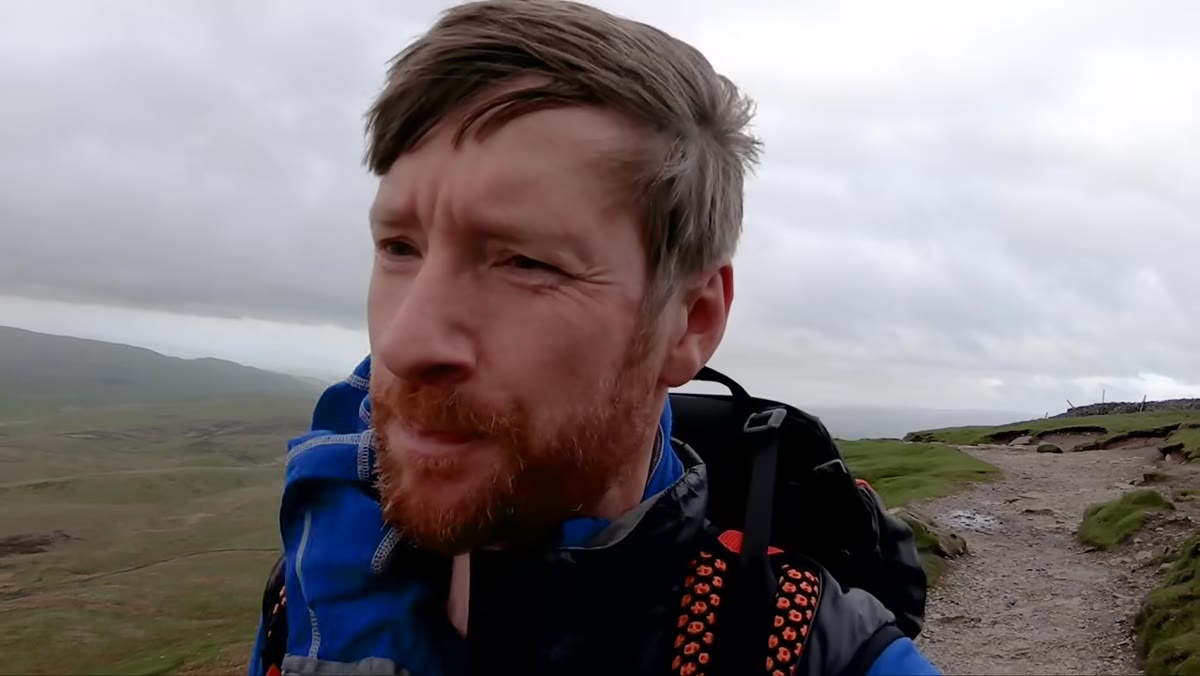 Heaton making image one near the approach to Pen-y-ghent
Around the two-mile mark, approaching the first peak, Heaton isn’t particularly inspired. The light is inconsistent, the weather is cold, and he admits he wasn’t feeling especially enthusiastic. He shoots anyway. And something shifts. He describes it like a jolt of creative energy - getting that first frame down acts as a trigger that opens up the rest of the session. This is something I tell everyone who comes to my workshops: the warm-up shot is not a wasted shot. The act of composing and committing, even imperfectly, switches your brain from hiker mode to photographer mode. Don’t wait to feel inspired before you raise the camera.
Step 3: Accept Snapshots as Part of the Practice
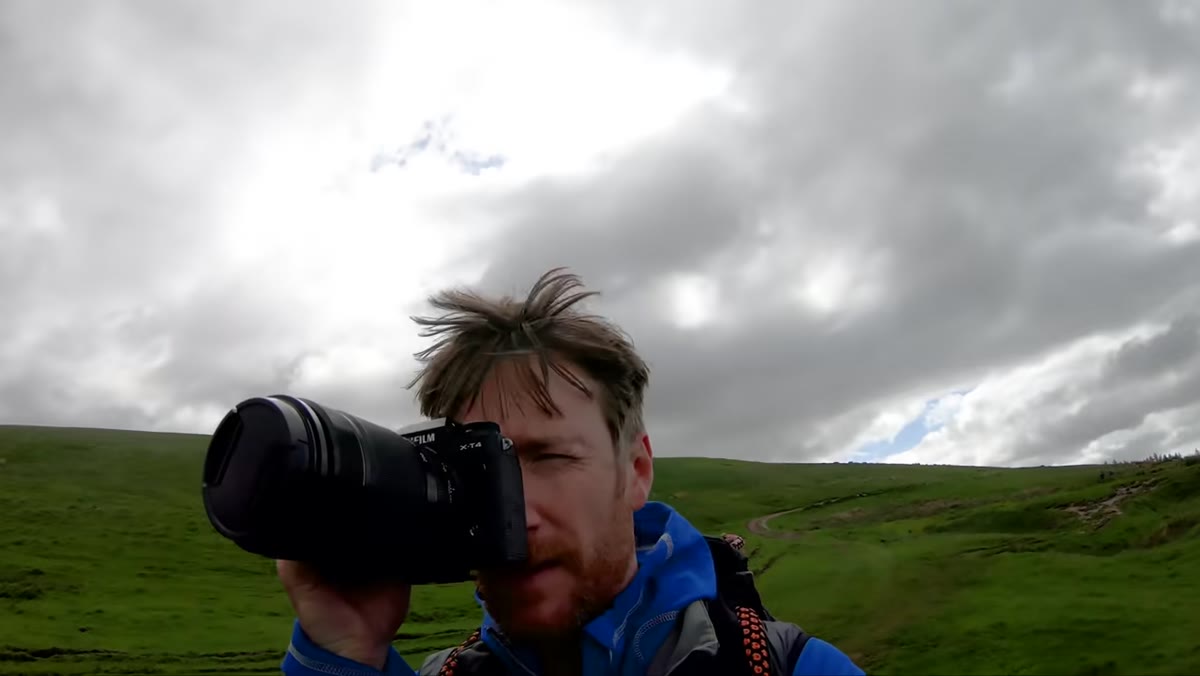 Walking between peaks, camera in hand, terrain visible
By mile six, Heaton is honest about what’s happening: some of what he’s making feels like snapshots, not portfolio work. His reframe is the useful part. The goal of the exercise is not 12 award-winning images. It is practicing the act of seeing - staying observant and visually engaged across a long, physically demanding day. That distinction matters enormously. If you only count a shoot as successful when you come home with a hero image, you will give up on difficult days far too early. Train yourself to find something worth noticing every mile, even if you don’t always raise the camera. The eye needs reps, not just results.
Step 4: Respond to Instinct Quickly - Then Keep Moving
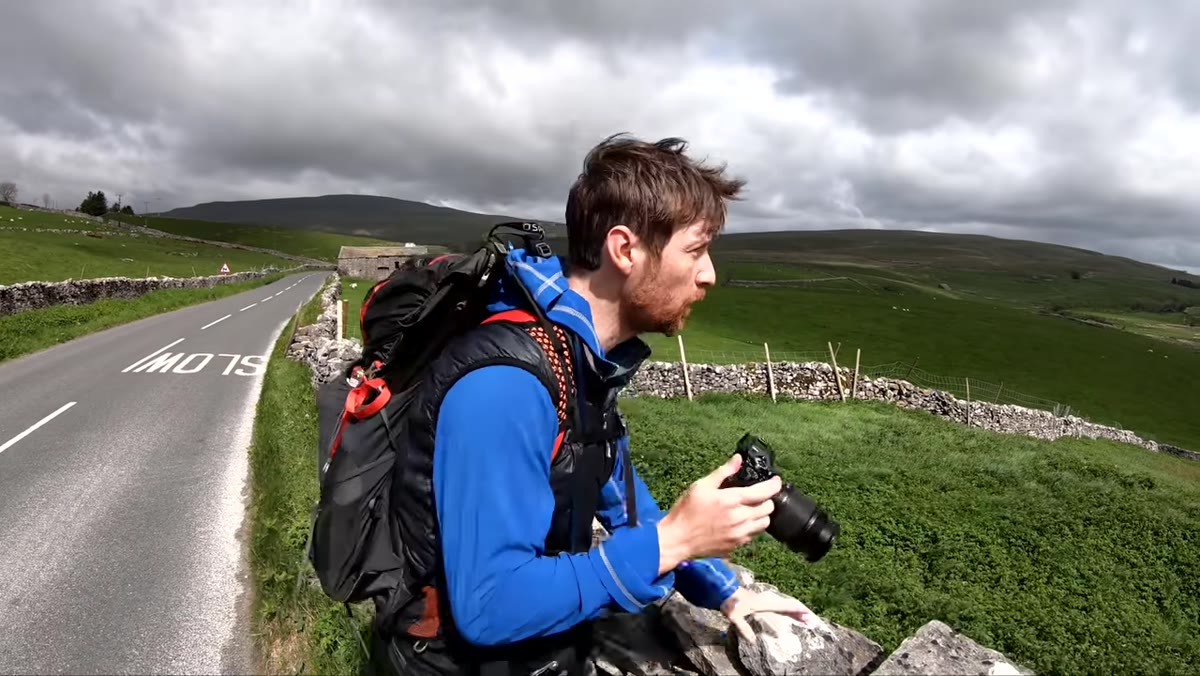 Heaton pausing briefly to photograph a lone barn in a field
One of the clearest patterns in this video is how Heaton shoots and moves. He doesn’t linger for 20 minutes at every composition. He sees something - in this case, a lone barn sitting in a wide field - responds to it, makes the frame, and catches up with his hiking partner. The physical pace of the challenge forces a decision-making speed that actually improves his shooting. When you have to choose fast, you stop second-guessing your instincts. Try giving yourself a 90-second window at any composition. If you haven’t committed to a frame in that time, make one anyway and move on.
Step 5: Know What You Can’t Photograph and Leave It Alone
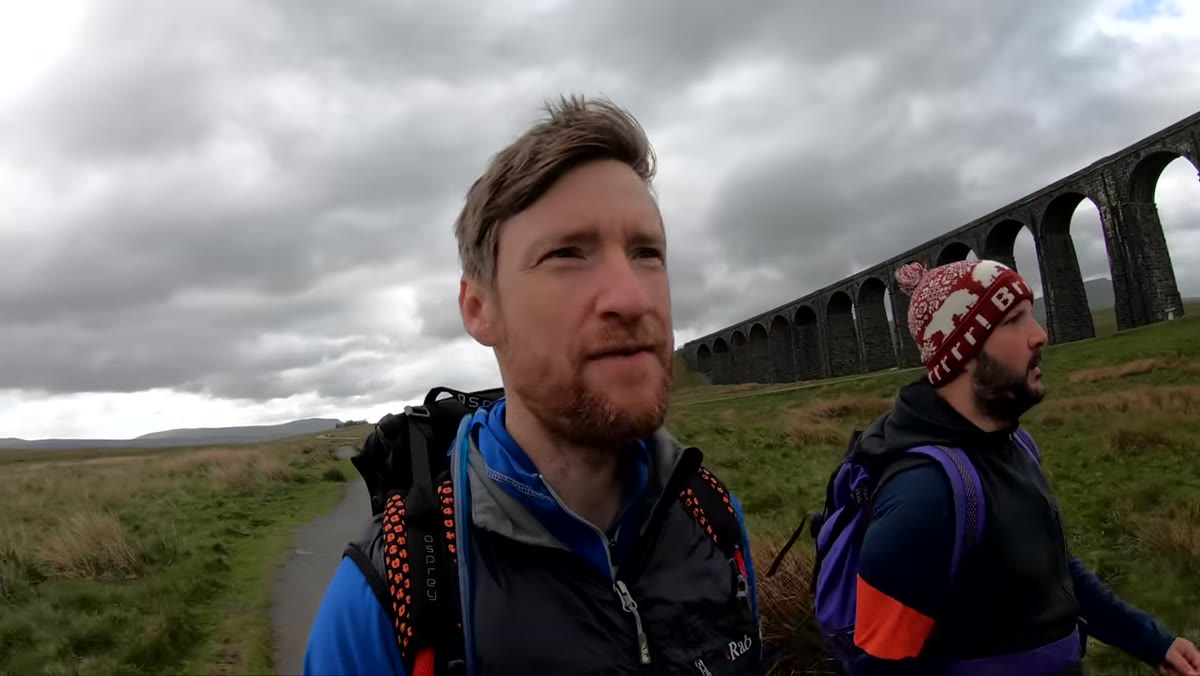 Ribblehead Viaduct visible in background as group passes
Past the 10-mile mark, the group passes Ribblehead Viaduct - a genuinely impressive Victorian structure crossing open moorland. Heaton has tried to photograph it before. He knows he can’t get what he wants from it on camera: the scale doesn’t translate, the grandeur flattens. So he keeps walking. This is a form of creative wisdom that takes a long time to develop. Not every extraordinary thing in front of you is a photograph. Learning to identify the gap between what you feel in the field and what the camera can actually render is as important as any technical skill. Letting some subjects go is an act of honesty, not failure.
A Note From 20 Years of Moving Through Landscapes
Heaton’s approach lines up with something a mentor told me early in my career, a quiet and very patient man who shot primarily in the mountains of the American West. He said the mountain doesn’t care about your schedule. What he meant was that forcing a location to perform for you, waiting it out until it delivers what you planned, often makes you blind to what it’s actually offering.
The Yorkshire Three Peaks challenge is a forced version of that lesson. When you’re covering 25 miles in a day, the landscape doesn’t wait. You move with it or you miss it. I find that a long walk with a camera - even without the competitive element of a timed challenge - resets my relationship to a place faster than any other technique. I still shoot film occasionally for the same reason: it slows down my commitment while keeping me moving through the world rather than planted behind a tripod waiting for perfection. Some of my best-selling prints have come from days that felt like failures while I was living them.
The single most important takeaway from this tutorial is deceptively simple: creative practice is not the same as waiting for the perfect shot. Heaton walks 25 miles and comes home with some frames that work and some that don’t, and that is the entire point. Movement, observation, and commitment - repeated over hours and miles - build the kind of visual fluency that eventually produces the images worth printing. The challenge is the training, not the trophy.
Watch the full tutorial on YouTube and pay attention to the moments between the peaks. That’s where the real lesson lives.
Comments (3)
Applied this to my portfolio shots and the improvement is noticeable.
This is the kind of content that keeps me coming back.
Great article! I actually covered something related on my site — the retouching angle is really complementary to this.
Leave a Comment