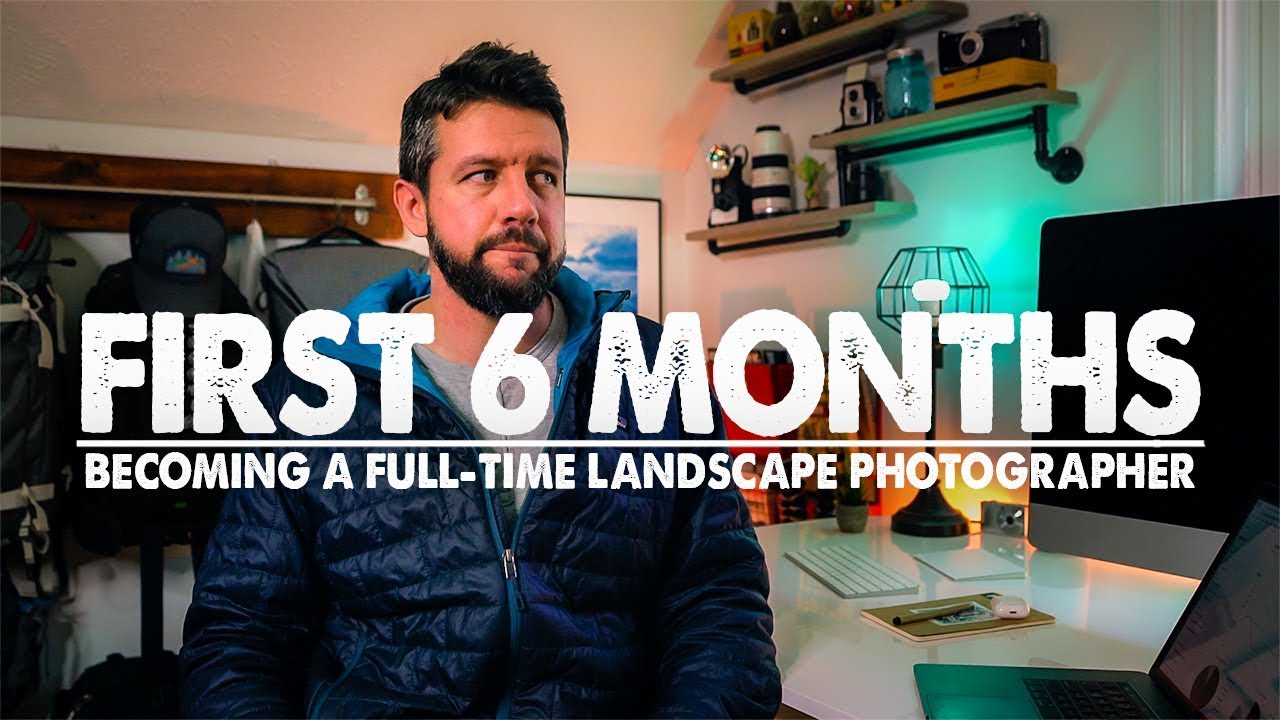
Twenty years ago, I was shooting film in the Cascades and telling myself the business side would sort itself out. It didn’t sort itself out. It took years of painful trial and error before I understood which income streams actually fit the way I work and which ones were just noise from people who made their real money teaching others how to make money. That gap between “here are all the ways photographers earn a living” and “here is what actually works for a specific photographer with a specific body of work” is exactly what most tutorials skip over.
Watch the full tutorial on YouTube
In this Mark Denney tutorial, recorded at the six-month mark of his transition to full-time landscape photography, he does something refreshingly honest: he pulls up his actual analytics, names the channels that are working and the ones that aren’t, and talks plainly about the financial pressure of making this leap without a safety net. There’s no vague encouragement here. He’s sitting with real numbers and real stakes, which is exactly the kind of conversation this industry needs more of. What follows is my own breakdown of the framework he lays out, grounded in two decades of doing this full-time from Bend, Oregon.
Step 1: Start With an Honest Assessment of Where You Are
 Mark asking himself whether six months went according to plan
Before you can build a sustainable income, you have to sit down and ask yourself a hard question: am I actually where I planned to be? Denney reaches the six-month anniversary of going full-time and immediately starts digging into his analytics rather than celebrating or spiraling. That instinct to measure before reacting is a discipline, not a personality trait. Pull up your revenue data, your social engagement numbers, your print sales, your inquiry emails. Look at what moved and what flatlined.
Mark asking himself whether six months went according to plan
Before you can build a sustainable income, you have to sit down and ask yourself a hard question: am I actually where I planned to be? Denney reaches the six-month anniversary of going full-time and immediately starts digging into his analytics rather than celebrating or spiraling. That instinct to measure before reacting is a discipline, not a personality trait. Pull up your revenue data, your social engagement numbers, your print sales, your inquiry emails. Look at what moved and what flatlined.
Most photographers I know avoid this step because the numbers feel like a verdict. They aren’t. They’re a compass reading. You can’t correct course if you don’t know which direction you’ve been drifting.
Step 2: Track Watch Time, Not Vanity Metrics
 YouTube analytics chart showing watch time in minutes over one year
If you’re building a YouTube presence alongside your photography, Denney makes a sharp observation worth internalizing: watch time in minutes is a far better indicator of traction than subscriber count. Subscribers are a lagging signal and a noisy one. People subscribe and then never watch another video. Watch time tells you whether the content is actually holding someone’s attention, which is what the algorithm rewards and what advertisers pay for.
YouTube analytics chart showing watch time in minutes over one year
If you’re building a YouTube presence alongside your photography, Denney makes a sharp observation worth internalizing: watch time in minutes is a far better indicator of traction than subscriber count. Subscribers are a lagging signal and a noisy one. People subscribe and then never watch another video. Watch time tells you whether the content is actually holding someone’s attention, which is what the algorithm rewards and what advertisers pay for.
Pull your YouTube Studio analytics and look at the watch time graph over the past twelve months. A slow upward slope with occasional spikes around certain video topics tells you more about where to invest your energy than any single viral moment. Identify the content categories that drove the longest average view duration and build your next quarter around those.
Step 3: Identify Which Revenue Streams Match Your Working Style
 Mark listing income channels, noting not everything works for everyone
Denney makes the point that the standard list of landscape photography income sources is well-known: print sales, workshops, YouTube ad revenue, licensing, affiliate partnerships, online courses, social media sponsorships. What he adds, which most tutorials don’t, is that not all of these work for every photographer. The question isn’t which ones exist. The question is which ones align with how you actually work and what your audience actually wants from you.
Mark listing income channels, noting not everything works for everyone
Denney makes the point that the standard list of landscape photography income sources is well-known: print sales, workshops, YouTube ad revenue, licensing, affiliate partnerships, online courses, social media sponsorships. What he adds, which most tutorials don’t, is that not all of these work for every photographer. The question isn’t which ones exist. The question is which ones align with how you actually work and what your audience actually wants from you.
For me, workshops and print sales have always been the spine of my income because they fit how I operate. I’m up before four in the morning anyway. I’m already standing in a river at dawn. Bringing a small group along and charging appropriately for that access makes sense. An online course built around stock footage licensing does not fit my working life, so I stopped pretending it would. Map the income streams against your actual daily habits before committing serious time to any of them.
Step 4: Treat the First Year as a Brand-Building Year, Not a Profit Year
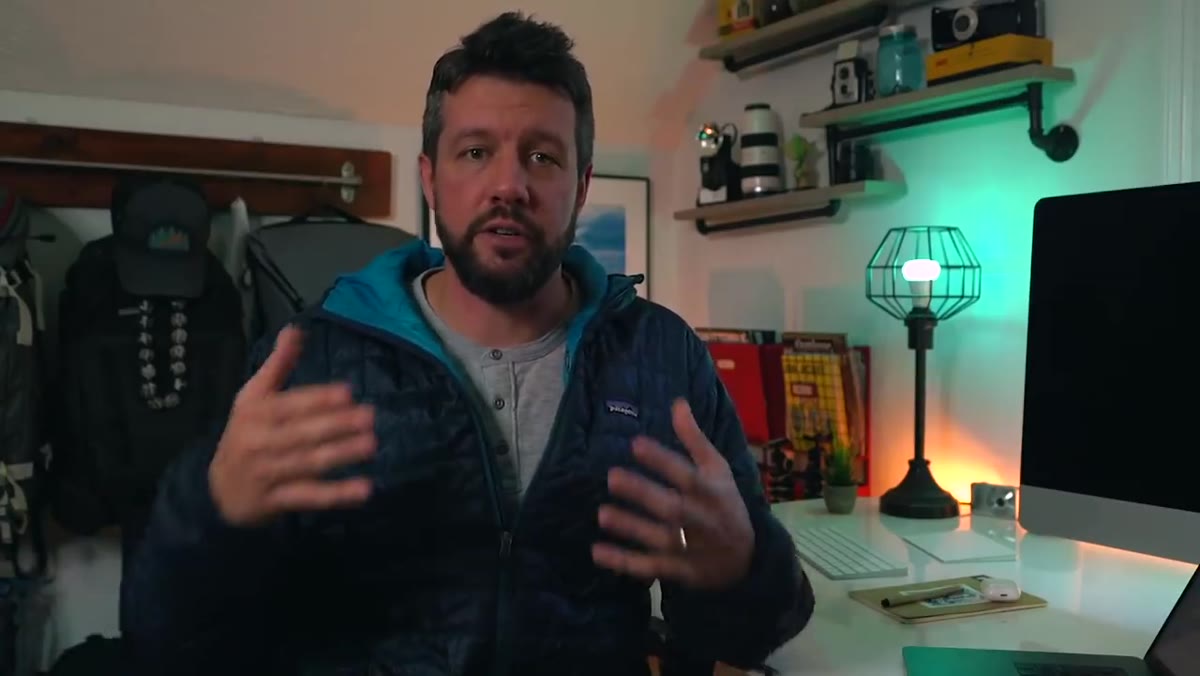 Mark explaining his mentality: maximum exposure in year one
Denney’s stated mentality for year one is to prioritize exposure over income. Get the work in front of as many eyes as possible. Post consistently. Build the body of social proof that makes future sales and partnerships easier. This is uncomfortable advice if you left a salary behind, but it’s structurally correct. Revenue in creative fields almost always lags visibility by six to twelve months.
Mark explaining his mentality: maximum exposure in year one
Denney’s stated mentality for year one is to prioritize exposure over income. Get the work in front of as many eyes as possible. Post consistently. Build the body of social proof that makes future sales and partnerships easier. This is uncomfortable advice if you left a salary behind, but it’s structurally correct. Revenue in creative fields almost always lags visibility by six to twelve months.
This doesn’t mean working for free indefinitely. It means being strategic about where you put your energy. A well-placed tutorial video that gets shared by a major photography account is worth more in year one than a licensing deal that earns you forty dollars and goes nowhere. Build the platform first. Monetize the platform second.
Step 5: Use the Six-Month Mark as a Genuine Checkpoint
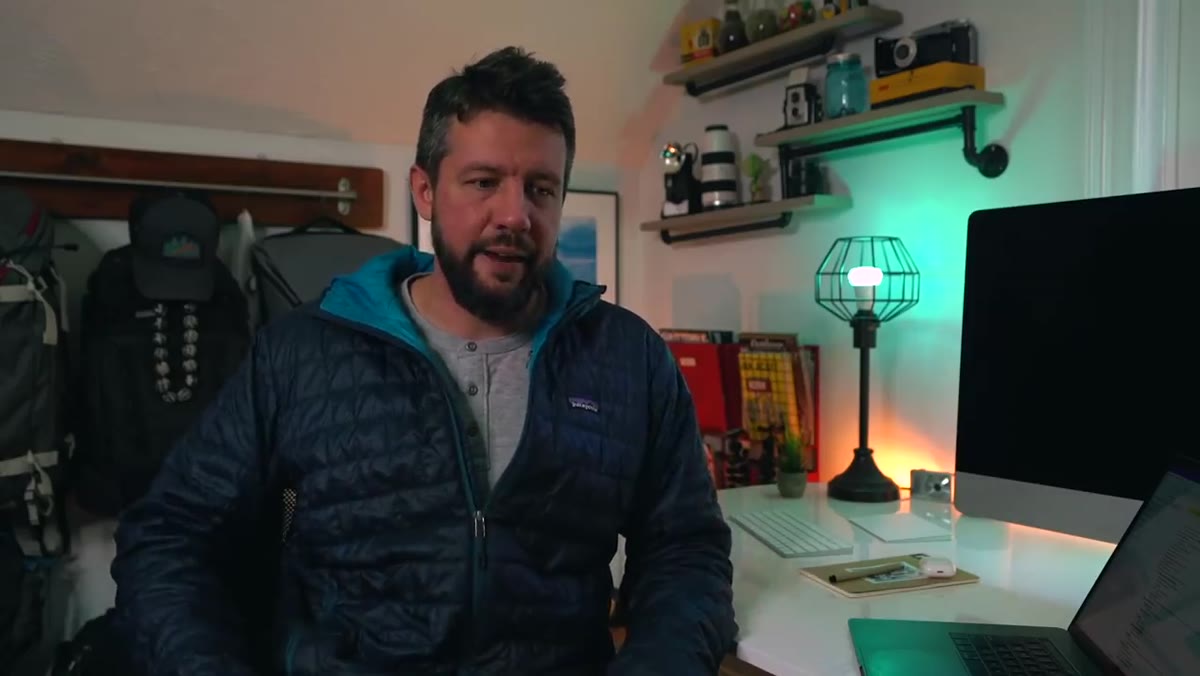 Mark reviewing analytics to plan the next six months
Denney’s six-month review isn’t just reflective, it’s operational. He’s using the data to decide what to keep, what to fix, and what to stop entirely. Build this habit into your own calendar. Set a recurring review at thirty, sixty, ninety, and one hundred eighty days. For each income stream, ask three questions: Is it generating revenue? Is it generating audience? Is it sustainable given my actual time and energy? If the answer to all three is no, cut it without ceremony.
Mark reviewing analytics to plan the next six months
Denney’s six-month review isn’t just reflective, it’s operational. He’s using the data to decide what to keep, what to fix, and what to stop entirely. Build this habit into your own calendar. Set a recurring review at thirty, sixty, ninety, and one hundred eighty days. For each income stream, ask three questions: Is it generating revenue? Is it generating audience? Is it sustainable given my actual time and energy? If the answer to all three is no, cut it without ceremony.
The photographers I’ve watched struggle the longest are the ones who keep pouring effort into channels that have never shown any return, out of fear that stopping means admitting failure. Stopping a strategy that isn’t working is not failure. It’s editing. Good photographers edit ruthlessly. The business side deserves the same discipline.
What Twenty Years Adds to This Conversation
Denney is six months in and already thinking clearly. I’d add one thing from the longer view: the income mix shifts significantly over time, and you have to stay loose enough to shift with it. When I started, print sales at local galleries were meaningful. Then the internet changed print sales entirely. Workshops were once a nice supplement; now they’re a primary revenue engine for many landscape photographers. YouTube didn’t exist as an income source for most of my career and now it’s central to Denney’s model.
The framework matters more than the specific channels. Build an audience around genuine work. Measure what’s actually moving. Cut what isn’t. Repeat. A mentor of mine once told me that the mountain doesn’t care about your schedule, and the same is true of building a photography business. It moves on its own timeline. Your job is to show up consistently and pay attention.
The single most important takeaway from Denney’s review is this: specificity beats generality every time. Don’t build a strategy around what works for landscape photographers in the abstract. Build it around what works for you, your audience, your subject matter, and your working rhythm. That calibration is ongoing and it never fully stops.
Watch the full tutorial on YouTube and pay particular attention to the moments where Denney talks about what isn’t working. That’s where the real information lives.
Comments
Leave a Comment