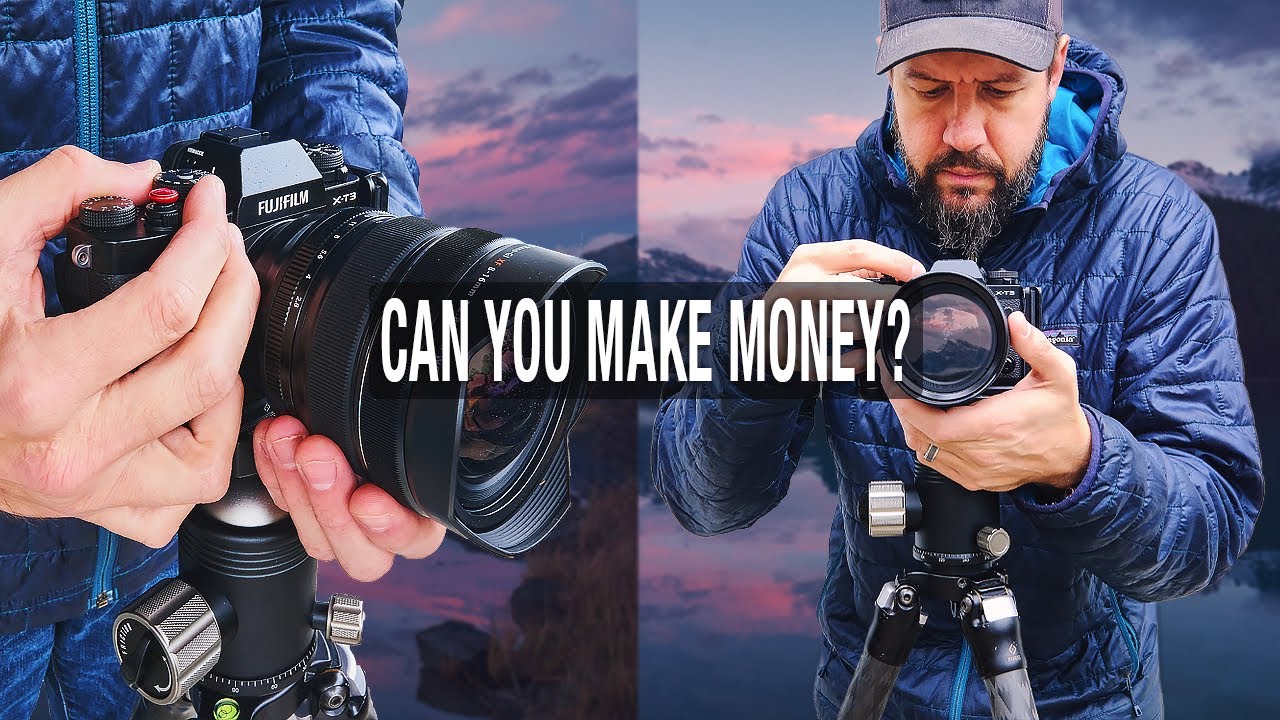
I’ve been doing this for twenty years, and I still catch myself romanticizing the version of this career that doesn’t quite exist. The one where you’re always in the field, prints are flying out the door, and galleries are calling. When I stumbled onto Mark Denney’s breakdown of his 2020 income results, I recognized that fantasy immediately, because he had it too, and he had the honesty to dismantle it in public. Watch the full tutorial on YouTube before or after reading this, depending on how you like to learn. Either way, the conversation it opens is worth your time.
What caught me wasn’t the numbers themselves. It was a distinction a viewer had written to Mark in an email, one of those quiet observations that lands harder than any industry report. The market for landscape photography things, this person wrote, is very small. The market for the landscape photography experience is massive. I read that twice and set down my coffee. After two decades of selling prints and running workshops out of Bend, Oregon, I’ve felt that truth in my own income ledger without ever having the words for it.
This tutorial walks through what Mark’s two full calendar years as a full-time landscape photographer actually produced, how those results compared to his original expectations, and what it implies about how any of us should think about building a sustainable career behind the camera. Here’s how I’d break it down into actionable steps.
Step 1: Audit the Gap Between Your Fantasy and Your Actual Revenue Streams
 Mark describing his original expectations of full-time photography
Before you can build a real business, you have to identify where your imagined business lives. Mark expected to be traveling constantly, exhibiting at festivals, and running a kind of print factory from his office. When he audited his actual 2020 results against that picture, almost nothing matched. He traveled no more than he had in his corporate job. Print sales turned out to be his smallest revenue channel. The festival circuit never materialized at all.
Write down what you assumed this career would look like, then write down what your bank account actually reflects. The gap between those two columns is where the real work begins. If prints are on your fantasy list but not your income list, that’s data, not failure.
Step 2: Recognize That “Selling Photography” and “Selling the Experience of Photography” Are Different Businesses
 Mark explaining the shift from things to experiences in the market
The email Mark received named something that takes most photographers years to feel. Consumers globally are moving away from buying objects and toward investing in experiences, in memories, in something they can carry rather than store. This isn’t a trend unique to photography. It maps directly onto what I’ve watched happen in my own workshop bookings versus my print sales over the past decade.
If you’re only thinking about monetizing your images as products, you’re fishing in a shrinking pond. The larger water is in what people can do with you, learn from you, or feel through the story of how the image was made. That fog-soaked trip I once made, six hours each way, two days sitting in a gray wall of nothing, and one frame that became my best-selling print, that story sells the print now more than the image does. Mark’s breakdown points directly at this dynamic.
Step 3: Stop Treating Print Sales as Your Primary Income Strategy
 Mark identifying prints as his smallest revenue channel
This one stings if you’ve built your plans around a print-centric model. Mark is clear: prints generated the least revenue of any channel he tracked in 2020. That doesn’t mean abandon them. It means stop centering your business around them.
Prints are slow, labor-intensive, margin-thin when you’re fulfilling them yourself, and dependent on a customer who has already committed to buying art for their walls. That’s a small pool. Keep prints as part of your offering, but treat them as a supplement, not a foundation.
Step 4: Diversify Toward Education, Content, and Community
 Mark referencing his multi-part series documenting his transition from corporate work
Mark’s growth as a full-time photographer tracked closely with his investment in YouTube, in documenting his process, and in building an audience that wanted to learn alongside him. This is where the experience economy idea becomes practical. People weren’t just buying his images. They were buying access to his thinking, his mistakes, his workflow.
If you’re twenty years in like I am, you have a library of hard-won knowledge that someone earlier on the path would pay to shortcut. Workshops, online courses, behind-the-scenes content, mentorship, these aren’t selling out. They’re selling what you actually have that’s rare, which is accumulated judgment.
Step 5: Document Your Transition Publicly and Honestly
 Mark referencing his playlist documenting the corporate-to-photographer transition
One of the smartest things Mark did was make his uncertainty visible from the start. He documented his move from a 17-year corporate career into full-time photography in a multi-part series, and that transparency built trust with an audience who could follow his reasoning in real time. People invest in people, not just portfolios.
You don’t need to broadcast your financial anxiety. But sharing your process, your location choices, your editing decisions, your failures, creates the kind of authenticity that sustains an audience through the dry spells when you’re not posting breathtaking images every week.
Step 6: Use the Right Infrastructure to Sell Online
 Squarespace sponsorship card opening the video
Mark’s tutorial is sponsored by Squarespace, and while sponsorships are worth scrutinizing, the underlying point is solid. If you’re going to sell prints, workshops, or any digital product, your website needs to handle transactions cleanly and present your work without friction. A broken checkout or a slow gallery page is a closed wallet.
Whatever platform you use, treat your site as a working sales tool, not a portfolio trophy. Update it. Test the purchase flow yourself. Make sure someone arriving from Instagram at 11pm on a phone can actually buy something.
What Twenty Years Taught Me That Mark’s Video Confirms
The biggest thing I’d add to Mark’s framework is this: patience is a revenue strategy. I learned from an older photographer years ago that the mountain doesn’t care about your schedule. That lesson applies to building a photography business too. The channels that paid off for me, workshops, editorial work, licensing, didn’t emerge in year one or year two. They deepened because I stayed consistent long enough for people to find me and trust me.
Mark’s two-year review is honest about surprise and gratitude in equal measure. That’s the right emotional register for this work. You build something, it surprises you, you adjust. The photographers I’ve watched fail at this career mostly failed because they expected the fantasy to arrive on a fixed timeline. The ones who stayed learned to treat every unexpected result as useful information rather than evidence they were doing it wrong.
The single most important takeaway from Mark’s breakdown is deceptively simple: the revenue follows the relationship, not the image count. Build the relationship with an audience first, through teaching, sharing, being honest about the process, and the income channels will find their shape from there.
Watch the full tutorial on YouTube to see Mark’s specific 2020 numbers and how each revenue channel stacked up. The honesty in it is worth an hour of your time.
Comments (4)
Simple but effective. Sometimes that's all you need.
Would love to see a follow-up going deeper into this topic.
Love how you break down complex stuff into manageable steps.
Just subscribed. If the rest of your content is this good, I'm in.
Leave a Comment