There’s a particular kind of tax that landscape photographers pay early in their careers. Not a financial one, though that’s real enough. It’s the tax of friction. Every morning you’re fighting your gear instead of reading the light, and you don’t even realize it yet because you don’t know what smooth feels like. I spent probably three years shooting on ball heads that I’d settled for, and the subtle frustration of a slipping clamp or a ball that moved in lurches rather than glides cost me more compositions than any lens I’ve ever owned. The gear doesn’t make the photograph, but the wrong gear at the wrong moment inserts itself between you and the image.
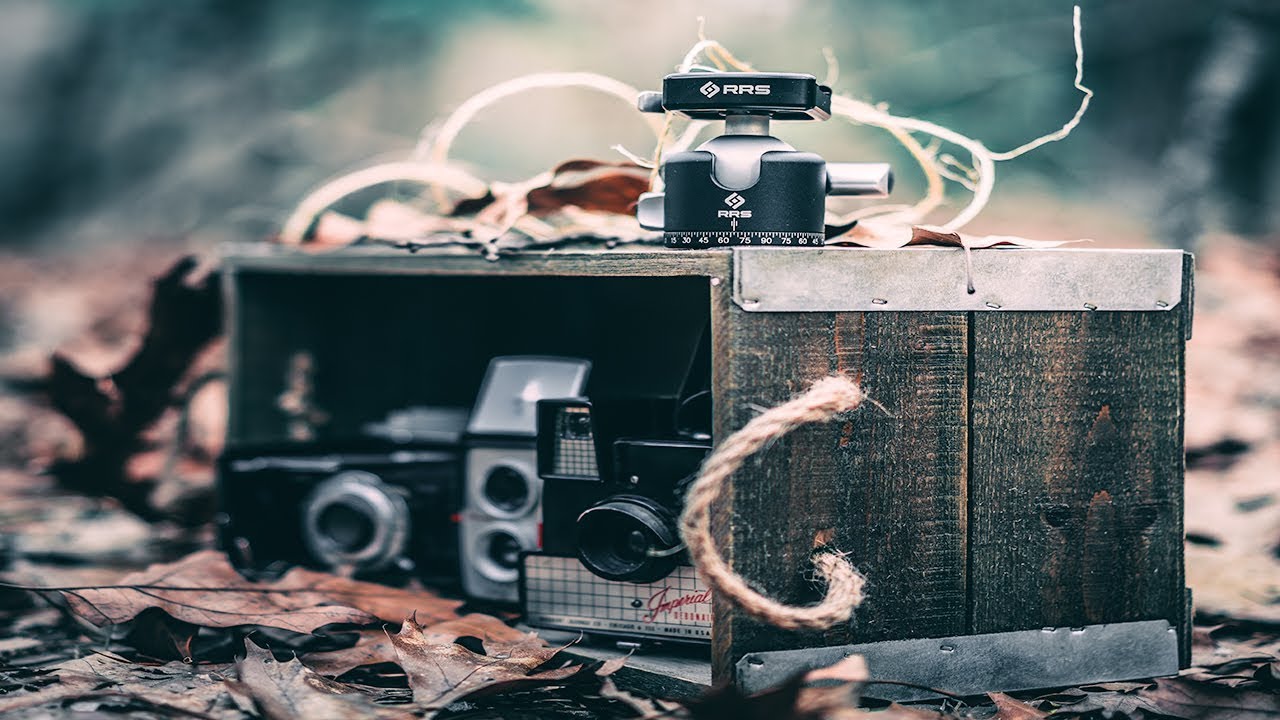
That’s why I paid close attention when I came across Watch the full tutorial on YouTube from Mark Denney, a landscape photographer whose eye for practical field craft I respect. His review of the Really Right Stuff BH-40 ball head isn’t a spec sheet walkthrough. It’s the kind of honest accounting you get from someone who’s actually carried and used a piece of gear across seasons. The video covers why he moved to the BH-40 from a larger model, how the head compares against other brands he considered, and what the physical controls feel like in use. Here’s a step-by-step breakdown of what he covers, with my own observations layered in where they’re relevant.
Step 1: Acknowledge the Upgrade Cycle Before You Buy Again
 Photographer speaking to camera about the gear upgrade cycle
Mark opens by naming something most of us are too proud to admit. New photographers, and plenty of experienced ones, cycle through cameras, tripods, and ball heads at a pace that ends up costing more than buying the right thing once ever would. He frames it as a crawl-walk-run pattern: you start cheap because you’re not sure you’ll stick with it, and then a year later you’ve bought four tripods and spent the equivalent of one excellent one.
Photographer speaking to camera about the gear upgrade cycle
Mark opens by naming something most of us are too proud to admit. New photographers, and plenty of experienced ones, cycle through cameras, tripods, and ball heads at a pace that ends up costing more than buying the right thing once ever would. He frames it as a crawl-walk-run pattern: you start cheap because you’re not sure you’ll stick with it, and then a year later you’ve bought four tripods and spent the equivalent of one excellent one.
Before you look at any specific ball head, including this one, ask yourself whether you’re still in that cycle. Write down what actually frustrates you about your current support system in the field. Is the ball slipping under a heavy telephoto? Is the panning control too stiff to make fine horizon adjustments? Is the whole rig too heavy to carry to locations worth visiting? The answer shapes which head makes sense for you, because there is no universal best option.
Step 2: Match the Head’s Load Capacity to Your Actual Kit
 Reviewer explaining the BH-55 load capacity versus mirrorless kit
Mark made the switch from the Really Right Stuff BH-55, which is a head rated to carry 50 pounds, to the smaller BH-40. His point is direct: if you’re shooting mirrorless, a 50-pound load rating is engineering for a problem you will never have. The BH-55 is a legitimate tool for large format shooters or photographers running heavy telephoto glass on a full-frame DSLR body. For a mirrorless setup with even a fast prime or a mid-range zoom, you’re carrying less than five pounds of camera and lens combined.
Reviewer explaining the BH-55 load capacity versus mirrorless kit
Mark made the switch from the Really Right Stuff BH-55, which is a head rated to carry 50 pounds, to the smaller BH-40. His point is direct: if you’re shooting mirrorless, a 50-pound load rating is engineering for a problem you will never have. The BH-55 is a legitimate tool for large format shooters or photographers running heavy telephoto glass on a full-frame DSLR body. For a mirrorless setup with even a fast prime or a mid-range zoom, you’re carrying less than five pounds of camera and lens combined.
The practical consequence isn’t just cost. A head sized for much heavier loads than you’re running tends to be larger and heavier than necessary. Every ounce of tripod and head is weight you’re carrying up a trail before sunrise. The BH-40 hits what Mark calls the right size-to-weight ratio for a mirrorless kit, and from my experience shooting in the Cascades, I’d agree that the head you’ll actually bring is worth more than the head that stays in the truck.
Step 3: Compare the Field of Competing Brands Honestly
When Mark was shopping for a replacement, he looked seriously at Arca-Swiss, Gitzo, and a few other well-regarded manufacturers before settling on Really Right Stuff. He doesn’t dismiss the competition, and you shouldn’t either. Brands like Acratech and Jobu Build make heads worth considering depending on your shooting style. What Mark was evaluating was the combination of build quality, control feel, and the specific locking mechanism design.
The locking mechanism question is worth slowing down on. Tension-style controls versus lever locks versus friction rings behave differently in cold and wet conditions. If you’re shooting in Oregon in November, which I am most mornings, gloves change how every control feels. Handle your shortlist in person if you can, or at minimum read reviews from photographers who work in conditions similar to yours.
Step 4: Assess the Physical Size and Weight in Context
Mark uses a deck of cards and an iPhone to demonstrate scale, which is a more useful comparison than raw millimeter measurements. The BH-40 is compact enough that it doesn’t look or feel like serious gear until you handle it. That’s not a flaw. That’s the point.
For landscape work, compact and solidly built is exactly what you want. A ball head that draws attention to itself in the frame of your shooting experience is a head that’s probably too large or too heavy for what you’re doing. The BH-40 disappears into the kit in the best possible way.
Step 5: Evaluate the Controls Under Real Shooting Conditions
The main ball tension knob, the panning lock, and the drag control are the three points of contact you have with this head in the field. Mark’s assessment is that they work with precision rather than in coarse steps. That matters most when you’re making small compositional adjustments without wanting to fully unlock and relock the ball.
The panning control in particular is worth noting for landscape photographers. Smooth, controlled horizontal movement is something you use constantly when aligning a horizon or making fine adjustments to foreground-to-sky ratios. A head that lets you pan with one finger’s worth of pressure, without any jerkiness, is a head that stops being an obstacle.
What Twenty Years of Pre-Dawn Shoots Taught Me About Ball Head Friction
I’ve owned heads at every price point, and the one thing I keep coming back to is that friction is personal. Not just mechanical friction in the controls, but the friction of using gear that makes you work around it rather than through it. My mentor used to say the mountain doesn’t care about your schedule, and he was right. But there’s no reason your ball head should add its own indifference to the equation.
If you’re already running a mirrorless system and still using a ball head you bought because it was included in a kit, or because it was on sale, the BH-40 is the kind of upgrade that will feel invisible in the best sense. You stop thinking about the head and start thinking about the frame.
The single most important takeaway from Mark’s review is this: buy for your actual kit, not for the heaviest rig you might theoretically own someday. A head that’s right-sized for what you carry will serve you better in every condition than an over-engineered one that adds weight without adding function.
Watch the full tutorial on YouTube to see the BH-40 up close and hear Mark’s complete reasoning on why this head replaced a more expensive one in his kit.
Comments
Leave a Comment