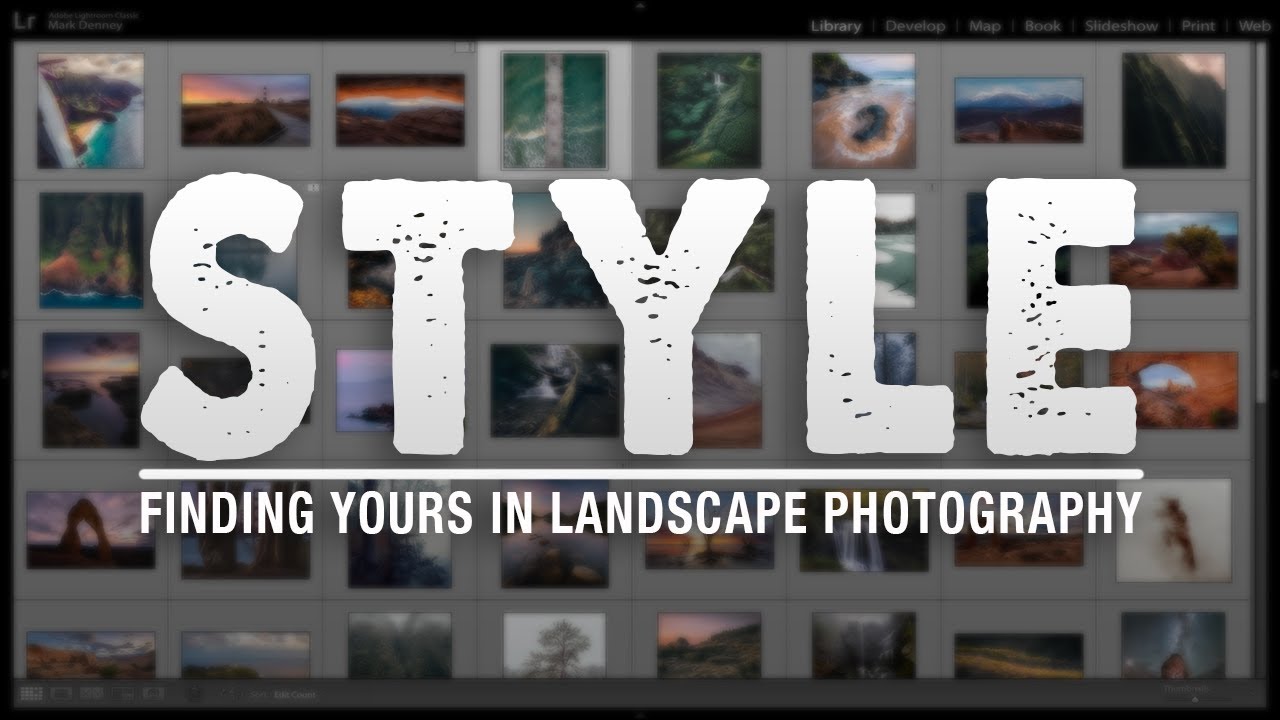
There’s a saying I keep coming back to whenever a workshop student tells me they’re struggling to find their photographic voice: you don’t find your creative style, your creative style finds you. I’ve been shooting landscapes full-time for two decades, and I can tell you that rings completely true. The style was always there, threading itself through my work quietly, long before I had the vocabulary to name it. The problem is most of us are too close to our own images to see the pattern.
That’s exactly the problem this Mark Denney tutorial cracks open. Watch the full tutorial on YouTube before you dive into this walkthrough, or follow along here and go back to the video for the visual reference. Mark walks through a structured catalog audit, pulling his favorite images from roughly a year of shooting, then systematically analyzing them for recurring patterns across two distinct categories: shooting style and editing style. What comes out the other side isn’t a prescription for how to shoot. It’s a mirror.
I did a version of this exercise myself last winter, spread out across a long morning with coffee going cold on the desk, and what I saw in my own work surprised me more than I expected. This guide walks you through Mark’s method step by step, with some notes from my own run through it.
Step 1: Pull Your Favorite Images Into One Place
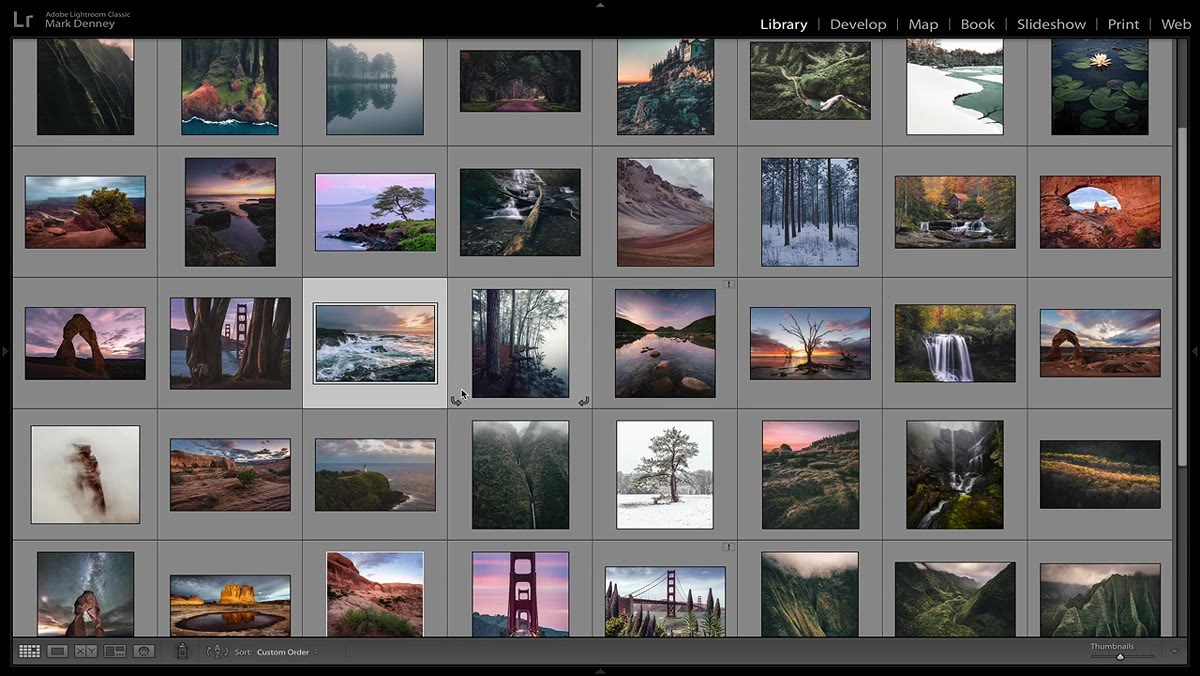
 Lightroom grid showing 50 favorite images selected
Open your Lightroom catalog, or whatever organizing software you use, and go back roughly ten to twelve months. Don’t just grab everything you exported or posted. Specifically pull the images you personally love, the ones you’d print, the ones you keep coming back to. Mark ended up with around fifty images in a separate folder. The number isn’t precious. Twenty images can tell you as much as a hundred if they’re genuinely your favorites and not just your most-liked posts.
The key is visibility. You want to see them all simultaneously in a grid, not scroll through them one by one. The pattern recognition your brain does when images sit next to each other is different from what happens when you evaluate them individually. Set your grid view tight, reduce the thumbnail size if you need to, and just look before you start analyzing anything.
Step 2: Analyze Location Themes in Your Shooting Style
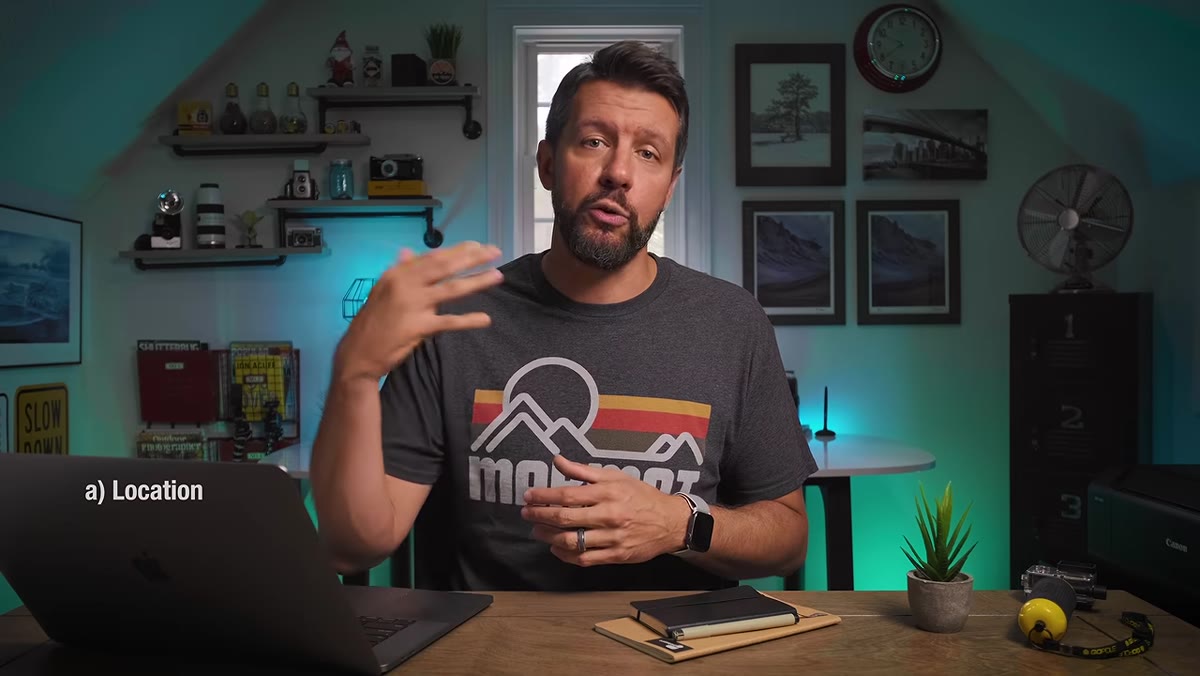 Grid showing recurring water and mountain scenes highlighted
With your images in front of you, ask one question: is there a dominant environment? Mountains, coastlines, forests, deserts, rivers, plains. Mark noticed almost immediately that woodland scenes were rare in his favorites, while water and mountain combinations dominated. I looked at mine and saw something similar. Almost no open plains, very few forest interiors without water present. River foregrounds with peaks behind them, over and over.
This matters because it tells you where your eye naturally wants to be. It’s not about limiting yourself going forward. It’s about understanding what conditions and environments produce your strongest work, so you can prioritize them intentionally rather than by accident.
Step 3: Look for Time-of-Day Patterns
 Comparing sunrise images versus sunset images in the grid
Scroll through the same grid again and this time pay attention to the light quality. Can you feel what time of day most of these were shot? Mark found that his catalog leaned heavily toward sunrise, with very little midday work and only occasional astrophotography. That matched his personality: he’s drawn to the stillness of early morning, the solitude, the way light arrives softly before the world wakes up.
I wake up around four most mornings without an alarm, and when I looked at my own favorites, the evidence was right there. Golden soft backlight, long shadows, mist still sitting in the valleys. Sunrise shooters produce a certain kind of image. So do blue-hour and astrophotography people. Neither is better, but they’re different languages. Knowing which one you’re fluent in helps you stop fighting the other conditions and start leaning into your natural instinct.
Step 4: Examine Focal Length Tendencies
 Grid revealing wide angle composition dominance across images
Look at your images and consider what focal length produced the majority of them. Were you pulling subjects close with a telephoto, or were you working wide, pulling the environment in around a foreground? This is one of the more revealing parts of the exercise because focal length is a compositional philosophy, not just a technical setting. Wide angle shooters tend to emphasize relationship: foreground to background, subject to environment. Telephoto shooters tend to isolate, compress, and simplify.
Most landscape photographers already have a preference here, but they may not have framed it as part of their identity. Seeing it reflected across fifty images at once makes it undeniable.
Step 5: Shift to Editing Style, Starting With Color
 Reviewing warm-toned edits consistently appearing across the grid
Once you’ve worked through the shooting-style analysis, turn your attention to how the images look. Mark breaks editing style into its own category with a first question about color. Are your images warm or cool? Muted or saturated? Do blues dominate, or do you pull toward earthy oranges and greens?
Look at this across all fifty images and you’ll likely see a palette you didn’t know you had. Mine runs toward cool shadows with warm highlights, desaturated foliage, and skies that lean slightly teal rather than deep blue. I didn’t decide that. It just kept happening. Mark saw consistent warmth in his work. Whatever you see in yours, name it.
Step 6: Identify Your Contrast and Tone Signature
 Side-by-side showing consistent tone curve and contrast approach
The final layer of analysis is tonal. Are your images high contrast with deep blacks and bright highlights, or do you favor a flatter, more filmic look with lifted shadows? Do you retain highlight detail even at the cost of drama, or do you let the sky blow out to protect the foreground? These aren’t right-or-wrong choices, but they create a recognizable signature across a body of work.
Compare ten of your images and look only at the relationship between shadows and highlights. If you see consistency, you have a tonal style. If the images look like they were shot by five different people, that’s useful information too. It means your editing philosophy hasn’t settled yet, and that’s fine. Seeing the gap is the first step to closing it.
A Note From the Field: Don’t Mistake Habit for Style
There’s one caveat I’d add after running through this exercise myself. Some of what shows up in your favorites folder is genuine style and some of it is just habit or geography. I shoot in the Pacific Northwest. Water is everywhere. Mountains are forty minutes from my front door. So of course those dominate my catalog. If I lived in the American Southwest, the patterns would look different.
Before you cement your conclusions, ask whether the patterns you’re seeing reflect a true creative preference or just the landscape you have access to. The honest answer is usually some combination of both, and that’s fine. But it’s worth separating what you’re drawn to from what you’ve been surrounded by.
The single most important thing this exercise teaches is that your style isn’t something you build from scratch. It’s already embedded in the work you’ve been doing. Your job is to surface it, name it, and then make decisions that honor it rather than undermine it. Mark Denney built a genuinely useful framework for doing exactly that, and it’s worth an hour of your time to sit with your catalog and run through it honestly.
Watch the full tutorial on YouTube to see Mark walk through his own catalog with the grid visible and hear him narrate what he’s noticing in real time.
Comments (5)
Bookmarked. Coming back to this one for sure.
This is the kind of content that keeps me coming back.
Couldn't agree more. I've seen this make a huge difference in retouching work specifically.
Great breakdown. The step-by-step approach really helps.
Great article! I actually covered something related on my site — the business angle is really complementary to this.
Leave a Comment