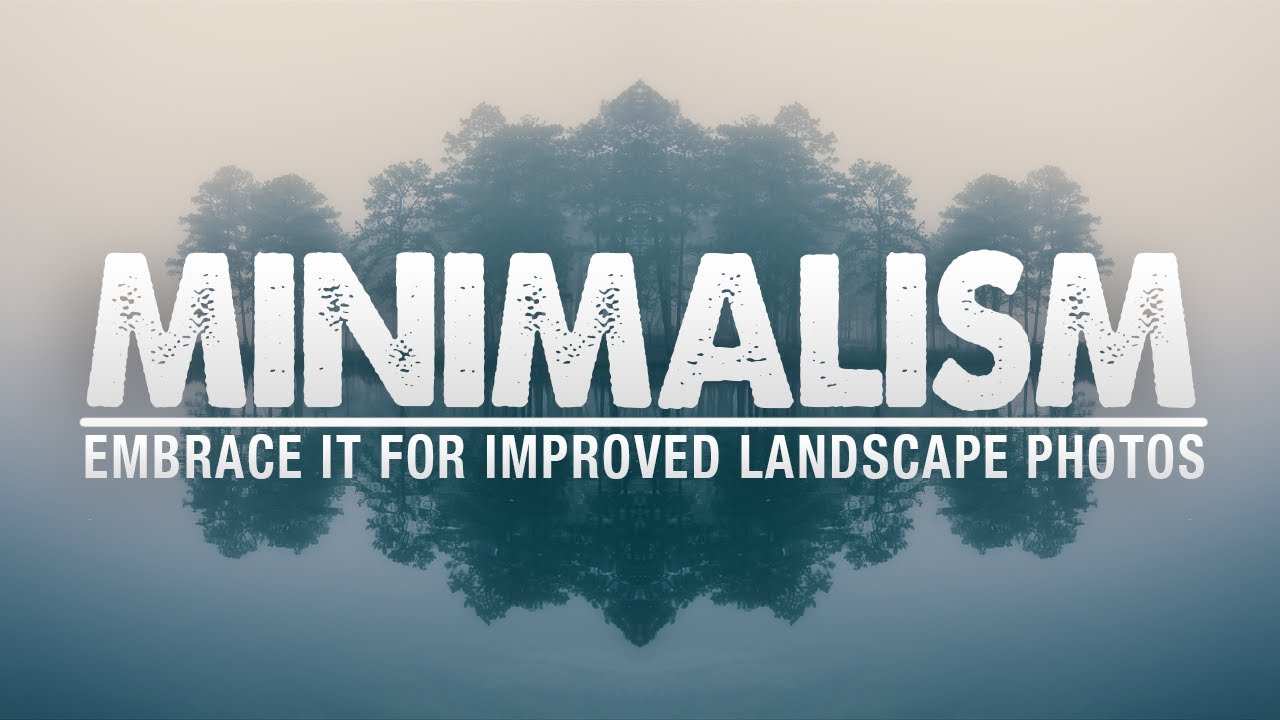
There’s a particular kind of creative drift that happens when you’ve been shooting landscapes for a long time. You start reaching for complexity out of habit. More foreground interest, more layers, more. I’ve done it myself countless times, standing in a field at dawn with a composition that technically checks every box and somehow says nothing. The image is busy doing too much to say anything at all.
That tension between complexity and clarity is exactly what drew me to this framework from Mark Denney. Watch the full tutorial on YouTube before or after reading this, because Denney walks through his own portfolio to show where these principles succeed and, honestly, where he thinks he’s still falling short. That kind of self-critical honesty from an experienced photographer is worth paying attention to.
What I’m laying out below is a step-by-step breakdown of the five qualities Denney identifies as the core of a successful minimalist landscape photo. I’ve run each one through my own field experience, so you’re getting the tutorial’s framework plus twenty years of standing in cold water thinking about composition.
Step 1: Establish an Obvious Subject - Not Just a Strong One
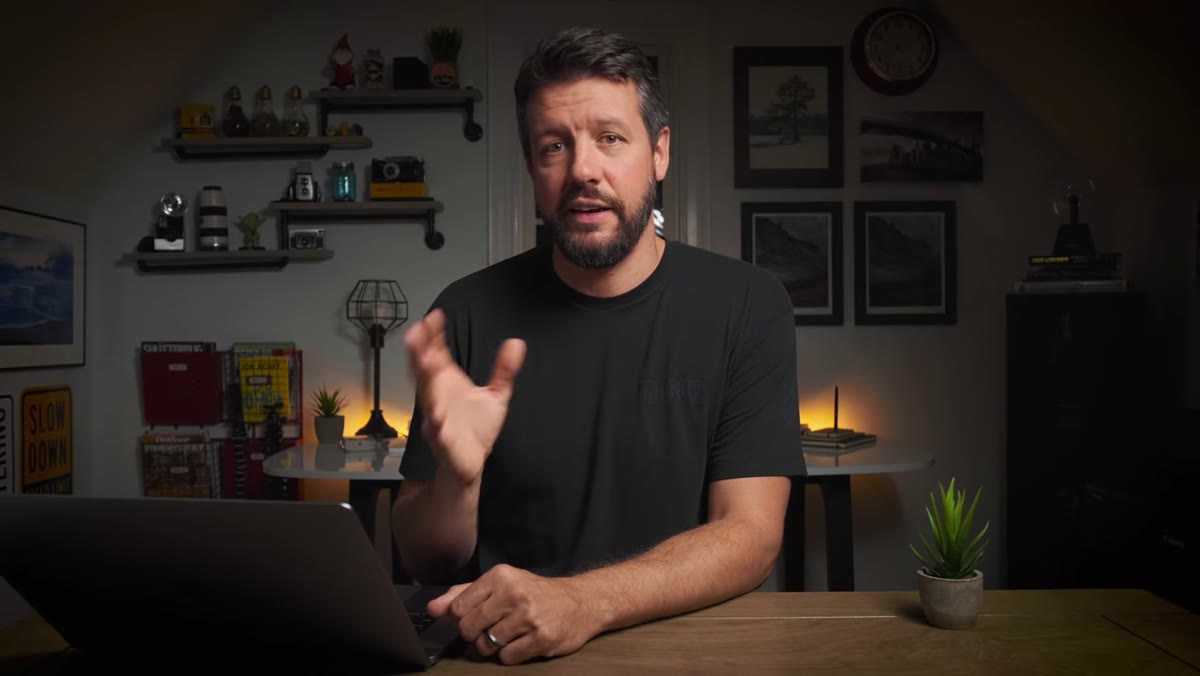 Shoreline and trees reflected in still water
This is the first and most important quality Denney identifies, and the distinction he draws is subtle but critical. An obvious subject is one that the viewer’s eye finds immediately and without negotiation. A strong subject is one that dominates the frame, often so much so that it crowds out everything else. These are not the same thing.
Look at your image and ask: does the subject announce itself, or does it compete? In minimalist work, the subject should feel inevitable, like there was no other choice. If you have to explain what someone should look at, the composition isn’t doing its job. When you’re in the field, practice asking that question before you press the shutter, not after. I still shoot a little film for exactly this reason. When you’re paying for every frame, you think harder before you fire.
Step 2: Control How Much of the Frame the Subject Occupies
 Cliff face emerging through fog, tight framing discussed
Denney revisits several of his own images here and flags the same error twice: he zoomed in too far. The subject is obvious, but it fills so much of the frame that the surrounding negative space collapses. In minimalist photography, the space around the subject is not empty. It’s doing active compositional work, giving the subject room to breathe and giving the viewer’s eye somewhere to rest.
A practical rule: if your subject occupies more than roughly a third of the frame, zoom out or move back and reassess. The goal is presence without dominance. A lone tree in a foggy field should feel solitary, not cramped. This is one reason I often start wider than I think I need and compose inward rather than the reverse. It’s easier to notice when a subject starts feeling too big when you’ve seen it small first.
Step 3: Identify and Eliminate Competing Subjects
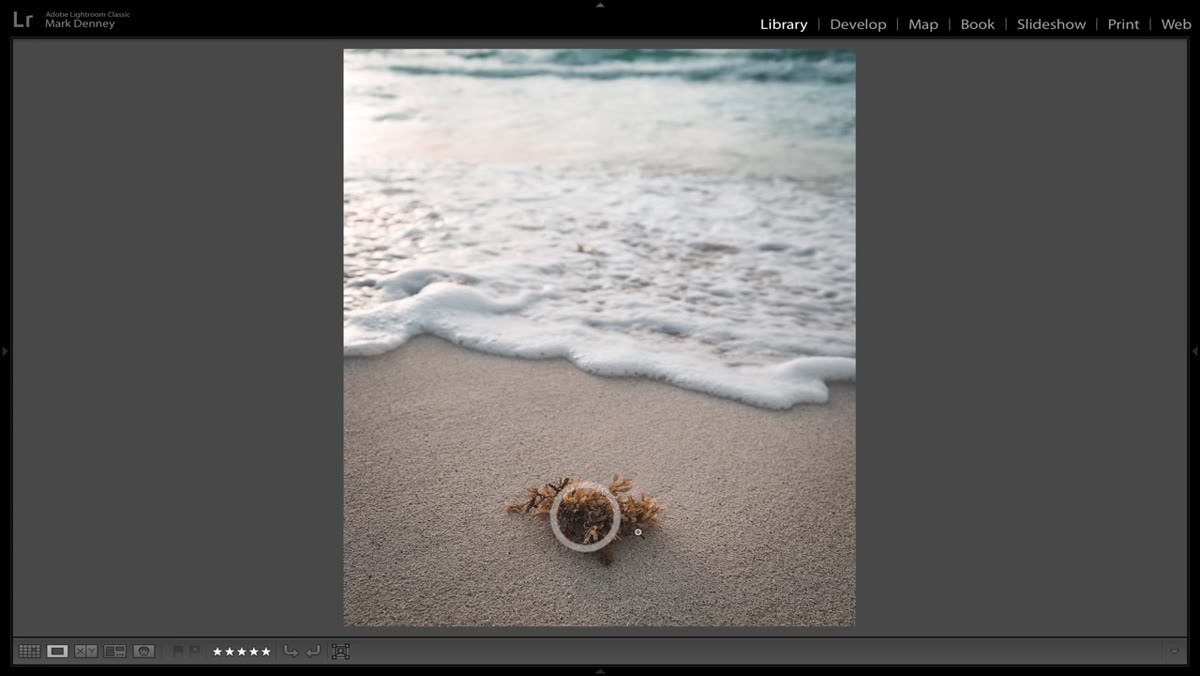 Seaweed, seafoam, and sand with no clear focal point
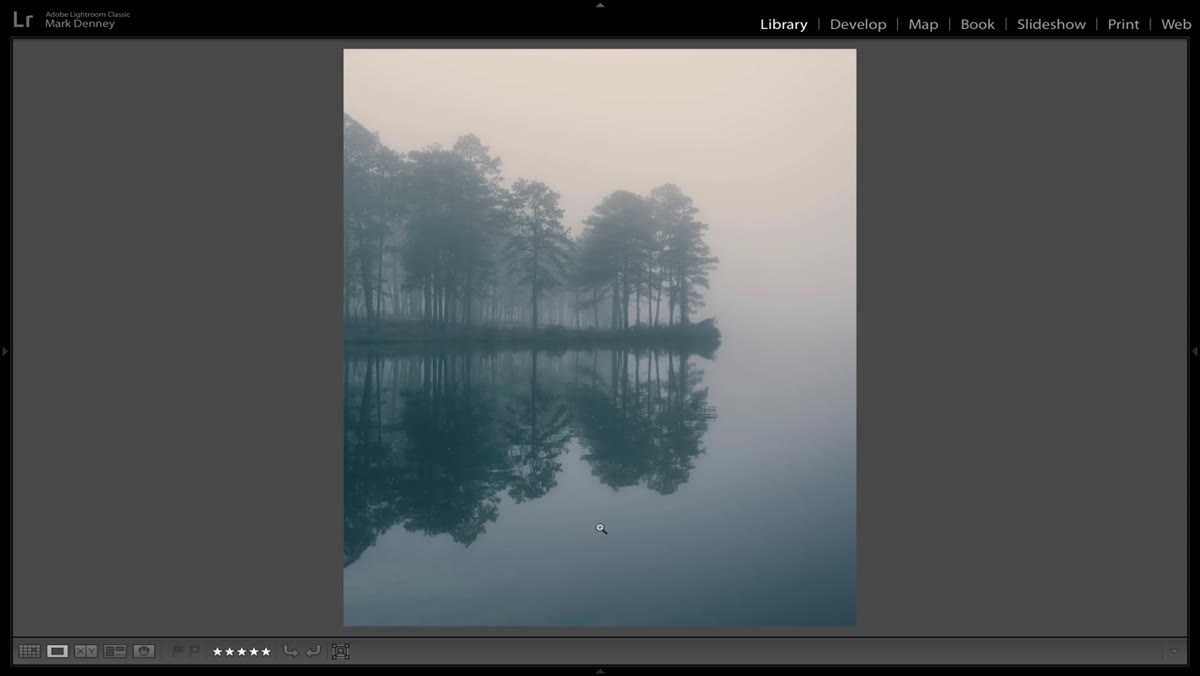
A minimalist image fails the moment it contains two subjects fighting for the viewer’s attention. Denney points to an image of seafoam washing across sand with a piece of seaweed in the foreground. He used to love it. Now he sees that neither element is clearly the subject, and the tension between them makes the whole image feel unresolved.
Before you finalize a composition in the field, do a subject audit. Point to what the photo is about. If you hesitate, or if you can point to two different things with equal confidence, something needs to go. That might mean moving, changing your focal length, adjusting your angle, or just waiting for the wave to clear the frame. Patience is the most underused compositional tool in landscape photography. My old mentor used to say the mountain doesn’t care about your schedule. Neither does the composition.
Step 4: Use Negative Space as a Compositional Element
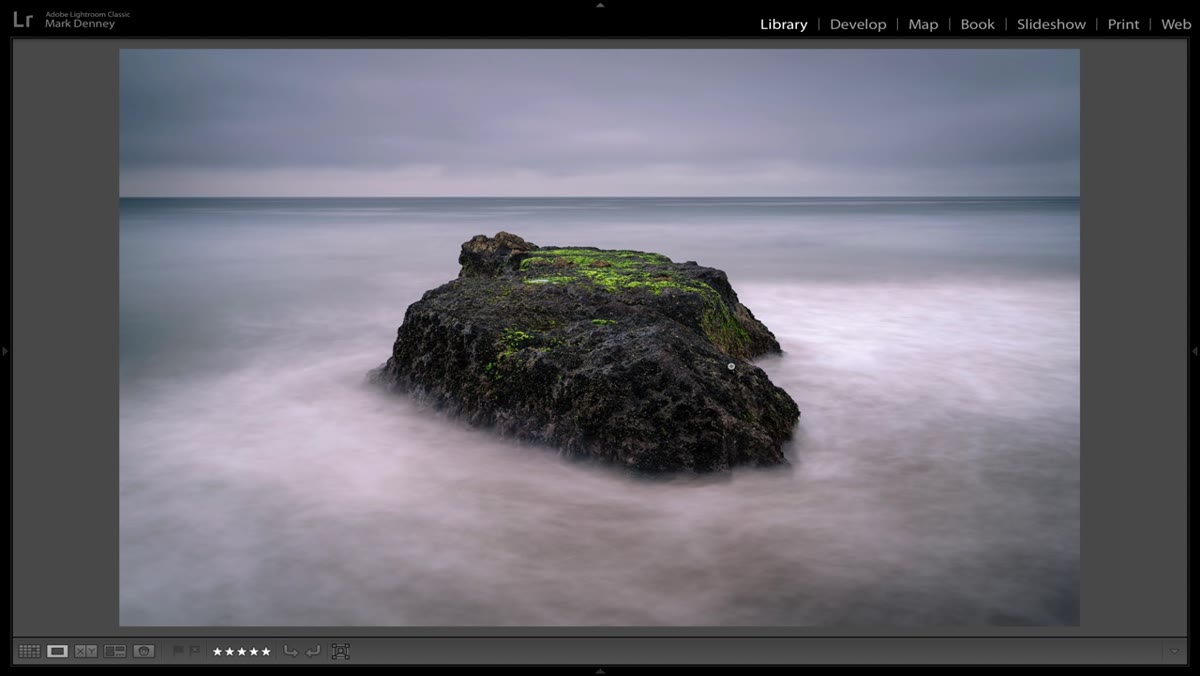 Small subject occupying minimal portion of wide frame
Once you have an obvious subject that isn’t overpowering the frame, negative space becomes your most powerful tool. Denney highlights an image where the subject is small and clear within a large, open composition. That openness is not a deficiency, it’s the point. The negative space amplifies the subject’s presence by surrounding it with quiet.
In practice, this means treating sky, water, fog, and open land not as backgrounds to be filled but as active parts of the composition. Fall and winter are ideal seasons for this because the visual noise of summer, full canopies, dense undergrowth, complex light, all of that strips away. You’re left with structure and space. If you live somewhere with seasonal fog, that’s your best training ground. Go shoot in the fog. Shoot things you can barely see. It forces you to work with almost nothing.
Step 5: Review Your Own Portfolio for Pattern Gaps
 Photographer reviewing personal archive of minimalist images
Denney doesn’t just define these five qualities and move on. He applies them to his own archive and scores himself honestly. This is a practice worth adopting directly. Pull up your last fifty images and ask, for each one, which of these qualities it has and which it lacks. The gaps that show up consistently are your actual weaknesses, not the ones you assume you have.
I do a version of this every season. I print a contact sheet, spread it on the table, and look for patterns without zooming in. What keeps showing up that shouldn’t? What’s missing that I keep meaning to try? A portfolio review without that critical lens is just nostalgia. With it, it’s a training session.
What Twenty Years Adds to This Framework
Denney’s framework is primarily compositional, and it’s solid. What I’d add from long experience is a timing layer. Minimalism in landscape photography is as much about when you shoot as how you frame. The qualities Denney describes, an obvious subject, controlled framing, clean negative space, become dramatically easier to achieve in conditions that simplify the scene for you: heavy fog, fresh snow, pre-dawn stillness, the flat grey light of an overcast winter afternoon.
The best minimalist image I’ve ever made came from two days of sitting in fog at a coastal location six hours from home. I came back with one usable frame. That image is now my best-selling print. The conditions did half the compositional work. Put yourself in scenes that want to be minimal, and your job gets easier.
The single most important thing to take from this framework: minimalism is not about removing things from a photo. It’s about committing to one thing so completely that everything else becomes irrelevant. When that commitment is clear in the composition, the viewer feels it without knowing why.
Watch the full tutorial on YouTube to see Denney walk through his own images and apply each of these qualities in real time. The self-critique portions alone are worth the watch.
Comments
Leave a Comment