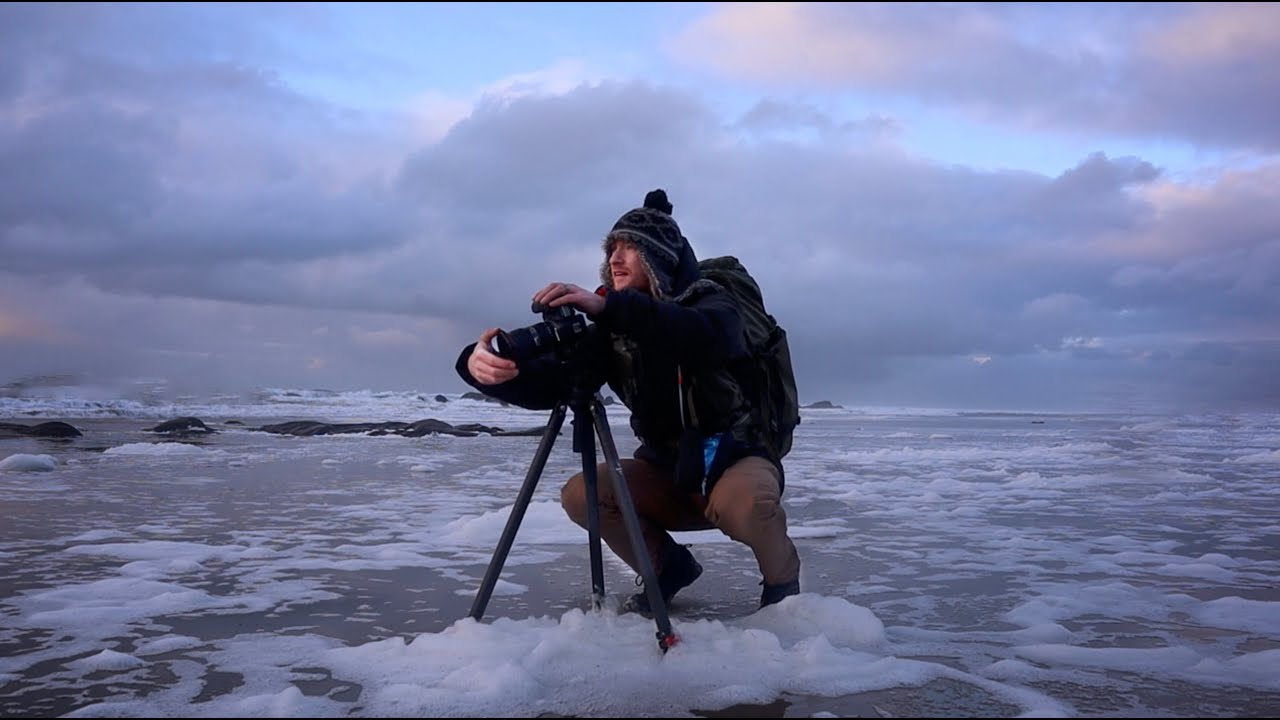
There’s a particular trap I’ve watched photographers fall into for two decades, and I’ve fallen into it myself more times than I’d like to admit. We spend so much energy hunting for the perfect location, the perfect conditions, the perfect angle, that we forget how to make something from what’s actually in front of us. Location-scouting apps, satellite imagery, golden hour calculators, all of it useful, all of it capable of becoming a crutch that replaces genuine seeing with logistical planning. In this Thomas Heaton tutorial, he accepts a challenge from Norwegian photographer Odd Bjorn Ostervik that strips all of that away in one clean move. Watch the full tutorial on YouTube
The premise is almost aggressively simple: walk exactly 1000 steps from your front door, stop wherever step 1000 lands you, and make one photograph. Not five. One. With a three-minute setup window. Heaton lives near the coast in northeast England, so he heads toward the beach with his dog in tow, but the point of this exercise has nothing to do with having a convenient coastline nearby. It’s about what happens to your creative instincts when you remove optionality. I’ve been thinking about this challenge ever since I watched the video, because it targets something I tell my workshop students constantly: the location isn’t the photograph. You are.
Step 1: Accept the Rules Before You Walk Out the Door
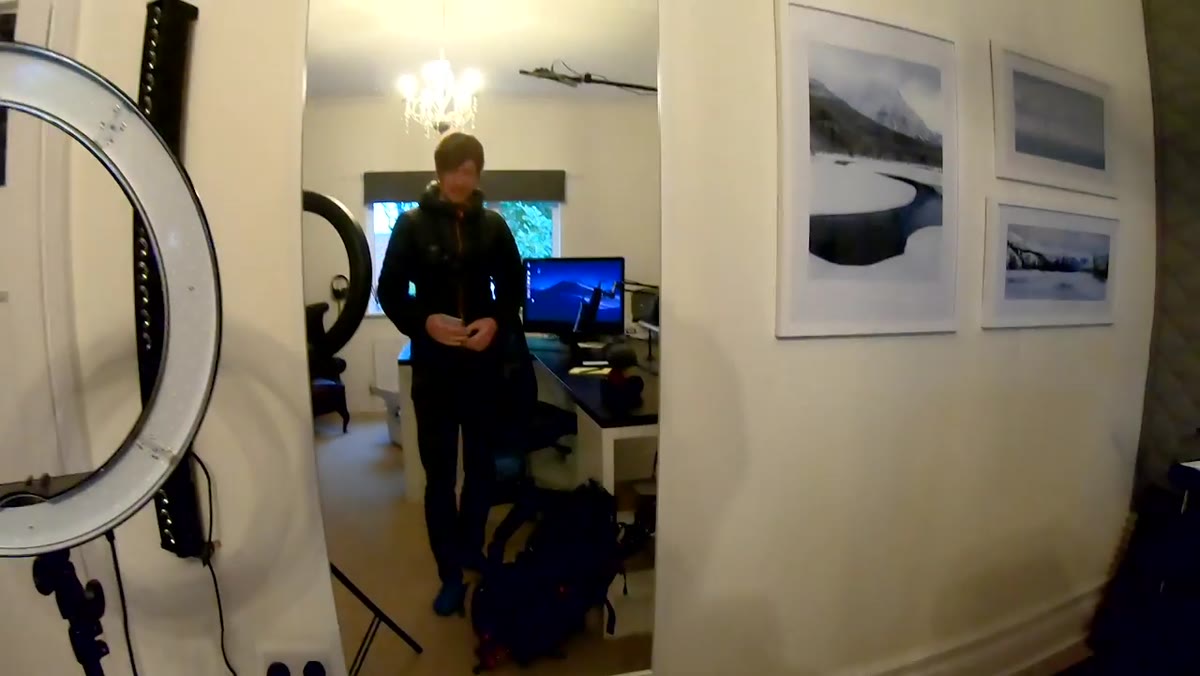 Thomas Heaton introduces the 1000-step challenge at his front door
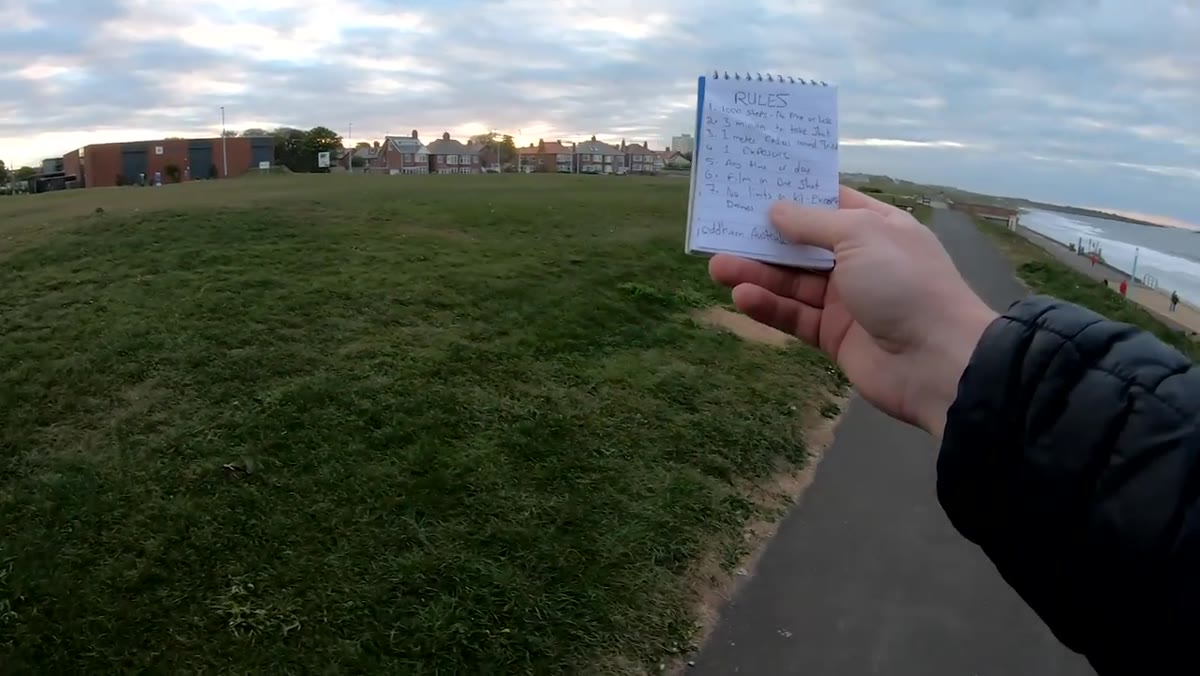
Before a single step is counted, Heaton lays out the full ruleset, and understanding these constraints matters because each one closes off a specific escape route photographers rely on. The rules are: exactly 1000 steps, no more no less. Three minutes to compose and capture once you stop. A one-meter radius around your tripod, meaning you can move around the camera but you cannot reposition significantly. One single exposure. No drones. Any time of day is fair.
Thomas Heaton introduces the 1000-step challenge at his front door
Before a single step is counted, Heaton lays out the full ruleset, and understanding these constraints matters because each one closes off a specific escape route photographers rely on. The rules are: exactly 1000 steps, no more no less. Three minutes to compose and capture once you stop. A one-meter radius around your tripod, meaning you can move around the camera but you cannot reposition significantly. One single exposure. No drones. Any time of day is fair.
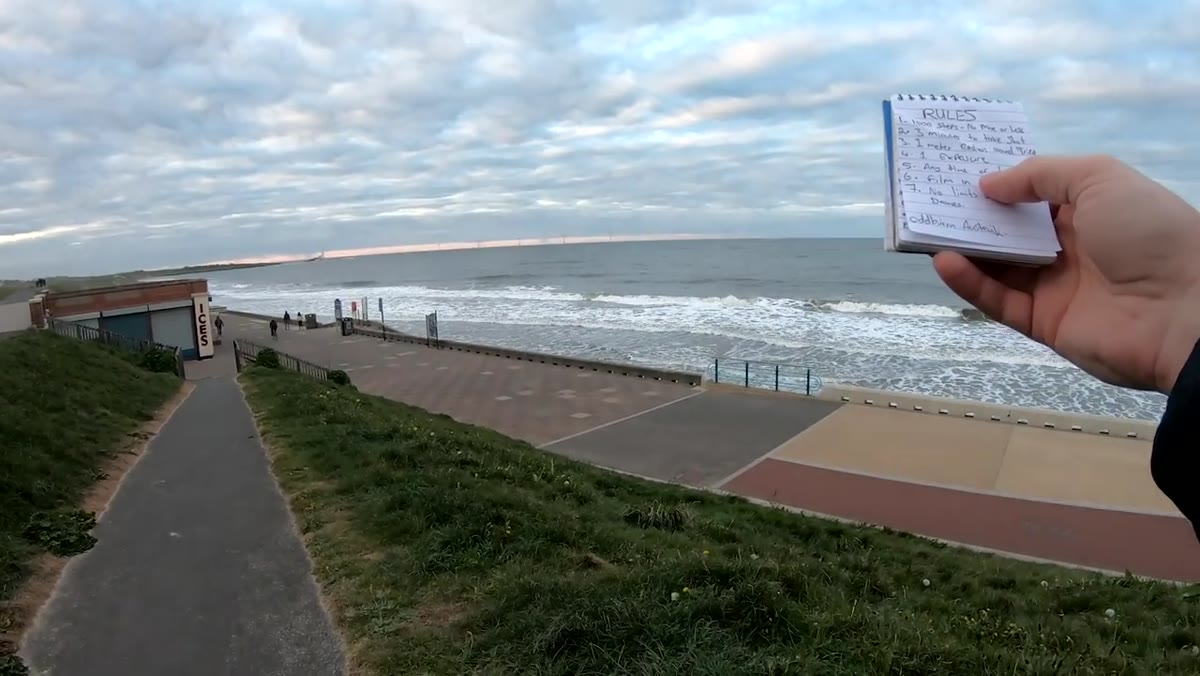
The one-exposure rule is the one that should make you uncomfortable, and that discomfort is the point. I still shoot film occasionally precisely because it enforces the same discipline. When you know you get one frame, you stop chimping and start thinking. Set up your shot mentally before you set up your tripod. Know your likely focal length, your general exposure intent, your horizon placement, before your timer starts.
Step 2: Use a Pedometer and Commit to the Count
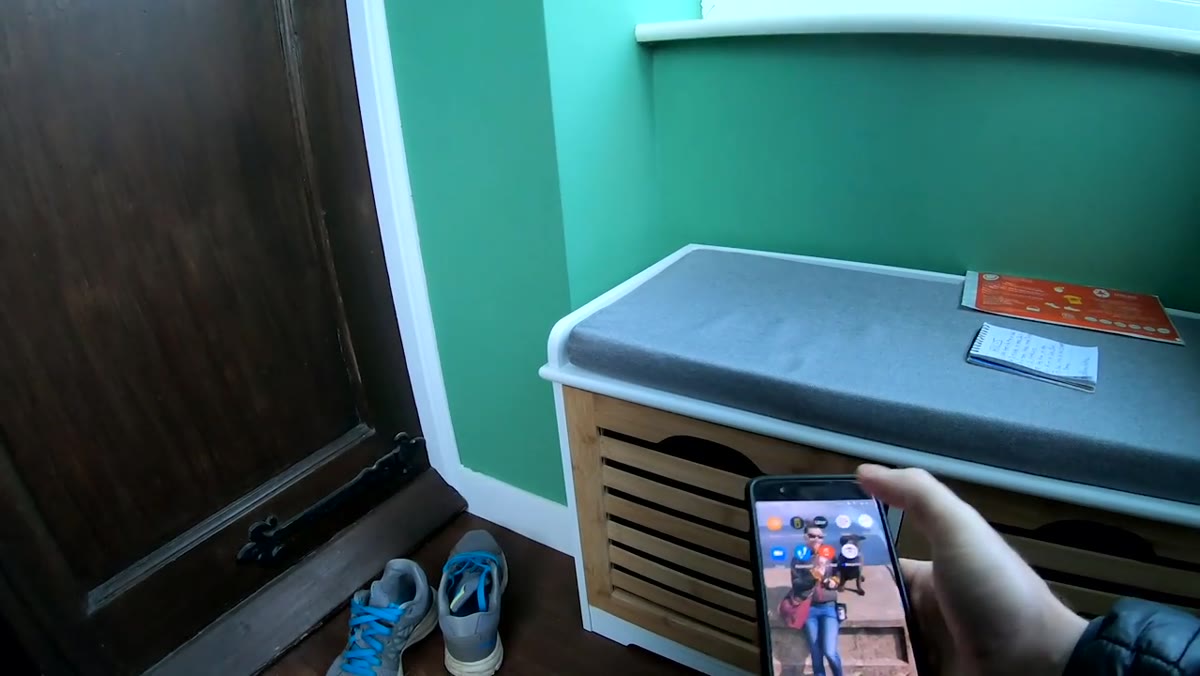 Heaton checks his step-counting app on his phone while walking
Heaton pulls up a pedometer app on his phone to track his steps, and he’s honest that its accuracy is imperfect. That’s fine. The precision isn’t really the point, the commitment is. Pick a tool, a phone app, a fitness tracker, a dedicated pedometer, and agree before you leave that wherever it says 1000, that’s where you stop. No negotiating. No “well, I’ll just take twelve more steps to get past this fence.”
Heaton checks his step-counting app on his phone while walking
Heaton pulls up a pedometer app on his phone to track his steps, and he’s honest that its accuracy is imperfect. That’s fine. The precision isn’t really the point, the commitment is. Pick a tool, a phone app, a fitness tracker, a dedicated pedometer, and agree before you leave that wherever it says 1000, that’s where you stop. No negotiating. No “well, I’ll just take twelve more steps to get past this fence.”
If you want to add one layer of intentionality before you go, think loosely about direction rather than destination. Heaton heads toward the beach because that’s where his instincts take him, but he doesn’t know what tide he’ll encounter or what the light will do. Give yourself a general compass bearing and let the steps do the rest. That small amount of pre-walk intention, without over-planning, tends to produce more interesting results than either pure randomness or a fully scouted approach.
Step 3: Read the Conditions While You Walk, Not After You Stop
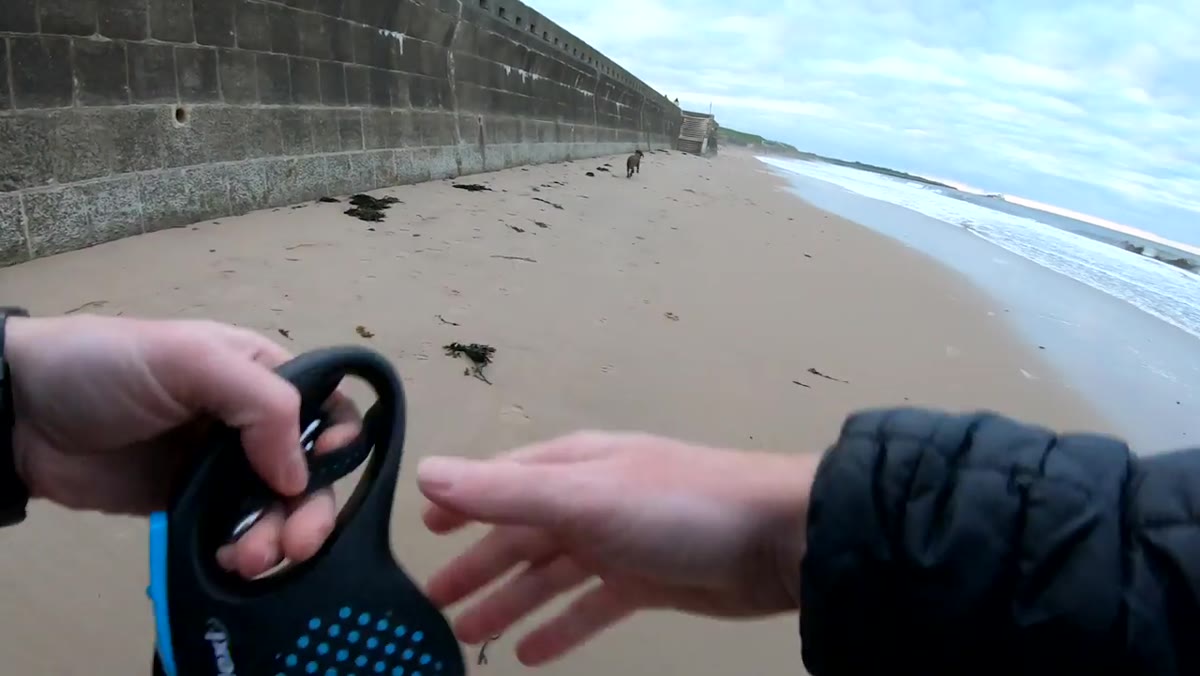 Heaton observes the beach conditions and high tide while walking
One of the quieter lessons in this video is watching Heaton assess his environment throughout the walk, not just when he arrives. He notes that it’s high tide, which limits his foreground options on the beach. He looks at where the sunset is tracking relative to his position. He’s doing compositional pre-visualization without yet knowing where he’ll stop.
Heaton observes the beach conditions and high tide while walking
One of the quieter lessons in this video is watching Heaton assess his environment throughout the walk, not just when he arrives. He notes that it’s high tide, which limits his foreground options on the beach. He looks at where the sunset is tracking relative to his position. He’s doing compositional pre-visualization without yet knowing where he’ll stop.
This is a transferable field habit regardless of whether you’re doing the challenge. Train yourself to read light direction, assess foreground texture, and note where shadows are falling while you’re still moving. By the time you arrive at your shooting position, you should already have two or three potential compositions forming in your head. When the three-minute clock starts, you won’t be seeing the scene for the first time.
Step 4: Stop at 1000 and Start Your Timer Before Touching Your Gear
 Heaton reviews the challenge rules including the three-minute window
When you hit 1000 steps, resist the urge to immediately unfold the tripod and start fiddling. Stop. Look. Spend the first fifteen to twenty seconds standing still and rotating slowly through 360 degrees. The challenge says you have three minutes from when you begin setup, so use a few of those seconds before setup begins to make your composition decision. Changing your mind halfway through pulling out filters eats time and produces muddy thinking.
Heaton reviews the challenge rules including the three-minute window
When you hit 1000 steps, resist the urge to immediately unfold the tripod and start fiddling. Stop. Look. Spend the first fifteen to twenty seconds standing still and rotating slowly through 360 degrees. The challenge says you have three minutes from when you begin setup, so use a few of those seconds before setup begins to make your composition decision. Changing your mind halfway through pulling out filters eats time and produces muddy thinking.
Heaton is working in fading light with a high tide beach, and that environmental pressure mirrors what I tell students about working under any constraint. Pressure clarifies. You stop auditioning options and start committing to one. Pick your direction, pick your focal length in your head, then open the bag.
Step 5: Execute the Single Exposure With Intention
 Heaton discusses the one-exposure rule and its creative implications
One photograph. This is where every technical decision you’ve been putting off has to happen simultaneously. Exposure mode, focus point, depth of field, shutter speed relative to any motion in the scene. Heaton shoots in challenging evening light with a moving sea, which means he has to balance a long enough shutter to smooth water without blowing highlights in a potentially brightening sky.
Heaton discusses the one-exposure rule and its creative implications
One photograph. This is where every technical decision you’ve been putting off has to happen simultaneously. Exposure mode, focus point, depth of field, shutter speed relative to any motion in the scene. Heaton shoots in challenging evening light with a moving sea, which means he has to balance a long enough shutter to smooth water without blowing highlights in a potentially brightening sky.
In practice, think through this sequence quickly: what is the critical sharpness point in this frame? Set focus there. What is my slowest acceptable shutter given any movement in the scene? Work backward to your aperture. Check your horizon. Check your edges for distracting intrusions. Take the frame. That’s it. The discipline of not having a backup shot makes each of these micro-decisions land with more weight, and over time, that weight becomes reflex.
Where This Challenge Falls Short, and What to Do About It
Heaton does this challenge once, which gives you a single data point. The real value compounds when you do it repeatedly, ideally in the same general area across different seasons and conditions. I’ve spent years photographing within a thirty-minute drive of Bend, and the intimacy you build with familiar terrain is irreplaceable. You start to know where the frost settles first, which ridgeline catches alpenglow longest, where the mud gets interesting after rain.
The 1000-step challenge works best as a monthly practice rather than a one-time experiment. Keep a simple log: date, general direction walked, conditions, what you found interesting about where you landed. After six months, you’ll have a document of your local landscape that no scouting app can generate for you.
The mentor who first pushed me toward this kind of constrained, local work used to say the mountain doesn’t care about your schedule, and he was right. Neither does your neighborhood. It will show you what it has when you stop waiting for conditions to be ideal and start showing up with 1000 steps and a willingness to see.
The deepest lesson in Heaton’s challenge isn’t about steps or timers. It’s that the photograph was always going to come from you, not the location. Stop looking for a better place to stand.
Watch the full tutorial on YouTube
Comments (4)
This should be required reading for anyone starting out.
Never thought of approaching it this way. Really creative.
Great article! I actually covered something related on my site — the gear angle is really complementary to this.
Solid advice. Especially the part about taking your time with it.
Leave a Comment