
There’s a particular kind of stillness that settles in when you haven’t picked up your camera in weeks. Not the good kind, the meditative pre-dawn quiet I’ve chased across central Oregon for two decades. The other kind. The kind where the bag sits in the corner and you walk past it without feeling much of anything. I’ve been there more times than I’d like to admit, and I’ve watched students hit that same wall in my workshops, often blaming their gear or their location or the weather. It’s rarely any of those things.
Watch the full tutorial on YouTube
In this William Patino tutorial, he does something that takes real honesty for a working photographer to do publicly: he admits he’s been in a creative funk, and then he actually diagnoses why. The answer he lands on isn’t a new lens, a better editing workflow, or a trip to some iconic location. It’s vision, or more precisely, the absence of one. What follows is a clear, practical breakdown of how to find your footing again when photography starts to feel like a chore rather than a calling.
Step 1: Recognize That Vision, Not Gear, Is the Engine
 Creator explaining the missing element has nothing to do with gear
Before you can fix anything, you have to name it correctly. Patino is direct here: the thing that had evaporated for him wasn’t skill, it wasn’t opportunity, and it wasn’t technical knowledge. It was a clear sense of what he was working toward. Without that forward pull, even the most beautiful morning light doesn’t feel worth setting an alarm for.
Creator explaining the missing element has nothing to do with gear
Before you can fix anything, you have to name it correctly. Patino is direct here: the thing that had evaporated for him wasn’t skill, it wasn’t opportunity, and it wasn’t technical knowledge. It was a clear sense of what he was working toward. Without that forward pull, even the most beautiful morning light doesn’t feel worth setting an alarm for.
Think about the last time you genuinely couldn’t wait to get out with your camera. Chances are, you had something specific in mind. A location you’d been studying. A mood you wanted to capture. A technique you were itching to try. That specificity is vision in its simplest form, and it matters more than most photographers give it credit for.
Step 2: Stop Staring at the Summit
 Creator describing the overwhelming feeling of comparing work to professionals
One of the fastest ways to kill motivation is to measure your current work against the best images you’ve ever seen. Patino flags this directly, especially for photographers who are still developing their eye. When you scroll through the portfolios of people who have spent a decade refining their craft, and then look at your own recent shots, the gap can feel paralyzing.
Creator describing the overwhelming feeling of comparing work to professionals
One of the fastest ways to kill motivation is to measure your current work against the best images you’ve ever seen. Patino flags this directly, especially for photographers who are still developing their eye. When you scroll through the portfolios of people who have spent a decade refining their craft, and then look at your own recent shots, the gap can feel paralyzing.
The fix isn’t to lower your standards. It’s to zoom in on a smaller stretch of the trail. Ask yourself what single element is most noticeably holding your images back right now, and focus there. Not everything at once. One thing.
Step 3: Diagnose the Specific Gap in Your Work
 Creator listing concrete examples like subject matter, light, and processing
This is where the tutorial gets genuinely useful. Patino walks through a handful of concrete examples: maybe you have solid subject matter but you’re not putting yourself in the right light. Maybe your compositions are strong but your processing feels flat. Maybe you’ve never really nailed long-exposure water movement because you keep rushing through the settings. Whatever the honest answer is, that’s your next step.
Creator listing concrete examples like subject matter, light, and processing
This is where the tutorial gets genuinely useful. Patino walks through a handful of concrete examples: maybe you have solid subject matter but you’re not putting yourself in the right light. Maybe your compositions are strong but your processing feels flat. Maybe you’ve never really nailed long-exposure water movement because you keep rushing through the settings. Whatever the honest answer is, that’s your next step.
I do a version of this with my workshop students by having them print five of their recent images and tape them to the wall. No screens. Standing in front of physical prints, most photographers can identify the pattern within ten minutes. The weakest link tends to announce itself pretty clearly when you’re not distracted by the editing interface around it.
Step 4: Build a Micro-Vision Around That Single Weakness
 Creator encouraging breaking photography goals into smaller bite-sized pieces
Once you know what the gap is, build a small, concrete goal around closing it. Not a vague resolution like “get better at light.” Something specific enough that you’d know whether you’d done it. “I’m going to wake up early three times this month and photograph the same location in different light conditions.” That’s a vision you can actually move toward.
Creator encouraging breaking photography goals into smaller bite-sized pieces
Once you know what the gap is, build a small, concrete goal around closing it. Not a vague resolution like “get better at light.” Something specific enough that you’d know whether you’d done it. “I’m going to wake up early three times this month and photograph the same location in different light conditions.” That’s a vision you can actually move toward.
This is the part where a lot of photographers skip ahead and try to build a grand artistic mission statement when what they actually need is a reason to go out Tuesday morning. Small visions are still visions. They create the momentum that eventually builds into something larger.
Step 5: Use Nature as a Reset, Not Just a Subject
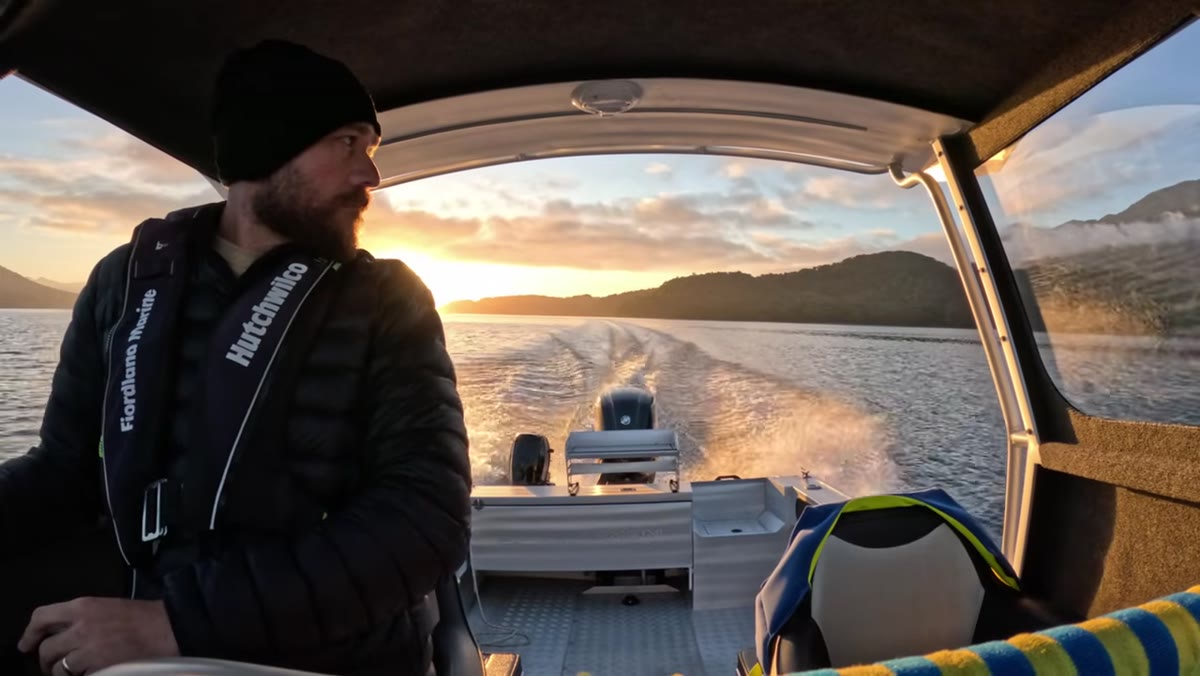 Creator describing spending time outdoors without touching his camera
Patino mentions something that I think gets overlooked in the productivity-obsessed corners of photography culture: he went out on his boat, brought the camera, and never touched it. And that time still helped. Being in the landscape without the pressure to produce anything from it is a different kind of input, and it feeds the creative process in ways that staring at a screen simply cannot replicate.
Creator describing spending time outdoors without touching his camera
Patino mentions something that I think gets overlooked in the productivity-obsessed corners of photography culture: he went out on his boat, brought the camera, and never touched it. And that time still helped. Being in the landscape without the pressure to produce anything from it is a different kind of input, and it feeds the creative process in ways that staring at a screen simply cannot replicate.
I learned a version of this early in my career from a mentor who told me, plainly, that the mountain doesn’t care about your schedule. He meant it as a lesson in patience, but I’ve always heard another layer in it. The landscape isn’t waiting for you to be in the mood. You go, you sit with it, and something usually shifts. Sometimes the shift takes two days of fog and one decent frame. Sometimes that frame turns out to be the best thing you’ve ever made.
Step 6: Recommit to One Small Action, Not a Complete Overhaul
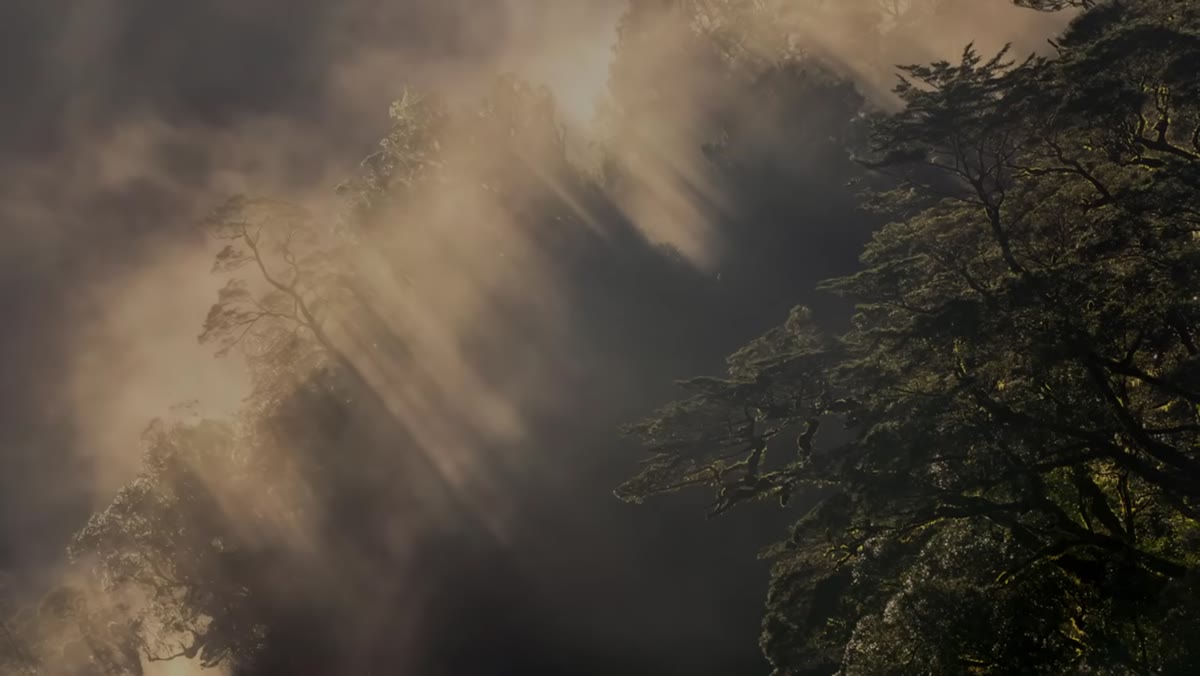 Creator describing how vision helps push through tough periods
Patino closes his framework with something simple: having a finish line in sight is what pulls you through when the conditions, the schedule, or the weather all conspire against you. Landscape photography is physically demanding. Early mornings, long hikes, cold water, late sunsets. None of that feels worth it when you’re shooting without direction. But a specific goal changes the math entirely.
Creator describing how vision helps push through tough periods
Patino closes his framework with something simple: having a finish line in sight is what pulls you through when the conditions, the schedule, or the weather all conspire against you. Landscape photography is physically demanding. Early mornings, long hikes, cold water, late sunsets. None of that feels worth it when you’re shooting without direction. But a specific goal changes the math entirely.
The action here is small: pick one thing. One location you’ve been putting off scouting. One technique you’ve been meaning to practice. One hour before sunrise that you commit to in advance. Put it in the calendar like it matters, because it does.
A Note From Twenty Years in the Field
The creative slumps Patino describes are not a sign that something is wrong with you as a photographer. They’re a sign that you’ve been outputting without refilling. I still shoot film occasionally, partly because I love the process, but mostly because it forces me to think hard before pressing the shutter. There are twelve frames on a roll. Each one costs something. That constraint has a way of clarifying vision faster than almost anything else I’ve tried. If you’re stuck, consider giving yourself an artificial limit. Fewer frames. A single focal length. One location for an entire season. Constraints are surprisingly good at generating the focus that a wide-open creative field sometimes can’t.
The central idea Patino lands on is this: motivation follows vision, not the other way around. Most of us wait to feel inspired before we make a plan, but the evidence, both in this tutorial and in my own experience, points in the opposite direction. Build the target first. The desire to reach it tends to follow.
Watch the full tutorial on YouTube and spend time with the early section especially. Patino’s honesty about his own plateau is worth the ten minutes on its own.
Comments (2)
Great breakdown. The step-by-step approach really helps.
I've watched a dozen tutorials on this and yours is the clearest by far.
Leave a Comment