I had one of those mornings last month where everything was wrong. Wrong light, wrong wind, the composition I’d pre-visualized for three weeks completely blocked by a tree that had dropped half its canopy over the trail. I packed up early, drove home, and sat with that familiar low-grade frustration that’s followed me into the field more times than I care to admit after twenty years doing this.
Then I watched this.
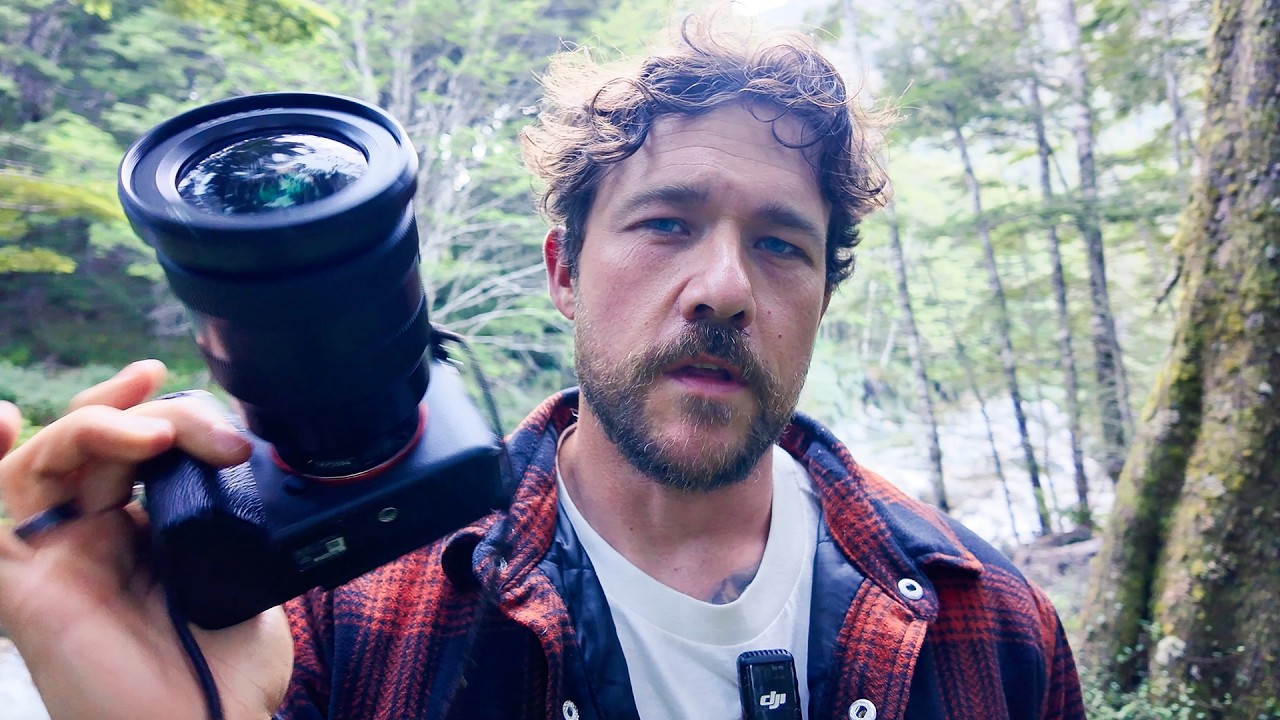
In this William Patino tutorial, filmed across the Fiordland landscape in New Zealand, Will doesn’t arrive with a shot list and execute it. He wanders. He waits. He adjusts. And somewhere in that process, he makes photographs worth making. Watching someone work that way, without the performance of certainty, was the reset I didn’t know I needed.
Fiordland Doesn’t Negotiate, and Neither Does Any Wild Place
Fiordland is one of the wettest places on earth. Will acknowledges this immediately, not as a complaint but as a condition of the work. Rain, mist, dramatic cloud movement, light that disappears and returns without warning. He treats the environment as a collaborator, not an obstacle.
This is the first real lesson in the video, and it’s easy to miss because it’s baked into his behavior rather than stated directly. He’s not chasing a specific image. He’s responding to what’s actually in front of him. When the clouds drop low and flatten the scene, he moves. When a shaft of light breaks through, he stops and works quickly. His pace changes with the conditions. That kind of attunement takes practice, and it requires letting go of the idea that a pre-planned shot is the goal.
A mentor of mine told me once that the mountain doesn’t care about your schedule. He was right, and Will’s approach to Fiordland proves it again.
How He Actually Moves Through a Scene
What makes this tutorial useful beyond philosophy is watching Will’s physical workflow. He scouts on foot before committing the tripod to anything. He circles a foreground element, checks it from low angles, moves laterally to see how it relates to the background layers. He doesn’t plant the tripod until he’s reasonably confident in the relationship between all three zones: foreground, midground, and the distant elements that anchor the frame.
When he does set up, he works methodically. Exposure is evaluated for the sky first, then he considers how much dynamic range the scene is asking him to manage. In Fiordland’s moody, high-contrast light, that often means either waiting for the contrast to soften or accepting that the shot will need to be exposed for the shadows and reined in during processing. He doesn’t over-explain this. He just does it, and watching the reasoning play out in real time is instructive.
His composition instincts lean toward simplicity. Fiordland will give you drama for free. The mistake most photographers make in visually loud landscapes is adding more, more leading lines, more foreground chaos, more elements competing for the eye. Will edits by removal. He frames to exclude, not to include everything available to him.
When the Shot Isn’t There, the Walk Still Is
About halfway through the video, Will has a stretch where the light simply isn’t cooperating. What he does in that window is worth paying attention to. He keeps moving. He photographs details, textures, small things. Not because those shots are the objective, but because staying engaged with the environment keeps his eye sharp for when the moment shifts.
I do something similar on dead-light mornings in the high desert around Bend. I’ll shoot lichen on basalt, or the way frost sits on sage. Rarely are those images the ones I take home with any intention of printing. But the act of making them keeps me present and loose. When the golden light finally breaks, I’m already warmed up, already seeing.
Will frames this the same way, though he doesn’t state it explicitly. The walk itself is practice. The camera is just the tool that keeps you honest.
Where I’d Push This Differently
The one place I diverge from Will’s approach, at least in how I work, is in the return visit. His workflow in this video is very much about being fully present to a single session, reading the conditions and responding. That’s the right instinct. But for locations I know I’ll return to, I use that first visit almost entirely as a reconnaissance session. I’m less interested in making a great photograph than in understanding what the location needs from me: what time of year the light hits the right ridge, which foreground survives when the water rises, where I’d want to be if fog rolled in from the south.
The drive-six-hours-and-sit-in-fog approach. I’ve done it. It’s produced my best-selling print. The fog wasn’t the failure. It was the data.
Will’s Fiordland session is a single visit done beautifully. Pair that with systematic location knowledge, and the hit rate improves significantly. Both things are true.
Presence Is the Technique
The deeper skill Will is demonstrating in this video isn’t compositional or technical. It’s the ability to stay open and observant when nothing is going according to plan. That’s the thing that separates photographers who consistently make strong work from those who only get lucky under ideal conditions.
Watch the full video for the visual demonstration of how Will moves through Fiordland and evaluates light in real time. The written version gets you partway there. The footage does the rest.
Watch the full William Patino tutorial on YouTube
Comments (5)
Just subscribed. If the rest of your content is this good, I'm in.
Solid advice. Especially the part about taking your time with it.
Finally someone explains this in a way that actually makes sense.
This is going in my reference folder. Incredibly useful.
Clear and practical. No fluff. Appreciate that.
Leave a Comment