I spent last October shooting the Crooked River canyon outside Bend. Three mornings in a row, golden light, no wind, perfect conditions on paper. I came home with technically clean images that felt completely flat. Sharp foreground rocks, a nice sky, clean exposure. Dead on arrival. Something was off in the architecture of the frames and I couldn’t name exactly what.
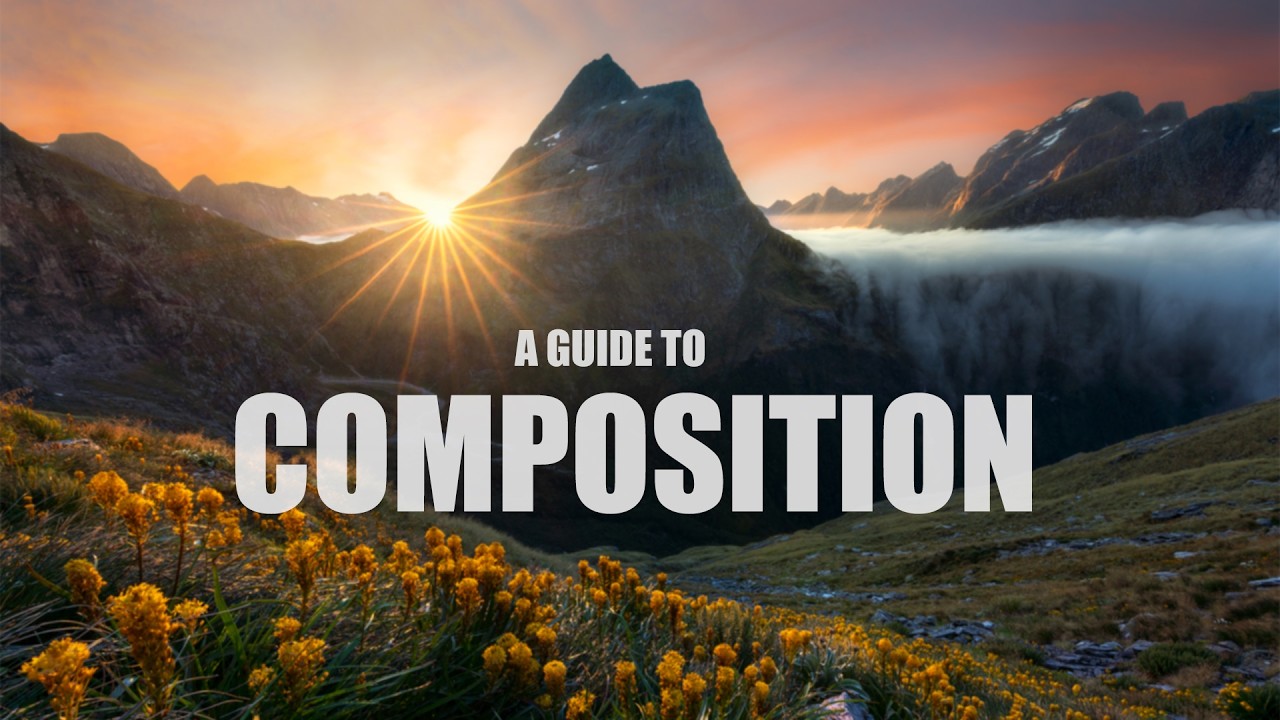
That’s when I sat down with this William Patino tutorial on landscape composition, and within the first ten minutes I had a specific language for the problem I’d been circling around for weeks.
The Problem With “Good Light Plus Nice Subject”
Most photographers, myself included on a bad morning, show up to a location and essentially point the camera at the thing that looks impressive. The light is good. The subject is there. We fire away and hope the frame holds together. What Patino’s tutorial pushes back on is that instinct. Composition isn’t decoration layered on top of a scene. It’s the structural logic that determines whether a viewer’s eye moves through the image or bounces around in it and gives up.
His framework organizes composition into three connected problems: how you balance the frame, how you lead the eye, and how you create the illusion of depth. Get all three working together and the image reads as coherent. Miss one and the whole thing can unravel, even with excellent light and a strong subject.
Balancing the Frame Without Going Symmetric
Balance in a landscape frame doesn’t mean equal weight on both sides. It means visual tension that feels resolved. Patino walks through how large, heavy elements on one side of the frame need to be countered by something on the other, which can be smaller in physical size but stronger in tonal contrast or color. A dark shadowed cliff on the left might be balanced by a small patch of bright highlight water on the right. Your eye registers mass, not just dimension.
The practical move here is to slow down before you raise the camera. Stand behind where you plan to shoot and scan the scene in quadrants. Ask what the heavy elements are and where they sit. If everything is stacking on one side with nothing answering it, you need to either shift position or find a different foreground. This sounds simple and it is, but doing it consciously rather than trusting a vague gut feeling changes how quickly you settle on a composition.
Leading the Eye: Lines Are Not Optional
Patino is direct about leading lines: they’re not a bonus compositional move reserved for shots with roads or rivers. Every successful landscape frame has something doing the work of pulling the viewer’s eye from entry point toward the main subject. That might be a river, yes, but it could also be a shadow line, a ridge, a row of rocks, or even a gradient in the sky that flows in a particular direction.
The entry point matters. Patino emphasizes placing it near a lower corner of the frame, which gives the eye a natural starting position and somewhere to travel from. When I’m scouting a foreground, I’m not just looking for interesting texture. I’m asking whether that texture connects to something. A beautiful patch of lichen-covered rock that sits in isolation, unconnected to anything else in the frame, is visual noise. The same rock, positioned so that it anchors a line moving toward the midground, becomes part of the composition’s logic.
Building Depth With Three Distinct Planes
The depth section of Patino’s tutorial is where I found the most immediate application to what had gone wrong at the Crooked River. He frames depth as a layering problem: foreground, midground, and background each need to be clearly distinct and each needs to contribute something specific to the image.
Foreground establishes intimacy and scale. Midground connects the viewer’s eye from the close element to the distant one. Background provides the payoff, the reason you’re there. When one of those layers is missing or unconvincing, the image collapses into a postcard. What I’d been doing wrong was treating the sky as my background while my midground was essentially empty space. The rock formations in the canyon needed to sit in that middle layer, connecting the foreground detail to the sky. I had the pieces but had been positioning them poorly.
Shooting low is part of the solution here. Getting the camera close to a foreground element and using a wide angle exaggerates the sense of near-to-far distance. A tripod set at ankle height isn’t romantic but it works.
Where I’d Push Back Slightly
Patino’s framework is built for scenes with clear structure, and most landscapes in good light cooperate with it. But I occasionally work in conditions where the scene actively resists these three layers, heavy fog being the most common in central Oregon. When depth collapses into atmosphere, you lose the midground almost entirely. Trying to force three-plane structure into a fog-softened scene produces images that feel clumsy because the elements don’t behave the way they would in clear light.
In those conditions, I let go of depth as the primary goal and lean into the balance and leading-line elements alone. Two-dimensional compositions with strong tonal balance can carry a fog image just fine. Patino’s framework isn’t wrong in those situations, it just needs to be applied selectively. I once drove six hours to shoot a location and sat in fog for two days. I came home with one usable frame. It became my best-selling print, and it works precisely because I stopped fighting the conditions and let the fog flatten everything into a simple tonal balance across the frame.
The Framework You Can Use Tomorrow Morning
Composition is not a collection of rules. It’s a set of questions to ask before you trip the shutter: Is this frame balanced? Does the eye have a path? Are there three distinct planes doing specific work? Ask those three questions on location and you’ll eliminate the majority of frames that look fine on the back of the camera and fall apart on a monitor.
Watch Patino’s full tutorial for the visual demonstrations. The written version of this framework gives you the logic. Seeing him apply it to actual landscape images is what makes it click.
Comments
Leave a Comment