
There’s a particular kind of humility the coast hands you. I’ve spent two decades waking before dawn, and the ocean still finds ways to remind me who’s in charge. That’s part of why I found myself watching this Thomas Heaton tutorial more than once - not just for the photography instruction, but because Heaton does something most tutorial creators won’t: he shows you the mistake in real time. He gets cut off by an incoming tide mid-shoot, wades back to dry land, and then calmly unpacks what he actually learned. That combination of honesty and craft is worth your hour.
Watch the full tutorial on YouTube
For those of us who shoot primarily inland - mountains, forests, high desert - seascape work carries a specific set of hazards and opportunities we’re not always trained to think about. The tide doesn’t behave like a river current or a shifting weather system. It moves on its own schedule, and it doesn’t negotiate. What Heaton demonstrates across two mornings at the same beach is a masterclass in adaptive shooting: using tide movement as a compositional tool, committing to long exposures at exactly the right moment, and reading changing light with enough flexibility to capture something you didn’t plan for. Here’s how he does it, step by step.
Step 1: Check Your Forecasting App Before You Leave the Car
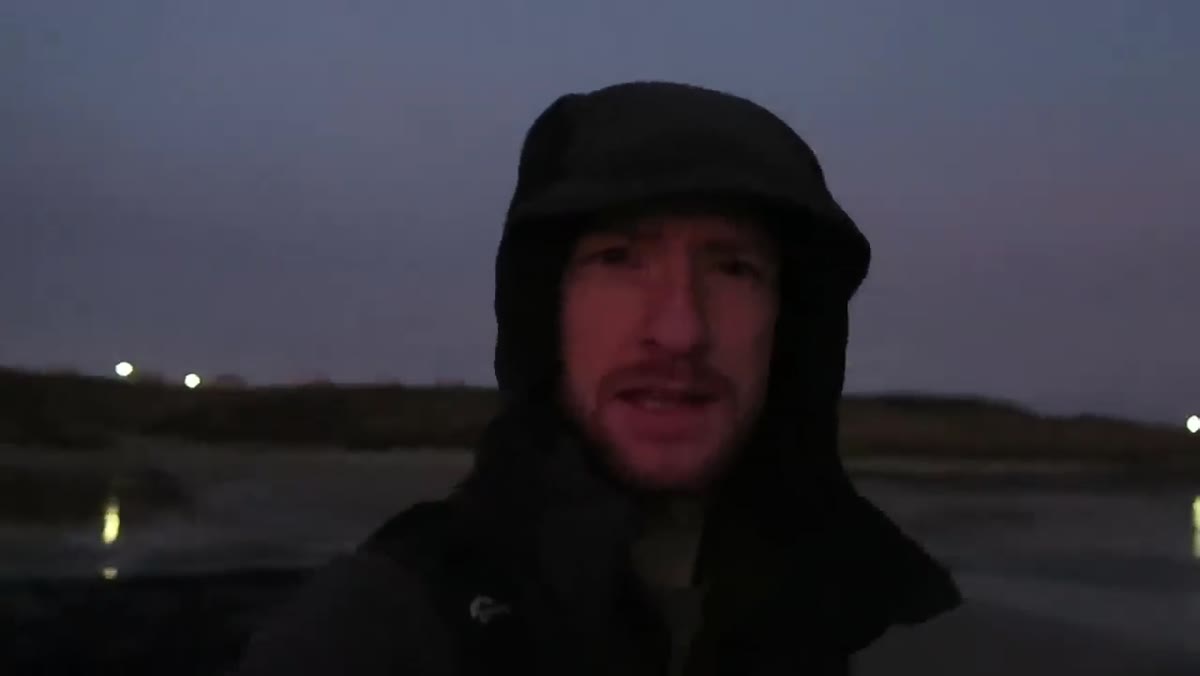 Heaton checking phone app before heading to the beach
Heaton is explicit about this. Before he returns to the beach for his second morning, he checks his app and reads the cloud positioning to assess whether conditions are trending better or worse than the day before. This is not casual scroll behavior - he’s looking at cloud coverage, light angle, and how those elements interact with his specific location. The app is a planning tool, not a reassurance device.
Heaton checking phone app before heading to the beach
Heaton is explicit about this. Before he returns to the beach for his second morning, he checks his app and reads the cloud positioning to assess whether conditions are trending better or worse than the day before. This is not casual scroll behavior - he’s looking at cloud coverage, light angle, and how those elements interact with his specific location. The app is a planning tool, not a reassurance device.
For coastal work, you need at minimum a tide chart app alongside your standard weather tools. Know the high and low tide times to the minute, and map out when the tide will be incoming versus retreating during your planned shooting window. That information shapes every decision that follows.
Step 2: Arrive Early and Scout Before the Light Arrives
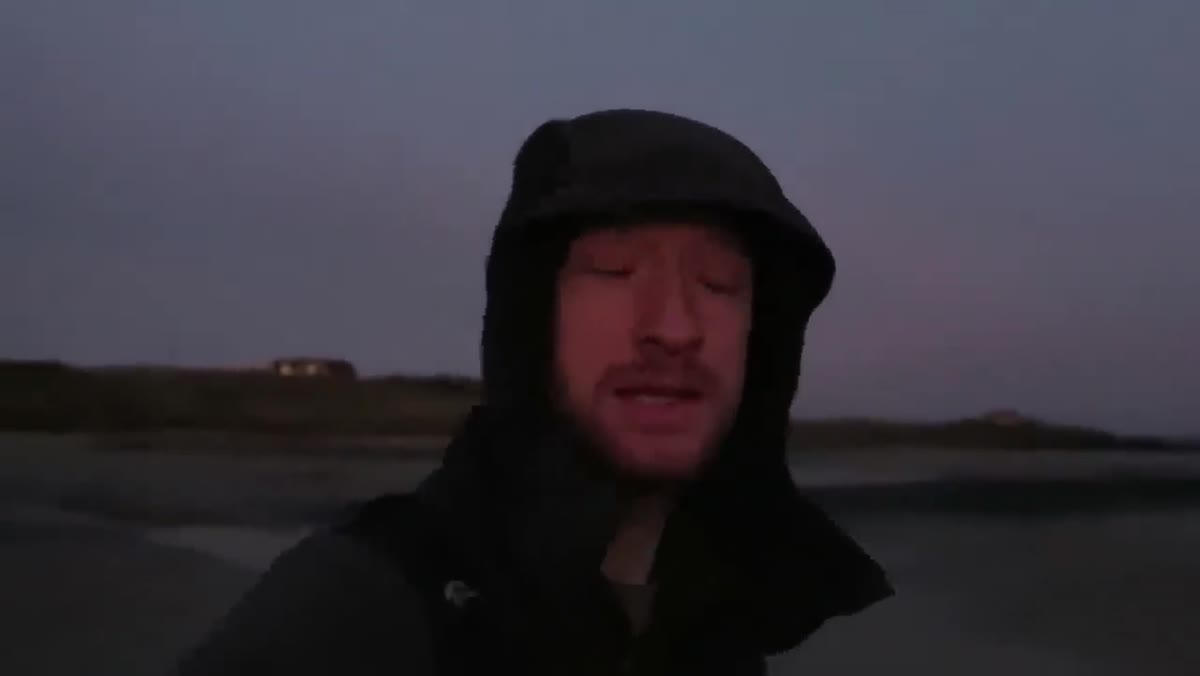 Heaton walking the beach in pre-dawn darkness
Heaton arrives at the beach well before sunrise and walks the shoreline while it’s still dark. This is the scouting window. He’s not shooting yet - he’s learning the terrain, noting where the rocks sit relative to the waterline, and reading the scene without the pressure of golden light burning overhead. Composition hunting under low pressure is how you find the shot before the shot actually exists.
Heaton walking the beach in pre-dawn darkness
Heaton arrives at the beach well before sunrise and walks the shoreline while it’s still dark. This is the scouting window. He’s not shooting yet - he’s learning the terrain, noting where the rocks sit relative to the waterline, and reading the scene without the pressure of golden light burning overhead. Composition hunting under low pressure is how you find the shot before the shot actually exists.
If you skip this step and show up at the moment of peak color, you’ll spend the best light making compositional decisions you should have made twenty minutes earlier. I learned this the hard way on the Oregon coast years ago, watching a jaw-dropping sunrise while fumbling around trying to find a foreground that worked. Walk first. Shoot second.
Step 3: Let the Tide Build Your Composition
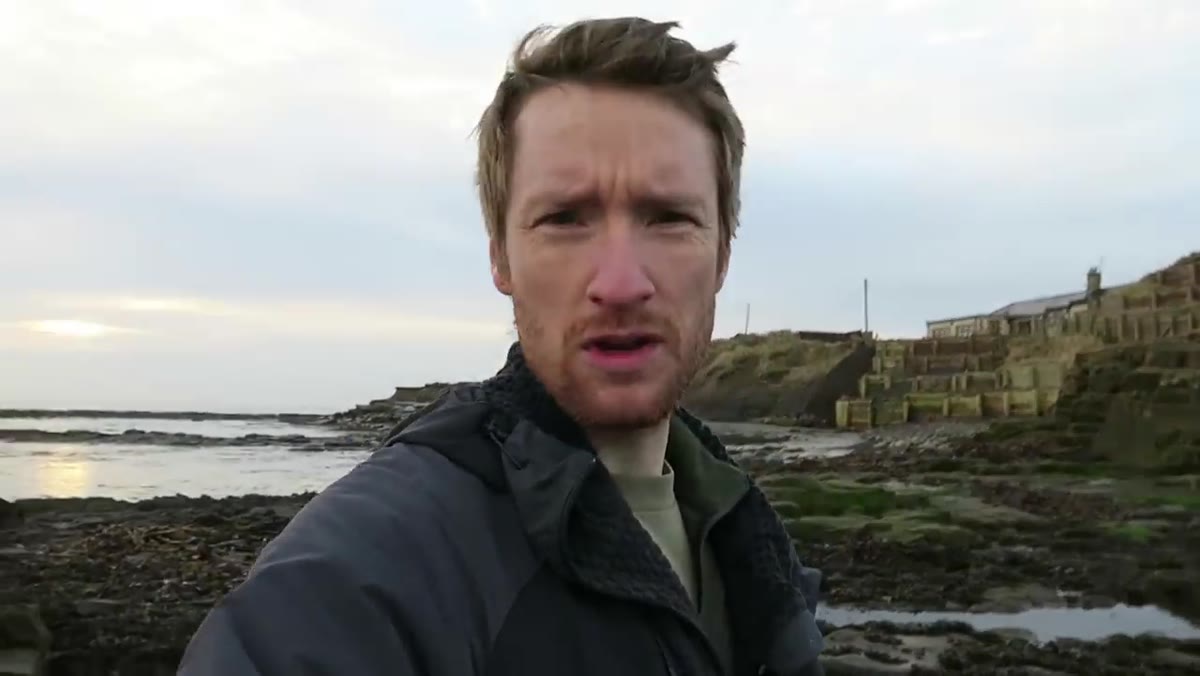 Incoming tide revealing wet rocks and new foreground elements
This is the insight I keep returning to. Heaton describes arriving at the beach without immediately finding a composition that excited him. Nothing jumped out. Rather than forcing a frame, he waited. As the tide came in, it transformed the landscape - covering dry sand, revealing wet rock faces, creating reflective surfaces that weren’t there thirty minutes earlier. The composition he ultimately shoots only exists because the tide built it for him.
Incoming tide revealing wet rocks and new foreground elements
This is the insight I keep returning to. Heaton describes arriving at the beach without immediately finding a composition that excited him. Nothing jumped out. Rather than forcing a frame, he waited. As the tide came in, it transformed the landscape - covering dry sand, revealing wet rock faces, creating reflective surfaces that weren’t there thirty minutes earlier. The composition he ultimately shoots only exists because the tide built it for him.
Wet rocks carry a reflective quality that dry rocks simply don’t have. When the tide moves over them and retreats, or when waves lap across a flat shelf, you get a mirror-like surface that adds depth and luminosity to a foreground. Position yourself to use that quality intentionally. Watch the water’s rhythm for a few minutes before you lock down your tripod position.
Step 4: Use a 6-Stop ND Filter for Long Exposures That Calm the Water
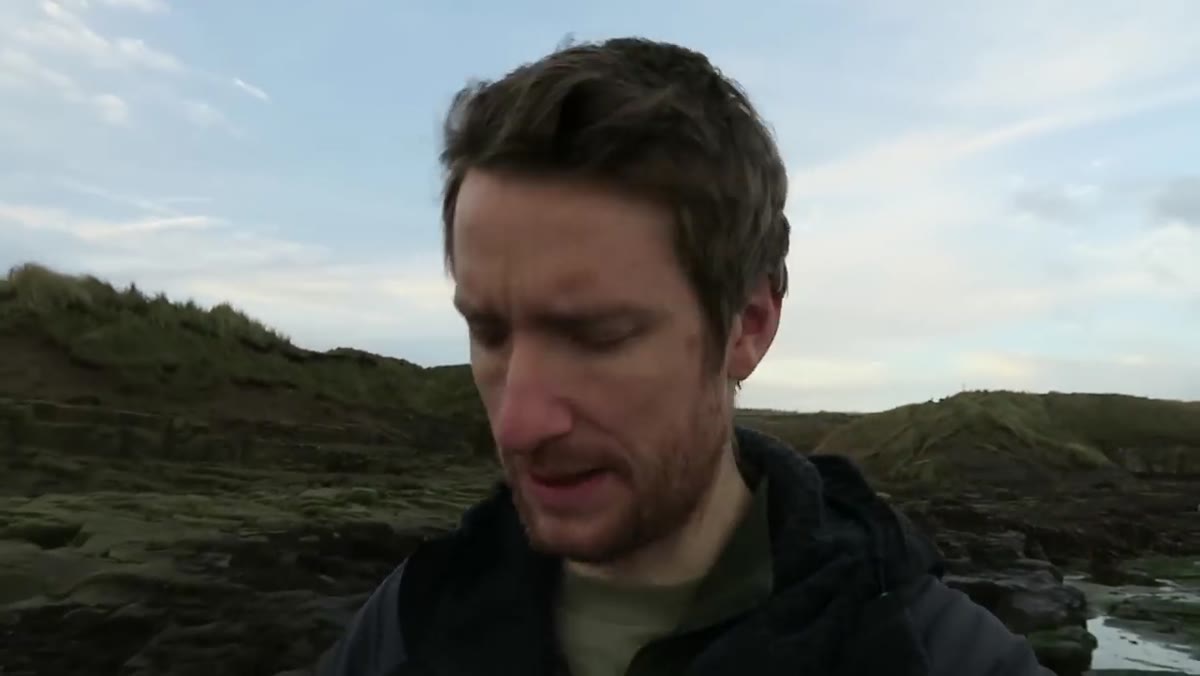 Camera on tripod with ND filter, long exposure in progress
For the featured composition, Heaton uses a 6-stop ND filter to achieve a 2-minute exposure. At that duration, any surface movement in the water smooths out to a soft, glassy finish. This is especially effective when you want the sea to read as calm and expansive rather than active and chaotic - it shifts the viewer’s attention toward sky and rock form rather than wave motion.
Camera on tripod with ND filter, long exposure in progress
For the featured composition, Heaton uses a 6-stop ND filter to achieve a 2-minute exposure. At that duration, any surface movement in the water smooths out to a soft, glassy finish. This is especially effective when you want the sea to read as calm and expansive rather than active and chaotic - it shifts the viewer’s attention toward sky and rock form rather than wave motion.
Two minutes is a long time to stand still. Set your exposure, lock the shutter with a remote release, and step back from the tripod. Don’t hover over the camera adjusting things. This is where Heaton’s mistake happened: he was absorbed in the exposure and stopped watching the environment around him. Set a mental timer or a phone alarm for tide checks every ten minutes. The image doesn’t require your attention during the exposure. The water does.
Step 5: Communicate Two Things at Once with Your Composition
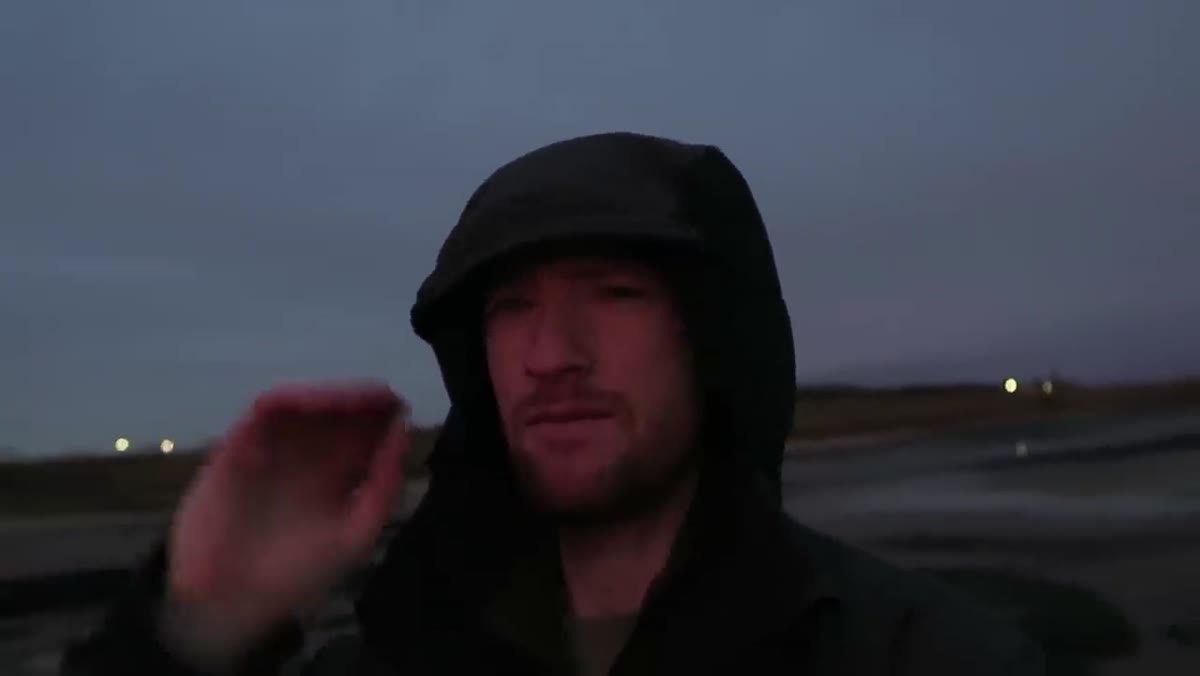 Heaton explaining his composition goals facing the sunrise
Heaton lays out his compositional intention clearly: he wants the image to carry two pieces of information simultaneously. First, the quality of the light - the color and drama of the sunrise sky. Second, the environment itself - the character and scale of the beach at low tide, not just a closeup of one interesting rock or texture. He’s not making an abstract image. He’s making a place portrait.
Heaton explaining his composition goals facing the sunrise
Heaton lays out his compositional intention clearly: he wants the image to carry two pieces of information simultaneously. First, the quality of the light - the color and drama of the sunrise sky. Second, the environment itself - the character and scale of the beach at low tide, not just a closeup of one interesting rock or texture. He’s not making an abstract image. He’s making a place portrait.
This dual-intention approach is a useful discipline regardless of where you’re shooting. Before you press the shutter, ask yourself what two things you want a viewer to know or feel when they look at this image. If you can’t name two things, you may not have the composition yet.
Step 6: Watch the Water, Not Just the Sky
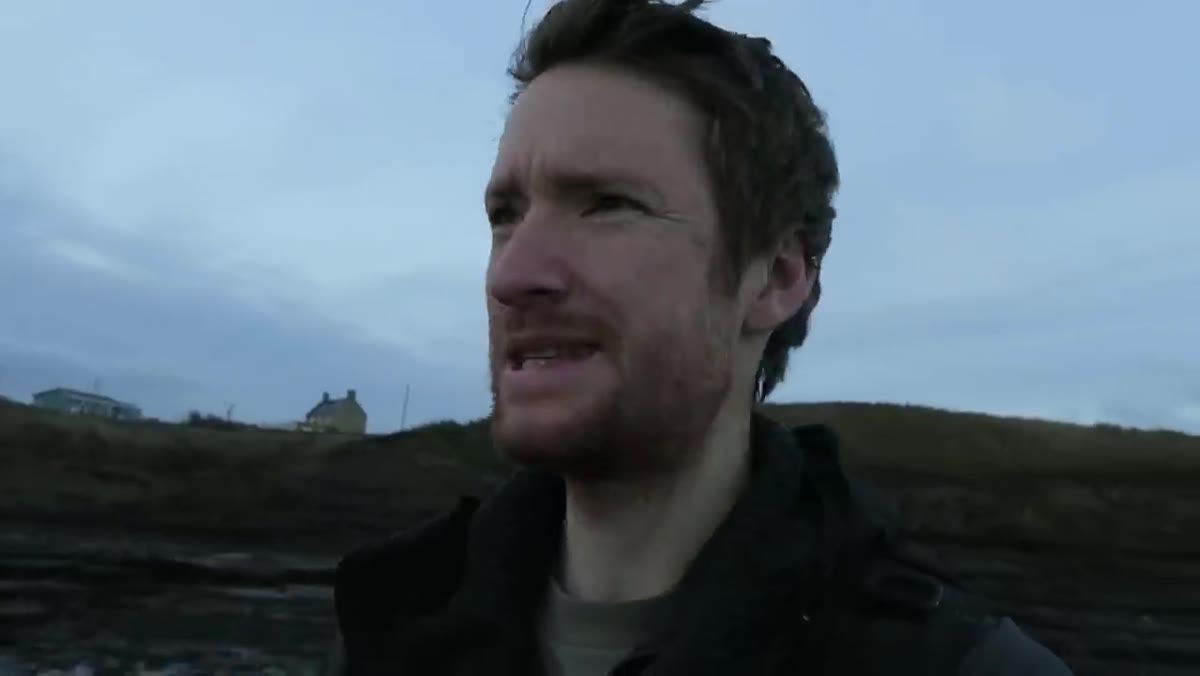 Heaton standing in ankle-deep water, tide moving in fast
The most important safety point in the tutorial comes from the mistake itself. Heaton was running a 2-minute exposure and focused entirely on his camera when the tide cut off his path back to shore. He describes it as a surge - fast, river-like, not the gradual creep he expected. He made it back safely, but the lesson is serious.
Heaton standing in ankle-deep water, tide moving in fast
The most important safety point in the tutorial comes from the mistake itself. Heaton was running a 2-minute exposure and focused entirely on his camera when the tide cut off his path back to shore. He describes it as a surge - fast, river-like, not the gradual creep he expected. He made it back safely, but the lesson is serious.
Long exposures are a cognitive trap at the coast. The camera demands your attention during the wait, and the water moves without announcing itself. Before each exposure, look up, look around, and confirm your exit route is still clear. This is especially critical on rocky headlands, tidal shelves, or any location where there’s only one way back.
What Twenty Years of Early Mornings Taught Me About Adapting
I’ve stood in front of plenty of conditions that weren’t what I planned for. My mentor once told me the mountain doesn’t care about your schedule, and the same is absolutely true of the ocean. Heaton’s first morning doesn’t deliver the burning red sunrise he hoped for. His response is to take what’s actually there - interesting cloud shapes, decent light, good rock structure - and build the best image those conditions will support.
That flexibility is a skill, and it atrophies if you only ever shoot in perfect conditions. The photographers I respect most aren’t the ones who got lucky with the light. They’re the ones who made something worth keeping when the light was ordinary. Go anyway. Shoot what’s there. The act of showing up consistently is what builds the eye to find the image that’s actually in front of you.
The single most transferable thing from this tutorial is also the simplest: treat tide movement as a compositional collaborator, not a backdrop. Watch how it transforms the scene across a thirty-minute window, and time your shot to capture the version of the landscape the water is building for you. The image Heaton came away with only existed for a brief window. He was there for it because he understood the tide was working with him.
Watch the full tutorial on YouTube to see both mornings unfold and hear Heaton walk through his thinking in real time. Worth it for the tide sequence alone.
Comments
Leave a Comment