I’ve been doing this long enough to know that the moments that genuinely humble you aren’t the ones you planned for. Last winter I drove out to the Oregon Cascades chasing a snowstorm that was supposed to roll in at golden hour. It arrived two hours late, in full darkness, and I stood there in the cold realizing I had no real strategy for capturing fast-moving weather when it doesn’t cooperate with my timeline. I got a few frames I liked but mostly I got a lesson in how much I still rely on conditions falling into place rather than being ready when they don’t.
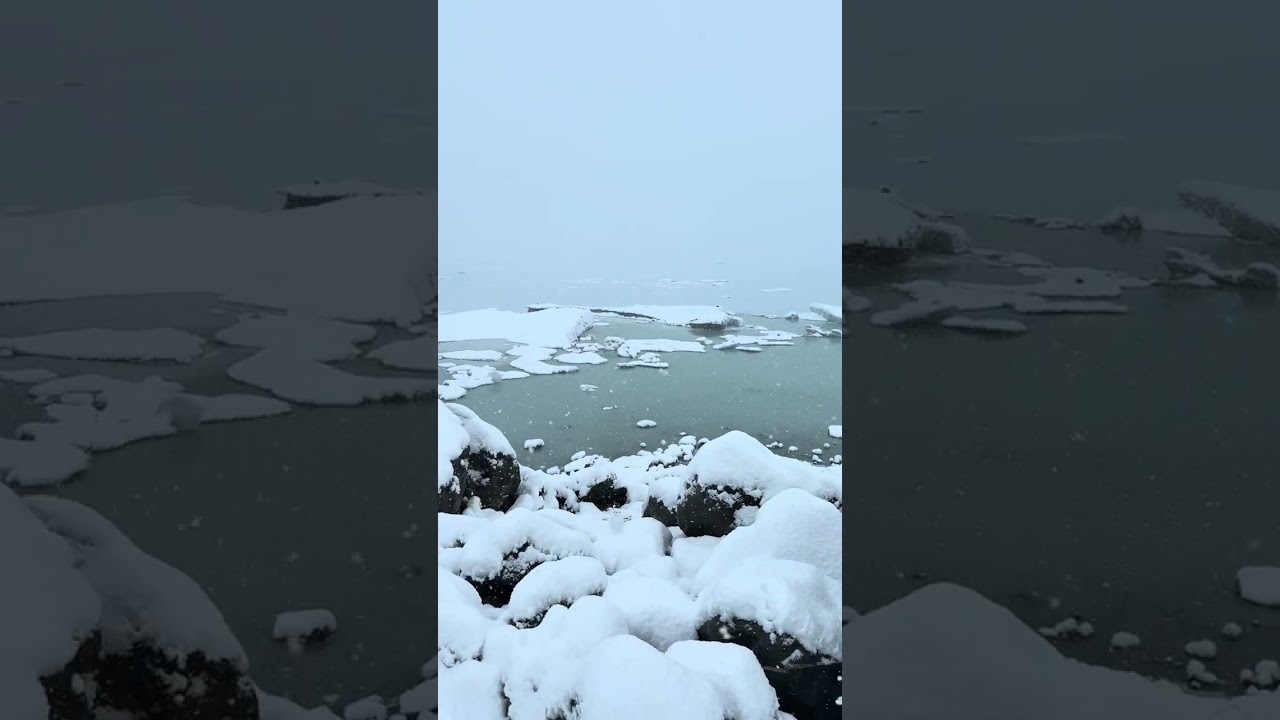
That’s why William Patino’s footage from Tasman Glacier in New Zealand stopped me cold. Watch the full tutorial on YouTube and you’ll see immediately what I mean. This is August 2026, deep in the Southern Alps, and Patino is capturing both heavy glacial calving and active snowfall at the same time. Two kinds of chaos, simultaneously. The footage is a masterclass in what preparation and positioning actually look like when the environment is making decisions faster than you are.
Why Tasman Glacier Is One of the Most Demanding Shooting Environments on Earth
Tasman is New Zealand’s largest glacier, and it has been retreating and fragmenting for decades. The terminal lake at its base has grown dramatically, which means calving events, large sections of ice breaking away and dropping into the water, happen with real frequency. That sounds like a gift for photographers. In practice, it’s a test.
You’re working with a white subject against a white environment during snowfall. The tonal range is brutal. The calving itself gives you maybe a second or two of warning, if you’re paying attention to the sounds and the micro-movements along the ice face. And you’re almost certainly shooting from a boat or a fixed lakeshore position with limited flexibility to reframe when something happens on the wrong side of the glacier.
Patino clearly did his homework on position before a single frame was captured.
Reading the Ice: How to Anticipate a Calving Event
This is the part of the video that I kept rewatching. Patino isn’t just waiting and reacting. There’s an attentiveness in how he holds position that tells you he’s been watching the glacier face for signs before the calving begins. The sound is the first cue. A deep cracking groan, low and percussive, often precedes visible movement by several seconds. In the footage you can hear it.
What that means practically is that your camera should already be up and your focus already locked on the most active section of the ice face before anything falls. Trying to react after the crack starts is too late. By the time your autofocus hunts and confirms, the largest chunk is already in the water.
Patino’s framing keeps negative space below the ice face, which is exactly right. The falling ice needs somewhere to go in the frame. If you’re too tight on the glacier wall, you’ll crop the event in the most dramatic moment. Give it room. You’ll lose a little of the texture detail at the top, but you’ll actually capture the thing you came to photograph.
Exposing for White on White During Active Snowfall
The simultaneous snowfall in this video is what makes the exposure question genuinely tricky. You’re not just dealing with ice and water. You’re dealing with falling precipitation that will blow out if you’re not careful, combined with a glacier face that needs enough detail to feel three-dimensional rather than flat and overexposed.
Patino is clearly shooting to protect the highlights while keeping enough shadow detail in the rock faces and waterline to give the image depth. In heavy snowfall, matrix or evaluative metering will be fooled constantly. The camera sees white and tries to make it gray. You have to push your exposure compensation positive, usually somewhere between plus one and plus one and two thirds, to render snow as white rather than muddy. But not so far that the calving ice face loses all its surface texture.
I’d have been tempted to bracket here and sort it in post. Watching the video, it looks like Patino had a single exposure strategy he committed to, which is the right call when events are happening faster than chimping allows.
What I’d Do Differently on a Shoot Like This
My one honest counterpoint to the approach in this video is shutter speed strategy during snowfall. Patino’s footage renders the falling snow with some motion blur, which gives it a painterly quality and a real sense of atmosphere. I understand that choice completely. But in my own work I’ve started carrying two bodies specifically for situations like this, one dialed for that softer, longer-exposure rendering of precipitation and one set faster to freeze individual flakes and give the image a harder, more documentary edge.
Neither is wrong. They’re different pictures. The mentor I learned most of my glacier and alpine work from had a phrase he’d repeat whenever I got too attached to one approach: the mountain doesn’t care about your schedule, and it doesn’t care about your settings either. You’re the one who has to be flexible enough to meet it where it is.
The single most important thing Patino demonstrates in this video is that capturing dynamic geological events isn’t about luck or reflexes. It’s about position, patience, and arriving with your exposure already worked out so your brain is free to read the environment instead of reading a histogram.
Go watch how he does it first-hand. Watch the full tutorial on YouTube and pay particular attention to how he holds his framing in the seconds before the calving events. That composure is the real technique.
Comments
Leave a Comment