There’s a particular kind of frustration that sets in around midsummer. The alarm goes off at 4am, you drive out to your location, and the sky is just… nothing. Flat, white, hazy. I’ve been doing this for twenty years and it still gets to me. The meadows in Central Oregon go bone-dry, the atmosphere turns milky, and every composition I know by heart starts to feel like a chore. That’s when the doubt creeps in. Not the healthy kind of doubt that sharpens your eye, but the dull kind that makes you wonder why you’re standing in a field at dawn when you could be sleeping.
Which is exactly why this tutorial from Mark Denney hit me at the right time. Watch the full tutorial on YouTube and you’ll hear him describe a feeling most landscape photographers recognize but rarely admit out loud: the seasonal wall. His framing of it is practical rather than dramatic, and the solution he offers is something I’ve since built into my own workflow.
The core idea is straightforward. When the conditions that your usual style depends on aren’t showing up, you have three options: quit, push through blindly, or change your approach. Denney argues for the third, and the specific mechanism he recommends is building a personal project around a different kind of shooting. Not a different genre entirely, but a deliberate pivot away from your default habits. For him, that meant moving away from grand sweeping landscapes and toward something tighter and more intimate. What follows is my breakdown of how he gets there, step by step.
Step 1: Recognize the Rut for What It Is
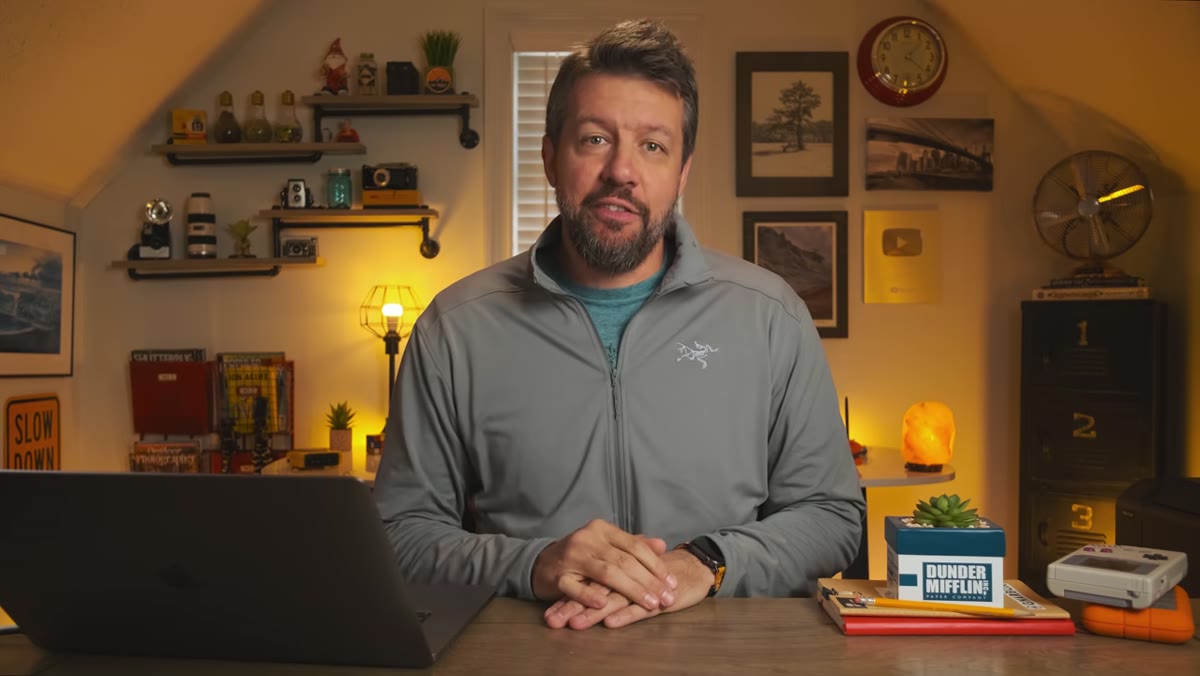 Mark Denney speaking directly to camera about burnout
The first move is simply naming the problem without catastrophizing it. Denney is clear that creative fatigue is a normal part of being a working photographer. It’s not a sign you’ve chosen the wrong path. It’s a sign you’ve been on the same path long enough that it’s worn smooth. Once you accept that, you can stop trying to brute-force your way through bad conditions and start thinking strategically about what to change. The key is acting on it rather than just waiting for the feeling to pass on its own.
Mark Denney speaking directly to camera about burnout
The first move is simply naming the problem without catastrophizing it. Denney is clear that creative fatigue is a normal part of being a working photographer. It’s not a sign you’ve chosen the wrong path. It’s a sign you’ve been on the same path long enough that it’s worn smooth. Once you accept that, you can stop trying to brute-force your way through bad conditions and start thinking strategically about what to change. The key is acting on it rather than just waiting for the feeling to pass on its own.
Step 2: Identify the Season or Condition That Triggers It
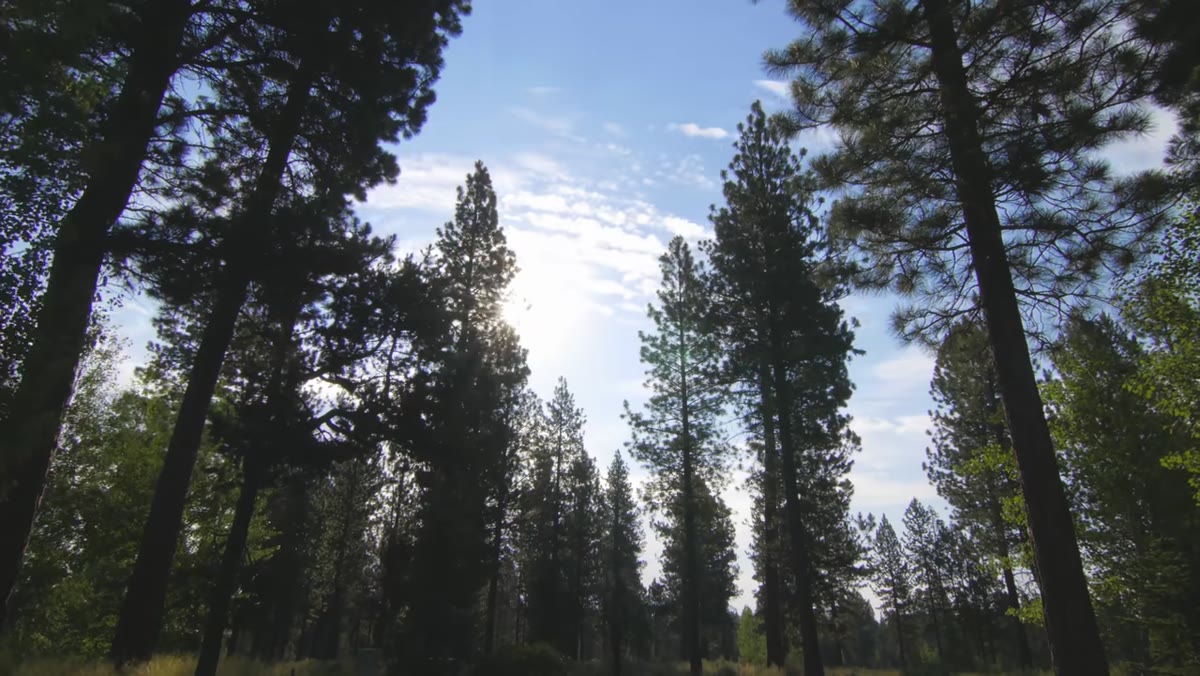 Denney describing summer as least photogenic season
Denney points specifically to summer as his trouble season. The light is harsh, the color palette flattens out, and the atmosphere lacks the drama that grand landscape work depends on. Your trigger might be different. For some photographers it’s the muddy shoulder seasons. For others it’s overcast months when nothing pops. The point is to get specific about when and why your motivation drops. Vague frustration is hard to solve. A clear pattern gives you something to work with. Once you know your weak season, you can plan around it rather than just endure it.
Denney describing summer as least photogenic season
Denney points specifically to summer as his trouble season. The light is harsh, the color palette flattens out, and the atmosphere lacks the drama that grand landscape work depends on. Your trigger might be different. For some photographers it’s the muddy shoulder seasons. For others it’s overcast months when nothing pops. The point is to get specific about when and why your motivation drops. Vague frustration is hard to solve. A clear pattern gives you something to work with. Once you know your weak season, you can plan around it rather than just endure it.
Step 3: Understand Why Your Default Style Is Condition-Dependent
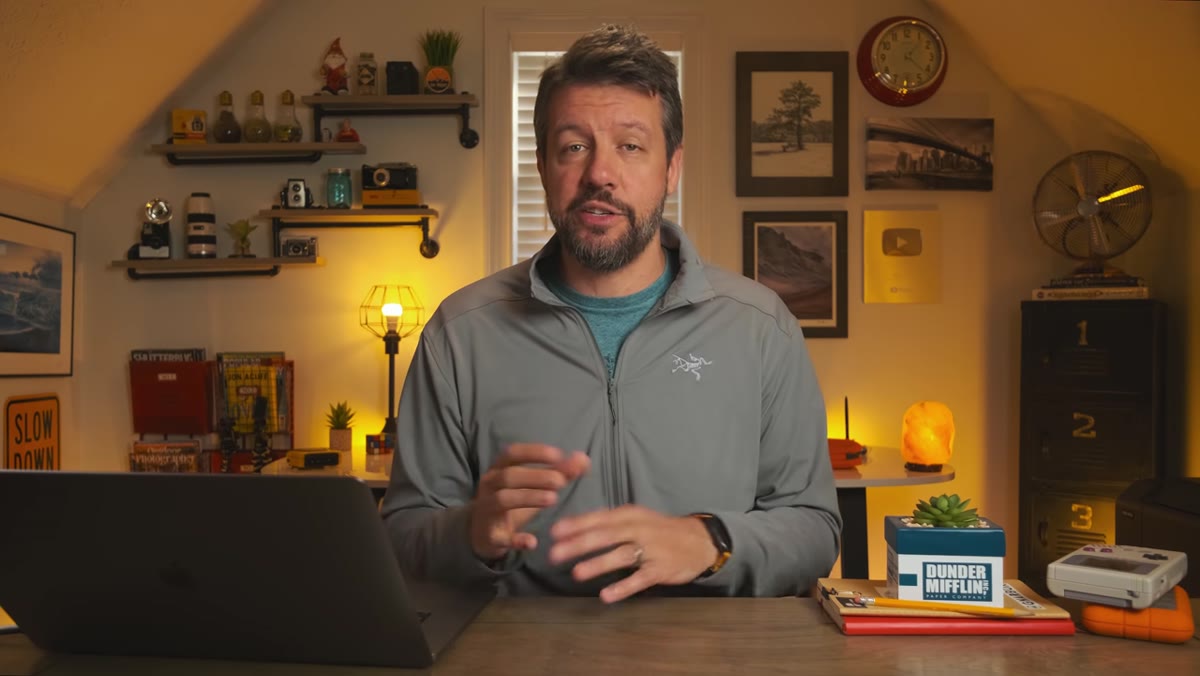 Denney explaining sky’s role in grand landscape composition
This step is where Denney’s analysis gets genuinely useful. Grand landscape photography, by its nature, relies heavily on sky drama. When you’re shooting wide and the sky takes up a third to half of the frame, a bland sky doesn’t just weaken the image. It can kill it entirely. Recognizing this structural dependency is important because it explains why grinding harder at your usual approach won’t fix the problem. You’re not shooting worse. The raw material isn’t there. Understanding that distinction protects you from false lessons, and from burning yourself out chasing conditions that simply aren’t coming that day.
Denney explaining sky’s role in grand landscape composition
This step is where Denney’s analysis gets genuinely useful. Grand landscape photography, by its nature, relies heavily on sky drama. When you’re shooting wide and the sky takes up a third to half of the frame, a bland sky doesn’t just weaken the image. It can kill it entirely. Recognizing this structural dependency is important because it explains why grinding harder at your usual approach won’t fix the problem. You’re not shooting worse. The raw material isn’t there. Understanding that distinction protects you from false lessons, and from burning yourself out chasing conditions that simply aren’t coming that day.
Step 4: Build a Project Around the Opposite of Your Default
 Denney showing intimate Iceland coastal detail photographs
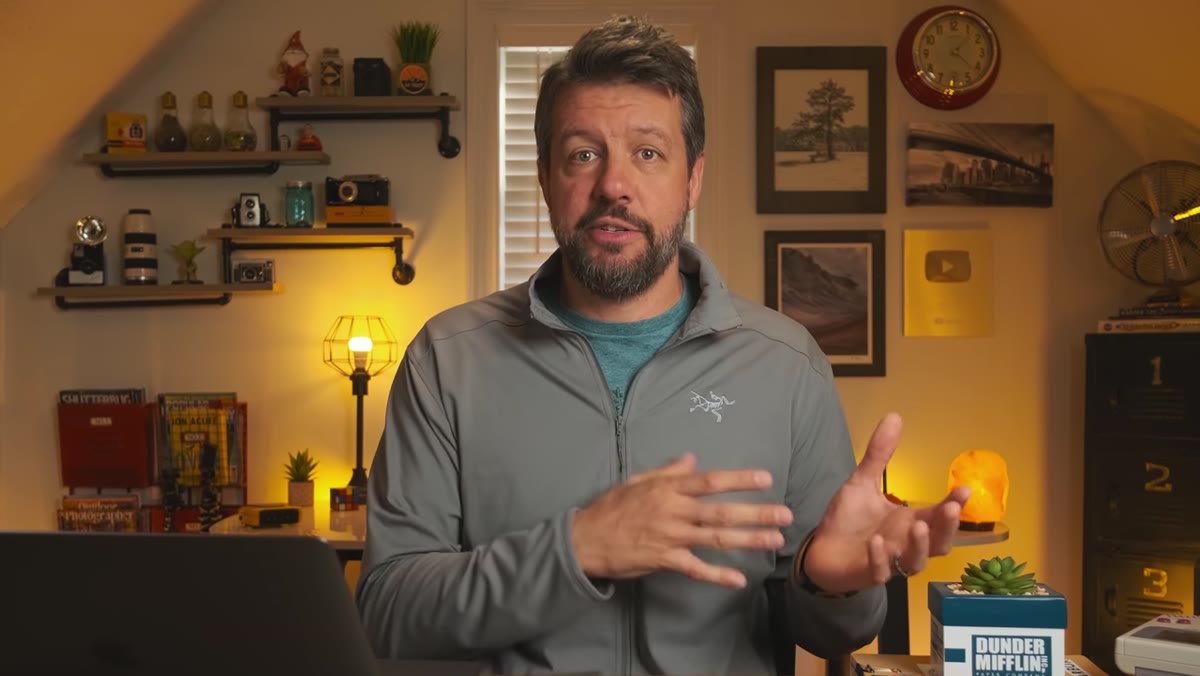
The practical solution Denney landed on was shooting intimate landscapes, tight detail work that removes the sky entirely from the equation. His recent project featured close-up work from Iceland: textures in lava fields, the geometry of glacier rivers, the layered patterns where new volcanic rock meets older terrain. The project gave him a framework for being productive on location even when conditions for his usual work weren’t cooperating. A project, as he frames it, isn’t extra homework. It’s a specific creative constraint that forces you to look differently. Pick something that is genuinely the opposite of what you default to. If you shoot wide, go tight. If you shoot color, try monochrome. The constraint is the point.
Denney showing intimate Iceland coastal detail photographs
The practical solution Denney landed on was shooting intimate landscapes, tight detail work that removes the sky entirely from the equation. His recent project featured close-up work from Iceland: textures in lava fields, the geometry of glacier rivers, the layered patterns where new volcanic rock meets older terrain. The project gave him a framework for being productive on location even when conditions for his usual work weren’t cooperating. A project, as he frames it, isn’t extra homework. It’s a specific creative constraint that forces you to look differently. Pick something that is genuinely the opposite of what you default to. If you shoot wide, go tight. If you shoot color, try monochrome. The constraint is the point.
Step 5: Use the Project to Retrain Your Eye On Location
 Denney describing shift from grand landscape to intimate detail work
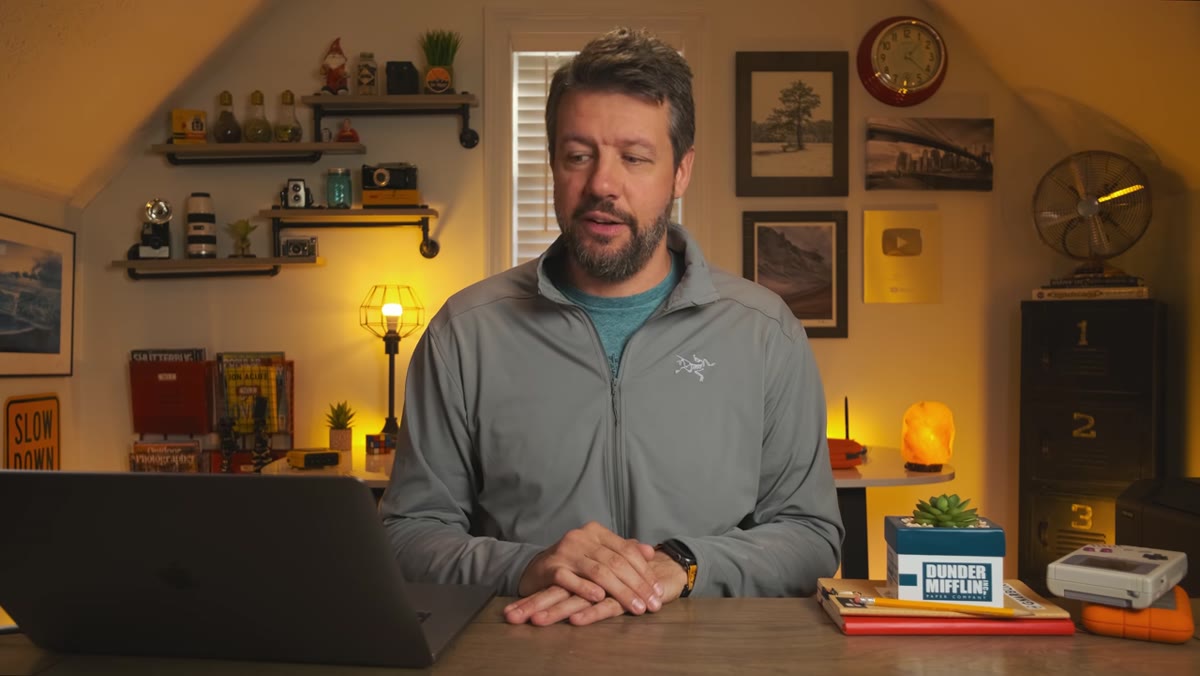
The deeper benefit of this kind of project isn’t just keeping you busy on slow days. It changes how you scan a scene. Once you’ve spent a few weeks forcing yourself to find images at ground level or within a few feet of your subject, you start seeing those opportunities even when you’re back to shooting wide. You notice the frost crystals on the rock in the foreground. You see the water pattern in the near shore. The project work feeds back into your main body of work in ways that are hard to predict but consistently valuable. Give yourself permission to come home with nothing for the main portfolio on a given shoot. That’s not failure. That’s training.
Denney describing shift from grand landscape to intimate detail work
The deeper benefit of this kind of project isn’t just keeping you busy on slow days. It changes how you scan a scene. Once you’ve spent a few weeks forcing yourself to find images at ground level or within a few feet of your subject, you start seeing those opportunities even when you’re back to shooting wide. You notice the frost crystals on the rock in the foreground. You see the water pattern in the near shore. The project work feeds back into your main body of work in ways that are hard to predict but consistently valuable. Give yourself permission to come home with nothing for the main portfolio on a given shoot. That’s not failure. That’s training.
What I’d Add From Twenty Years in the Field
Denney’s project approach is solid, and I’d only add one layer to it: put a hard constraint on gear as well. When I’m in a rut, I leave the wide zoom at home and bring one prime lens. Lately that’s been a 100mm macro, which forces me to work close and slow. It’s the same principle he’s describing but applied to equipment. The limitation removes decision fatigue and pushes you toward seeing differently by default rather than by willpower alone. I also find that occasionally pulling out a film camera for these project sessions helps. When you only have 36 exposures, you stop burning frames hoping something works and start actually looking. My mentor once told me the mountain doesn’t care about your schedule, and he was right. The conditions will be what they are. What you can change is what you’re trying to make out of them.
The single most important idea in this tutorial is that creative frustration is a signal worth listening to, not just a mood to push through. It’s pointing you toward a gap between what your current approach can do and what the conditions are actually offering. A focused personal project, built around working differently rather than just working harder, is one of the most practical ways to close that gap and come back to your main work with a sharper eye.
Watch the full tutorial on YouTube and see Denney walk through his Iceland project images alongside this discussion. It’s worth the time even when you’re not in a rut.
Comments
Leave a Comment