There’s a question I’ve been asked maybe twice in twenty years of doing this professionally, and both times it stopped me cold. Not “how do you make money at it” or “what camera do you use,” but the simpler, harder one: why landscapes? Most people who learn what I do for a living nod politely and move on. The ones who ask that follow-up question are the ones who make me think for days. Mark Denney had one of those moments recently, and he turned it into a video worth sitting with. Watch the full tutorial on YouTube before or after reading this, because what he’s working through isn’t a technical problem. It’s the philosophical foundation that makes every technical decision make sense.
In this Mark Denney tutorial, he recounts a social situation where someone finally asked him the follow-up question he’d been quietly hoping for. He’d spent years answering “what do you do?” with corporate-speak about marketing and financial institutions. The day he could answer with “I’m a professional landscape photographer” felt like a milestone. But when the follow-up came, it cracked something open. Why not portraits? Why not street photography? Why landscapes specifically? I’ve thought about my own version of that question many times standing in the Deschutes River at 5am, water at my knees, waiting for light that may or may not arrive. The answer turns out to be the most useful thing you can know about yourself as a photographer.
Step 1: Recognize the Question Behind Your Genre Choice
 Woman at party asks Mark “why landscapes?”
Before you can grow inside a genre, you have to know why you chose it, or why it chose you. Denney’s party conversation forced him to articulate something he’d felt but never fully said out loud. Your assignment here isn’t to watch someone else answer the question. It’s to answer it yourself, right now, before you read further. Open your notes app and write one sentence: “I shoot landscapes because…” Don’t polish it. Don’t perform it. Just get the raw version on the page.
Woman at party asks Mark “why landscapes?”
Before you can grow inside a genre, you have to know why you chose it, or why it chose you. Denney’s party conversation forced him to articulate something he’d felt but never fully said out loud. Your assignment here isn’t to watch someone else answer the question. It’s to answer it yourself, right now, before you read further. Open your notes app and write one sentence: “I shoot landscapes because…” Don’t polish it. Don’t perform it. Just get the raw version on the page.
The reason this step matters technically is that your “why” governs your “when” and “where.” A photographer drawn to solitude will make different location choices than one drawn to dramatic weather. A photographer motivated by the meditative quality of long exposures will invest in a different kit than one chasing golden hour light at crowded overlooks. Your answer to “why landscapes” is actually a creative brief you carry into every shoot.
Step 2: Separate the Feeling From the Habit
 Mark recounts his rote marketing consultant answer
Denney spends time on the contrast between the rehearsed, hollow answer he used to give about his old career and the alive, genuine answer he now gives. That contrast is diagnostic. If your answer to “why landscapes” sounds like a press release, “I love capturing the beauty of nature,” you’re describing a habit, not a motivation. Habits don’t sustain you through two days of fog at a location six hours from home. Motivations do.
Mark recounts his rote marketing consultant answer
Denney spends time on the contrast between the rehearsed, hollow answer he used to give about his old career and the alive, genuine answer he now gives. That contrast is diagnostic. If your answer to “why landscapes” sounds like a press release, “I love capturing the beauty of nature,” you’re describing a habit, not a motivation. Habits don’t sustain you through two days of fog at a location six hours from home. Motivations do.
Push past the first answer. If you wrote “I love being outdoors,” ask yourself what specifically about being outdoors. If the answer is “the silence,” you’re getting closer. If it’s “the feeling that the mountain was there before me and will be there after,” you’re at the real thing. That level of specificity shapes where you point the camera when nothing obvious is happening in front of you.
Step 3: Identify the Contrast That Makes Landscape Compelling to You Personally
 Mark reflects on the question all evening after the party
Denney keeps returning to that evening, turning the question over in his mind long after the conversation ended. That kind of rumination is useful data. The thing you keep thinking about is usually the thing that defines your creative instinct. For me, it’s always been the tension between permanence and transience. A granite ridge that’s been there for ten thousand years, lit by light that will last four minutes. That contrast is why I’m willing to drive through the dark to be somewhere specific at a specific moment.
Mark reflects on the question all evening after the party
Denney keeps returning to that evening, turning the question over in his mind long after the conversation ended. That kind of rumination is useful data. The thing you keep thinking about is usually the thing that defines your creative instinct. For me, it’s always been the tension between permanence and transience. A granite ridge that’s been there for ten thousand years, lit by light that will last four minutes. That contrast is why I’m willing to drive through the dark to be somewhere specific at a specific moment.
Your contrast might be different. It might be the intimacy of a small detail inside a vast space. It might be the way weather makes a familiar place unrecognizable. Write down the specific tension or contrast that keeps pulling you back. This becomes a filter you can apply when scouting: does this location, at this time, in this light, contain my contrast? If not, it might be technically beautiful and still not your photograph.
Step 4: Let Your “Why” Inform Your Editing Decisions
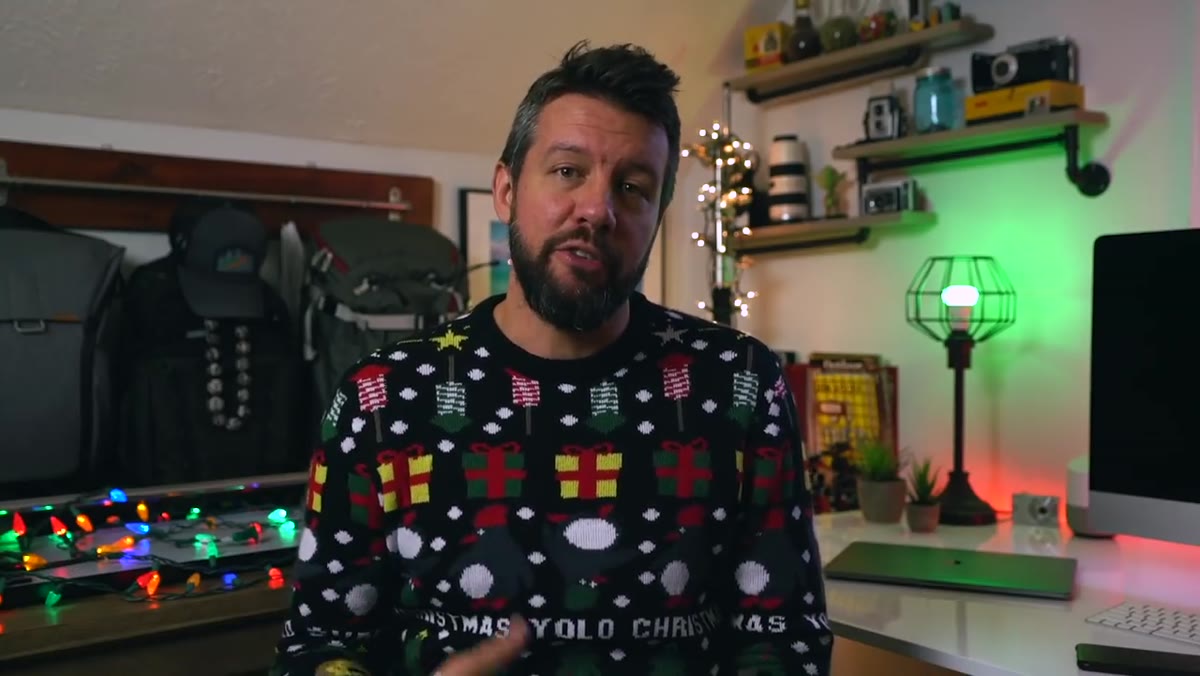 Mark describes how rarely people ask follow-up questions
One of the quieter implications in Denney’s video is that clarity about your motivation affects the entire workflow, not just where you show up. If your reason for shooting landscapes is that you find them emotionally grounding, your editing should probably reflect stillness rather than drama. If you’re drawn to the raw, indifferent power of natural systems, your processing might lean harder into contrast and mood.
Mark describes how rarely people ask follow-up questions
One of the quieter implications in Denney’s video is that clarity about your motivation affects the entire workflow, not just where you show up. If your reason for shooting landscapes is that you find them emotionally grounding, your editing should probably reflect stillness rather than drama. If you’re drawn to the raw, indifferent power of natural systems, your processing might lean harder into contrast and mood.
This is where “why” stops being abstract and becomes a practical editing tool. Pull up a folder of your recent work and ask which images feel most like your actual answer to “why landscapes.” Those are your reference points. When you’re at a decision point in post, “does this feel like my why” is a faster and more reliable question than “does this look good.”
Step 5: Practice Saying It Out Loud
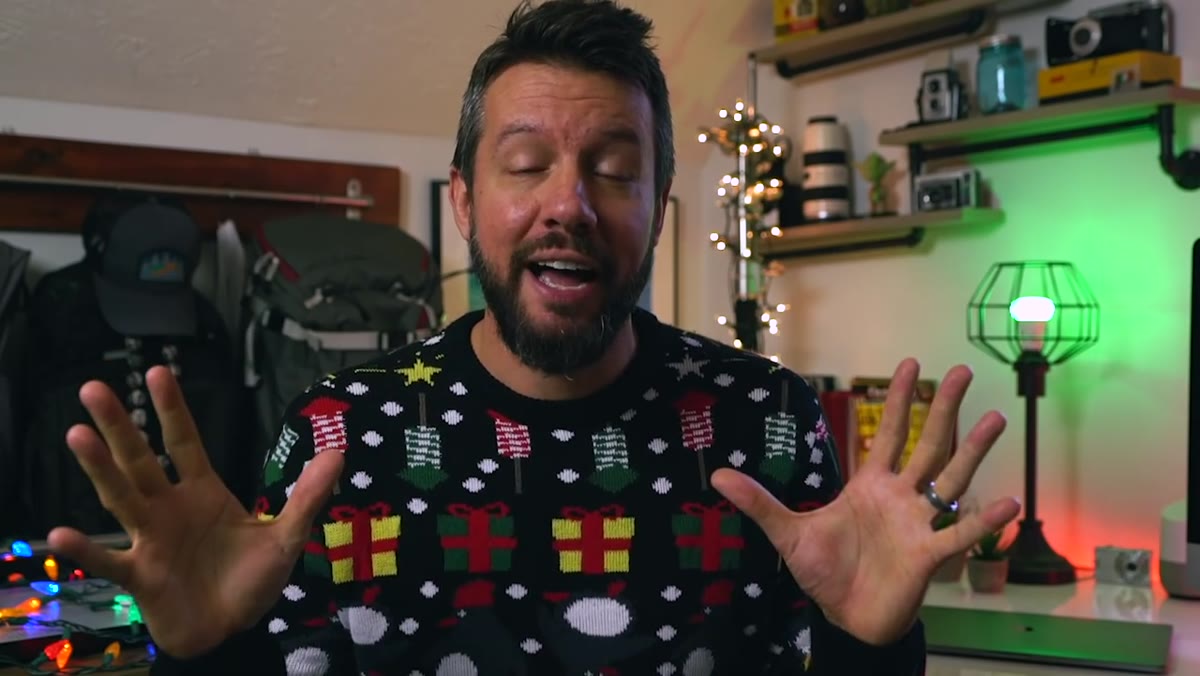 Mark describes the fireworks feeling of saying “professional landscape photographer”
Denney describes the almost physical sensation of saying “I’m a professional landscape photographer” for the first time in a context that felt real. There’s something important in that. The ability to articulate your creative identity out loud, without flinching, changes how you approach the work itself. It raises the stakes in the best way. You’re not just a person who takes pictures outside. You’re someone with a specific, defensible vision.
Mark describes the fireworks feeling of saying “professional landscape photographer”
Denney describes the almost physical sensation of saying “I’m a professional landscape photographer” for the first time in a context that felt real. There’s something important in that. The ability to articulate your creative identity out loud, without flinching, changes how you approach the work itself. It raises the stakes in the best way. You’re not just a person who takes pictures outside. You’re someone with a specific, defensible vision.
Practice your answer to “why landscapes” the way you’d practice a field technique. Say it to someone you trust. Say it in front of a mirror if you have to. The goal isn’t performance. It’s clarity. When you can say it without hedging, you’ll find it easier to make bold decisions in the field, including the decision to wait longer, or to walk away from a shot that doesn’t serve your actual vision.
What I’d Add From the Field
I’ve had twenty years of mornings where the light didn’t cooperate and I had to decide whether being there still mattered. My mentor told me once that the mountain doesn’t care about your schedule, and I’ve been working with that sentence ever since. What kept me out there when the conditions were bad wasn’t discipline. It was a clear enough sense of why I was there in the first place that showing up felt worthwhile regardless of the outcome. Denney’s video is really about building that foundation. Every frame you make afterward sits on top of it.
The single most useful thing this video pushed me toward was writing down, plainly and without flattery, why I chose this specific genre of photography. Not the poetic version. The honest one. That sentence is worth more than any piece of gear or any technical skill, because it’s the thing that gets you out the door at 4am when nothing is guaranteed.
Watch the full tutorial on YouTube and then sit with the question Mark’s party guest asked him. Your answer to “why landscapes” is the most important creative decision you’ll make this year.
Comments
Leave a Comment