Why Forests Fight Your Camera (And How to Stop Losing the Battle)

Why Forests Fight Your Camera (And How to Stop Losing the Battle)

The Lie the Histogram Tells You I was standing in an old-growth Douglas fir grove outside Sisters, Oregon, about twenty minutes before the light went flat. My histogram looked clean. Midtones stacked neatly in the center, no clipping on either end. I took the shot, packed up, and didn’t look at it properly until I was back at my desk. The shadows under the canopy were a muddy, detail-less mess, and the few beams of light that had cut through the ferns were blown to white.
Why Your Forest Photos Look Flat (And What the Light Is Actually Doing)

Why Your Forest Photos Look Flat (And What the Light Is Actually Doing)

There’s a stretch of old-growth Douglas fir outside Bend that I’ve visited probably forty times. The first dozen or so, I came home with nothing worth keeping. Technically correct images, sure. Properly exposed, reasonably composed. But flat. Lifeless. The kind of shot that makes you think maybe forests just aren’t photogenic. I was wrong about that, obviously. What I didn’t understand yet was that shooting in a forest isn’t a simplified version of landscape photography.

Finding Harmony in the Chaos: How to Photograph Temperate Rainforest Like a Pro

Finding Harmony in the Chaos: How to Photograph Temperate Rainforest Like a Pro

Forest photography has humbled me more times than I care to admit. I’ve stood in old-growth Douglas fir outside Bend with a perfectly charged battery, ideal overcast light, and zero keeper shots to show for two hours of work. The problem wasn’t the gear. It wasn’t the light. It was the chaos — that wall of overlapping trunks, competing textures, and tangled canopy that refuses to arrange itself into anything resembling a composition.

Snow, Trees, and the Art of Seeing Less: Lessons from a New Zealand Forest Shoot

Snow, Trees, and the Art of Seeing Less: Lessons from a New Zealand Forest Shoot

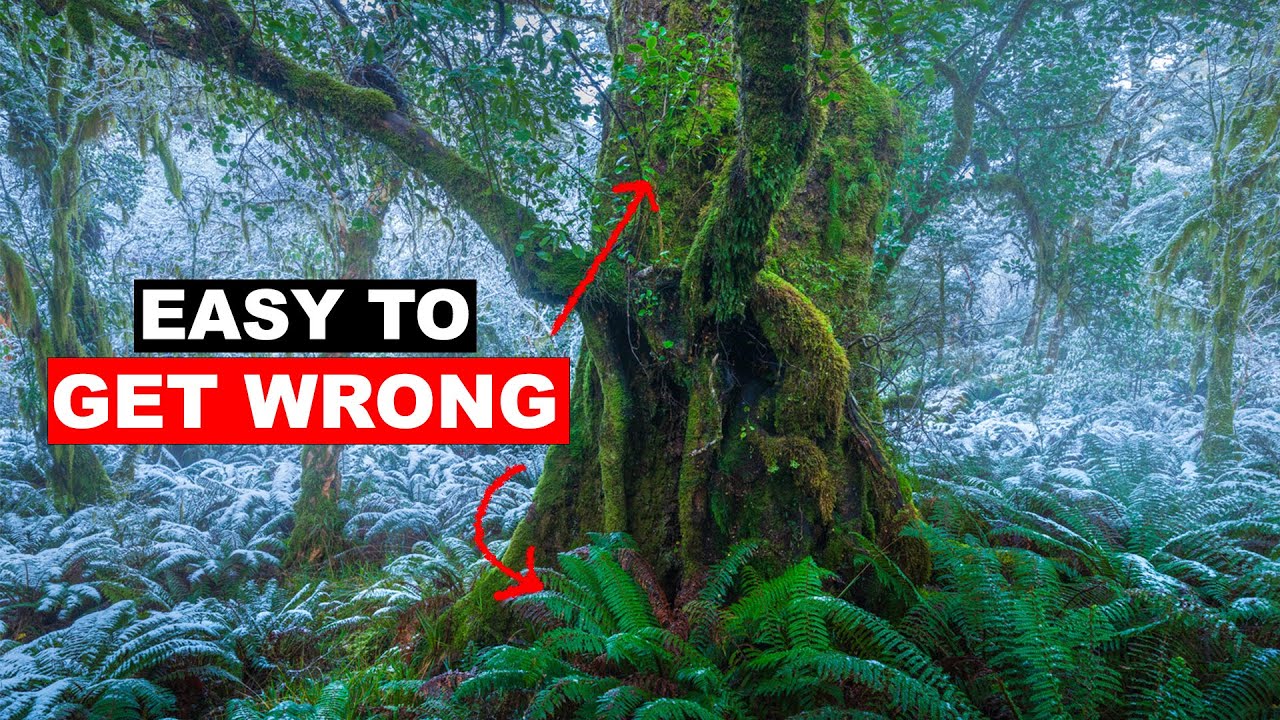
Forest photography has humbled me more times than I care to admit. I’ve stood in old-growth stands in the Pacific Northwest, light filtering through fir canopies like something out of a painting, and still come home with a card full of images that felt cluttered, directionless, and flat. The trees are beautiful. The camera doesn’t always agree. Add a dusting of snow to that equation and the compositional challenges multiply fast.

Finding Order in the Australian Bush: A Woodland Photography Walkthrough

Finding Order in the Australian Bush: A Woodland Photography Walkthrough

Forest and woodland photography has humbled me more times than I care to admit. After twenty years of working mostly in the American West, where I’ve learned to read sagebrush flats and volcanic ridgelines, I still find dense tree environments genuinely difficult. There’s no clean horizon line, no obvious subject, and the light behaves like it has its own agenda. I’ve stood in old-growth Douglas fir stands at golden hour feeling completely lost despite having a camera in my hands since my mid-twenties.

Shade Is Half the Shot: Field Lessons From a William Patino Tutorial

Shade Is Half the Shot: Field Lessons From a William Patino Tutorial

There’s a version of me that wasted years chasing light. Not the wrong kind of chasing. I mean the obsessive, tunnel-vision pursuit of golden hour glow while ignoring everything around it. I’d stand in a meadow fixated on one warm patch of light and wonder why my images felt flat, directionless. The shadow areas around that light felt like problems to solve, not tools to use. It took a long time in the field to understand that shade isn’t the absence of something good.

Why Forest Photography Breaks Your Meter (And How to Shoot It Anyway)

Why Forest Photography Breaks Your Meter (And How to Shoot It Anyway)

There’s a particular kind of frustration that comes from standing in a cathedral of old-growth Douglas fir at golden hour, the light doing something genuinely extraordinary through the canopy, and watching your histogram blow out in six different places at once. I’ve been shooting landscapes full-time for two decades, and forests still give me more trouble per square foot than any other environment. Open alpine, coastal, desert slot canyons - those have hard rules you can memorize.

How to Find and Photograph Forest Scenes When the Light Refuses to Cooperate

How to Find and Photograph Forest Scenes When the Light Refuses to Cooperate

There’s a kind of shoot I’ve done hundreds of times: I show up somewhere dramatic, the sky is flat blue, the light is harsh, and everything that made the location worth the drive looks completely dead on a sensor. For years, my instinct was to pack up and wait for better conditions. What I’ve learned since then, slowly and sometimes painfully, is that a flat-light day isn’t a failed shoot day.

Finding Light in the Shadows: A Forest Photographer's Guide to Capturing Woodland Depth

Finding Light in the Shadows: A Forest Photographer's Guide to Capturing Woodland Depth

Finding Light in the Shadows: A Forest Photographer’s Guide to Capturing Woodland Depth When I first began photographing forests seriously, I made the mistake that many newcomers do: I treated them like any other landscape. I’d arrive expecting golden hour drama and sweeping vistas. What I found instead were dense shadows, confusing compositions, and frustratingly flat images. Only after spending dozens of overcast mornings in the woods did I begin to understand that forests demand a completely different approach.

The Art of Forest Photography: Finding Light in the Shadows

The Art of Forest Photography: Finding Light in the Shadows

The Art of Forest Photography: Finding Light in the Shadows I’ve spent countless mornings standing in dense woodland, tripod sinking slightly into damp earth, waiting for that precise moment when golden light pierces through the canopy. Forest photography demands patience in ways that open landscape work simply doesn’t. You’re not working with the light—you’re hunting for it, creating geometry from shadow and illumination. Understanding Forest Light The forest is a study in contrast and subtlety.

The Art of Forest Photography: Capturing Light Among the Trees

The Art of Forest Photography: Capturing Light Among the Trees

I learned early that forest photography demands patience and surrender. You cannot force a forest to reveal itself—you must move through it with intention, waiting for the light to do what the light does best. Understanding Forest Light Forests are paradoxes of light. Dense canopies block direct sun while simultaneously filtering it into something magical. When I first attempted forest photography, I underexposed everything, frustrated that my camera couldn’t capture what my eyes perceived.

Finding Light in the Woods: The Art and Craft of Forest Photography

Finding Light in the Woods: The Art and Craft of Forest Photography

Finding Light in the Woods: The Art and Craft of Forest Photography There’s a peculiar silence that settles over me when I’m deep in a forest with my camera. The light filters through the canopy in ways that seem impossible to translate to a sensor, and yet that impossibility is exactly why I keep returning to these places. Forest photography demands something different from us than open landscape work. You’re not capturing expansive vistas or dramatic skies—you’re hunting for relationships between layers, textures, and the elusive moments when light finds its way through dense vegetation.