Getting Uncomfortably Close: How Ultra-Wide Lenses Unlock a Different Kind of Landscape Image

Getting Uncomfortably Close: How Ultra-Wide Lenses Unlock a Different Kind of Landscape Image

There is a version of me from fifteen years ago who bought a 10mm lens, slapped it on my camera, and wondered why everything looked like a novelty fisheye postcard. Wide angle lenses are deceptive. They look forgiving because they seem to pull everything in, but they punish lazy composition faster than any other focal length. The problem, specifically, is the foreground. With a longer lens you can ignore it. With an ultra wide, it is half your image whether you planned for it or not.

What the Fog Teaches: How I Finally Learned to Expose the Night Sky Without Blowing Out the Stars

What the Fog Teaches: How I Finally Learned to Expose the Night Sky Without Blowing Out the Stars

The first time I tried seriously shooting the Milky Way, I drove out to the high desert east of Bend at 11pm with a fast prime lens and enough confidence to embarrass myself. I’d read the forums. I knew about the 500 rule. I set up, fired off a thirty-second exposure at f/1.8 and ISO 6400, and came home with a frame full of comma-shaped stars, a washed-out galactic core, and a foreground so noisy it looked like wet concrete.

What the Milky Way Teaches You About Exposure (When You Stop Fighting It)

What the Milky Way Teaches You About Exposure (When You Stop Fighting It)

The first time I tried to photograph the Milky Way seriously, I drove out to the Oregon high desert, set up in the dark, and shot at ISO 6400 with a 30-second exposure because someone on a forum said that was the right way to do it. The images looked like someone had dragged a wet paintbrush across a black canvas. Smeared, noisy, directionless. I drove home at 3am thinking I just didn’t have the right gear.

Why Your Forest Photos Look Flat (And What the Light Is Actually Doing)

Why Your Forest Photos Look Flat (And What the Light Is Actually Doing)

The Forest Doesn’t Owe You Good Light I pulled into a trailhead outside of Sisters, Oregon at 4:45 in the morning last October, thermos in hand, headlamp cutting through fog that had settled thick between the ponderosas. I’d scouted this spot two weeks earlier on a clear afternoon and built a whole mental image around a shaft of low light hitting a particular grove of aspens. The fog had other ideas.

What Marc Muench Taught Me About Seeing Light Before You Lift the Camera

What Marc Muench Taught Me About Seeing Light Before You Lift the Camera

There’s a version of landscape photography where you chase the histogram, obsess over sharpness, and treat every outing like a technical exam. I spent a few years in that mode early on, and the images I made were technically fine and emotionally empty. What changed things for me wasn’t a new lens or a better sensor. It was understanding that the photograph begins long before you lift the camera. That realization is exactly what Marc Muench leads with in his Nature Visions seminar, and it’s why I keep coming back to it when I need to recalibrate.

What a Telephoto Lens Taught Me About Slowing Down (And Slowing the Water)

What a Telephoto Lens Taught Me About Slowing Down (And Slowing the Water)

There’s a version of landscape photography that gets all the attention — the towering peak, the sweeping vista, the grand composition that makes you feel small. I’ve chased that version for twenty years, and I’ll keep chasing it. But some of my most technically interesting work, and honestly some of my most meditative shooting days, have come from standing at the edge of a small river with a long lens pointed at a patch of moving water no bigger than a dining room table.

Why Your Panoramas Feel Flat (And the Overlap System That Fixed Mine)

Why Your Panoramas Feel Flat (And the Overlap System That Fixed Mine)

There’s a ridgeline outside Bend I’ve been shooting for years. On a clear morning in October, it catches the first alpenglow in a way that makes the whole sky feel like it’s been lit from underneath. The scene is about 180 degrees wide. A single frame, even with my widest rectilinear lens, kills it. The compression flattens the drama, shrinks the peaks, and turns something enormous into something merely pretty. The only answer is a panorama, and for most photographers, that’s where the frustration starts.

Balancing Light and Composition at Sunset: What William Patino's Framework Taught Me to Stop Ignoring

Balancing Light and Composition at Sunset: What William Patino's Framework Taught Me to Stop Ignoring

There’s a particular kind of pressure that builds when golden light starts happening and you’re still walking, still looking, still not sure where to plant the tripod. I’ve felt it hundreds of times over the past two decades. The chest tightens, the legs move faster, and suddenly you’re forcing a composition instead of finding one. I’ve come home with technically fine shots that feel hollow because I rushed into them. So when I came across Watch the full tutorial on YouTube from William Patino, filmed during a summer sunset session in Fiordland National Park, I kept nodding along because he was describing the exact problem I still wrestle with, and offering a framework that actually works.

The Framework I Wish I'd Had Twenty Years Ago: Composing Landscape Images That Actually Work

The Framework I Wish I'd Had Twenty Years Ago: Composing Landscape Images That Actually Work

There’s a particular kind of paralysis that sets in when you’re standing in a beautiful place with a camera in your hands. The light is doing something extraordinary, the scene is alive, and you have absolutely no idea where to point the lens. After two decades of doing this work, I still feel it. The difference now is that I’ve built a repeatable process for working through it, and that process maps almost perfectly onto what William Patino demonstrates in his forest composition tutorial.

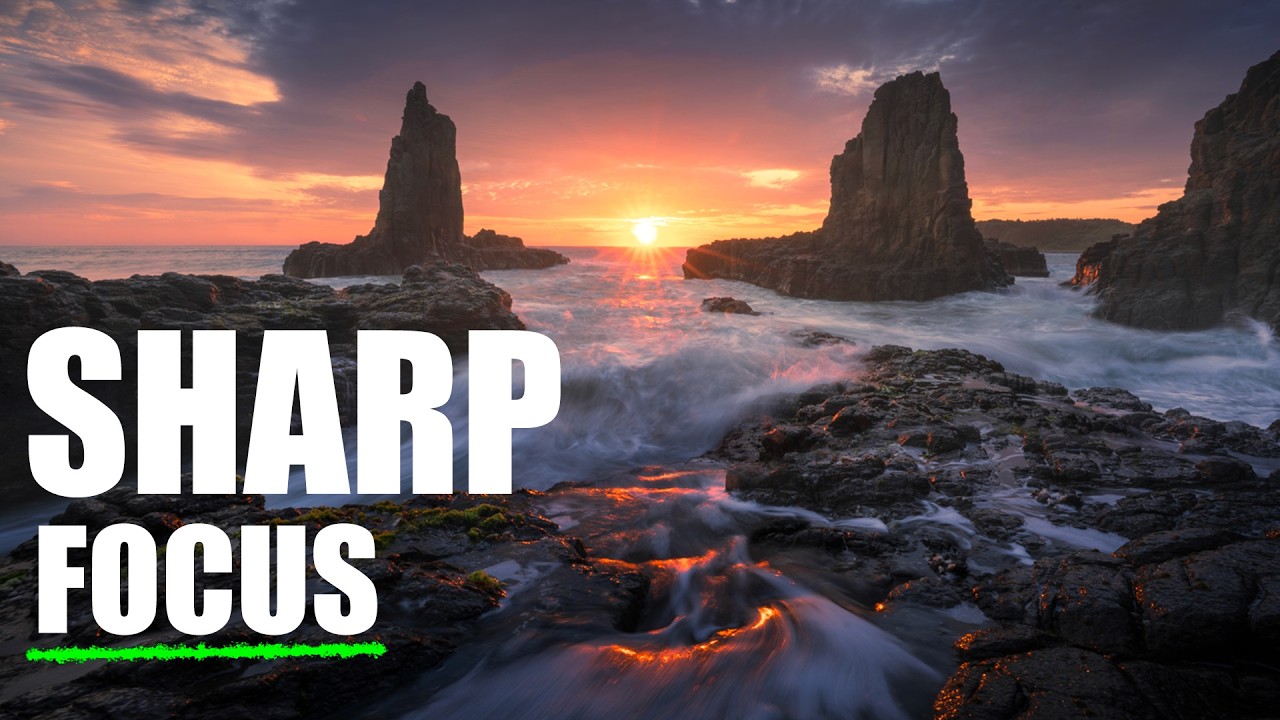
Sharp Front to Back: How Focus Stacking Saved My Last Desert Shoot

Sharp Front to Back: How Focus Stacking Saved My Last Desert Shoot

There’s a particular kind of frustration that comes with a scene that simply will not cooperate with your aperture. You’re standing in front of something extraordinary, maybe a gnarled tree pushing up from a rocky foreground with a mountain range filling the sky behind it, and no matter where you set your f-stop, something goes soft. Stop down to f16 and diffraction steals your sharpness. Open up to f8 and the foreground loses definition.

Why Your Sky Masks Look Fake (And the Lightroom Workaround That Finally Fixes It)

Why Your Sky Masks Look Fake (And the Lightroom Workaround That Finally Fixes It)

There’s a particular kind of frustration that lives in the zoom-in. You’ve done everything right. The sky mask selected cleanly, the clouds have drama and texture now, the exposure looks balanced. You toggle the edit on and off and feel that small, quiet satisfaction of a job done well. Then you zoom in to check your edges and there it is: a thin, glowing halo hugging the ridgeline like the mountain is lit from behind by something that was never there.

The Art of Showing Up: What William Patino's Fiordland Workflow Taught Me About Getting Out of My Own Way

The Art of Showing Up: What William Patino's Fiordland Workflow Taught Me About Getting Out of My Own Way

There’s a version of landscape photography that gets sold online constantly. Perfect golden light, a clear vision, a hero shot on the first try. After twenty years of hauling gear into the dark before most people set an alarm, I can tell you that version is mostly fiction. The reality looks a lot more like what William Patino captures in this refreshingly honest tutorial, Watch the full tutorial on YouTube, where he walks into a patch of forest with no plan, no golden light, and no guarantee of anything.