The 1000-Step Photography Challenge: What Happens When You Can't Choose Your Spot

The 1000-Step Photography Challenge: What Happens When You Can't Choose Your Spot

There’s a particular trap I’ve watched photographers fall into for two decades, and I’ve fallen into it myself more times than I’d like to admit. We spend so much energy hunting for the perfect location, the perfect conditions, the perfect angle, that we forget how to make something from what’s actually in front of us. Location-scouting apps, satellite imagery, golden hour calculators, all of it useful, all of it capable of becoming a crutch that replaces genuine seeing with logistical planning.

Reading the Wild: What William Patino's New Zealand Creek Walk Taught Me About Working an Unfamiliar Scene

Reading the Wild: What William Patino's New Zealand Creek Walk Taught Me About Working an Unfamiliar Scene

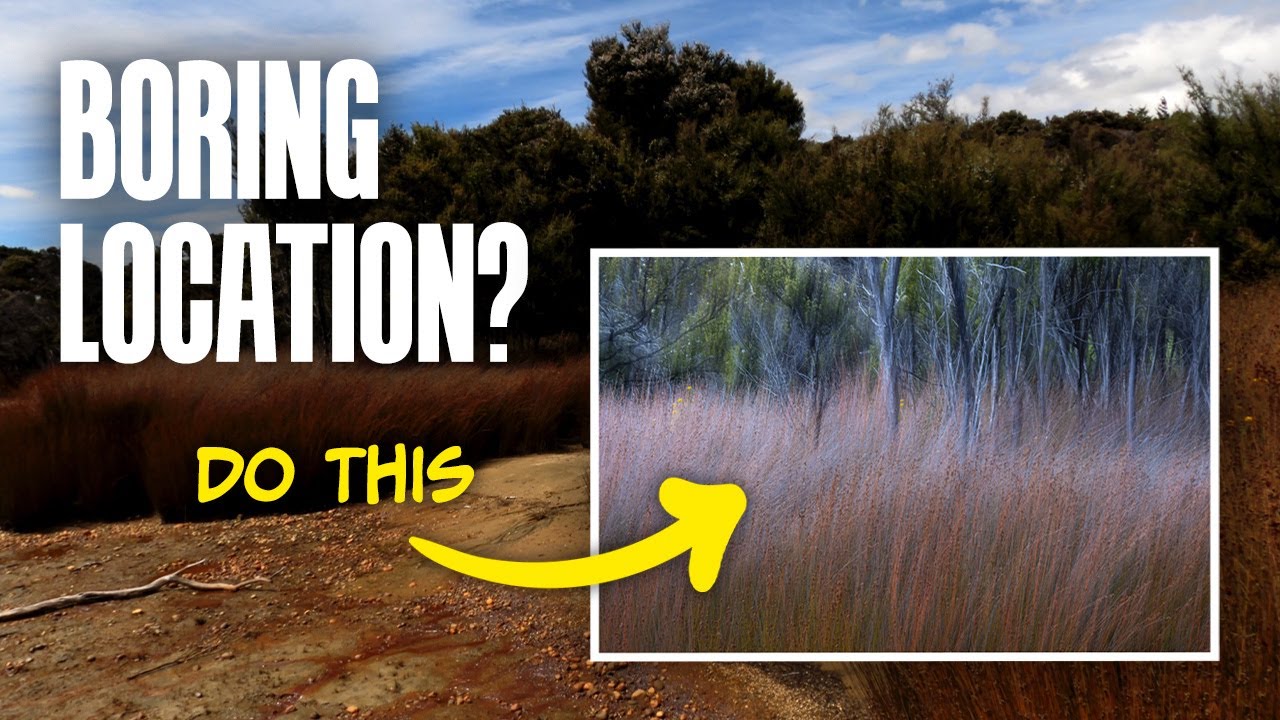
There’s a particular kind of anxiety that hits when you arrive at a location you’ve never scouted and the light is already moving. You’re standing in front of something genuinely beautiful, and instead of working methodically, you freeze or lunge at the obvious shot right in front of your boots. I’ve been photographing landscapes for twenty years and I still catch myself doing it. It’s the reason I keep returning to tutorials from photographers who think out loud on camera, because watching someone else’s decision-making process is one of the fastest ways to debug your own.

Why I Stopped Treating ISO Like a Four-Letter Word (And You Should Too)

Why I Stopped Treating ISO Like a Four-Letter Word (And You Should Too)

There’s a rule I carried around for years like a stone in my pack: keep ISO at 100, always. I learned it early, repeated it in workshops, and held onto it even when the light was failing and I knew, somewhere in the back of my mind, that I was making compromises that hurt my images. I’d drag my shutter speed to half a second, a full second, longer, trying to hold the exposure together without touching that dial.

Why Mountain Light Breaks Your Meter — And How to Shoot in It Anyway

Why Mountain Light Breaks Your Meter — And How to Shoot in It Anyway

The Exposure Problem Nobody Warns You About I was standing on a ridgeline in the Three Sisters Wilderness at 5:47 a.m., watching first light hit a snow-covered summit above me. The sky behind it was a deep, bruised violet. The snow itself was picking up a pink cast that I knew would last maybe four minutes. I had everything set up the night before. I knew my composition. And my meter was still lying to me.

Three Lenses, One Mountain: A Composition Guide That Actually Works in the Field

Three Lenses, One Mountain: A Composition Guide That Actually Works in the Field

There’s a particular kind of frustration that comes from standing in front of a jaw-dropping mountain scene and knowing, somewhere in the back of your mind, that your images aren’t going to do it justice. I’ve been shooting landscapes full-time for two decades and I still wrestle with it. Mountains are humbling that way. The scale defies a single frame. The light moves faster than you expect. And the lens you grabbed first is usually the wrong one.

Light, Weight, and the Freedom to React: Field Notes on the Nikon Z5 for Landscape Photography

Light, Weight, and the Freedom to React: Field Notes on the Nikon Z5 for Landscape Photography

There’s a specific kind of frustration that every landscape photographer knows: you’re watching extraordinary light develop in front of you, and by the time you’ve locked your tripod down and dialed in your settings, it’s gone. I’ve stood in enough pre-dawn fields in central Oregon to understand that the camera you can use right now is often more valuable than the camera with the theoretically better specs still in the bag.

What a Landscape Photographer Learns When They Stop Controlling the Frame

What a Landscape Photographer Learns When They Stop Controlling the Frame

There’s a particular kind of humility that comes from stepping outside your own genre. I’ve spent two decades composing landscapes, reading light, waiting for clouds to cooperate. I know my tools cold, and I know my instincts. But every so often something pulls me sideways into unfamiliar territory, and that’s usually where the real learning happens. In this Nigel Danson tutorial, the British landscape photographer trades his wide-angle compositions for a telephoto lens and spends a morning in a photography blind in a Danish forest with wildlife photographer Morten Hilmer.

Shooting in Foul Weather: What a Scottish Storm Taught Me About Finding the Shot

Shooting in Foul Weather: What a Scottish Storm Taught Me About Finding the Shot

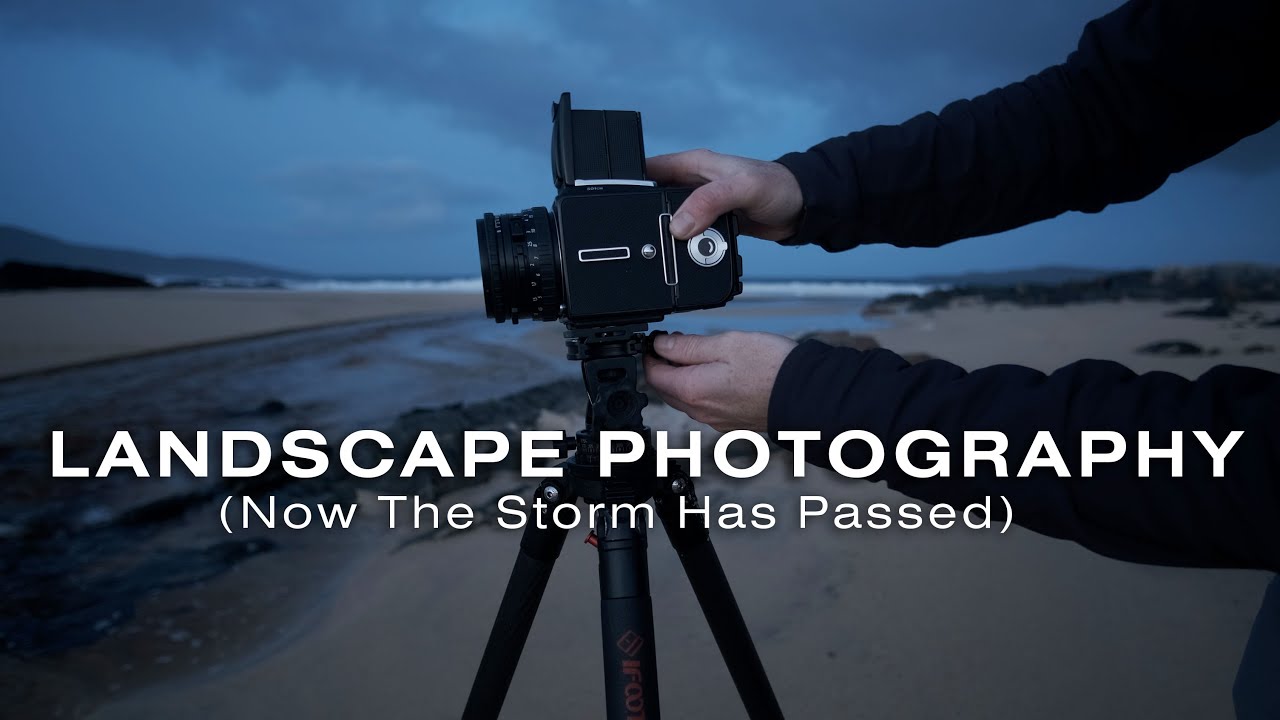
There’s a particular kind of misery that comes with arriving at a location after a long drive only to find flat gray light, horizontal rain, and a scene that refuses to cooperate. I’ve lived that morning more times than I can count. Twenty years into this work, I still don’t have a clean answer for what to do when the weather beats you. What I do have is a set of habits that keep me shooting when most people would retreat to the car.

How to Find and Shoot an S-Curve Composition When the Light Fails You

How to Find and Shoot an S-Curve Composition When the Light Fails You

I’ve stood on enough beaches, ridgelines, and river banks at 4am to know that the light you planned for rarely shows up on time. Sometimes it doesn’t show up at all. After two decades of this, I’ve stopped treating a failed sunrise as a failed shoot. The question I ask now is: what does the scene still have? And more often than not, if I look at my feet instead of the sky, the answer is a strong lead-in line.

Why Your Landscape Photos Feel Empty (And What to Do Before You Ever Raise the Camera)

Why Your Landscape Photos Feel Empty (And What to Do Before You Ever Raise the Camera)

I stood at the edge of a basalt rim above the Crooked River for about twenty minutes before I took a single frame. The light was moving fast, the way it does in late October in central Oregon, dropping from gold to amber to that flat grey that kills everything. A newer photographer next to me was already firing. I counted his shutter presses. Forty-seven frames in the first three minutes.

The Mid-Range Lens Is Quietly the Most Useful Thing in My Camera Bag

The Mid-Range Lens Is Quietly the Most Useful Thing in My Camera Bag

There’s a lens sitting in my bag that I probably reach for more than I’d care to admit, given how long I spent ignoring it. For years I worked almost exclusively between two extremes: the ultra-wide for sweeping foreground drama, and the telephoto for compression and isolation. The mid-range zoom felt like a compromise. Neither fish nor fowl. I was wrong, and it took me an embarrassingly long time to figure that out.

Why Your Landscape Photos Look Flat (And Three Field Fixes That Actually Work)

Why Your Landscape Photos Look Flat (And Three Field Fixes That Actually Work)

There’s a particular kind of learning that only happens when someone shows you their failures. Not polished, curated “before and after” content, but the real stuff, the photographs that made them wince years later. I’ve been shooting landscapes full-time for two decades, and I can still pull up folders from my early years that make me question my own taste. Which is exactly why this William Patino tutorial stopped me mid-scroll.